The UAP Puzzle: Anthropocentrism and Avoiding Strategic Surprise
Jeremy Kenyon Lockyer Corbell’s statement argues that UAP deserve urgent scientific, defense, and public-policy attention. It presents his interpretations and allegations about secrecy, reporting failures, nonhuman technology, and strategic surprise, while advocating better data access, reduced stigma, stronger reporting systems, and public transparency.
Search extracted document text
Probed searches extracted/indexed text and can show matching pages when page indexing is available.
Document Intel
Source status, provenance, and extraction context.
- Source / agency
- U.S. House Committee on Oversight and Accountability
- Type
- Document
- Classification
- Unclassified
- Reference #
- HHRG-118-GO06-20230726-SD003
- Published
- 2023-07-26
- Content Type
- application/pdf
- Pages
- 6
Structured Analysis
Claims and source material extracted from the document text. Timeline context is surfaced in document intel.
Corbell asserts that reported UAP activity affects defense operations and warrants an urgent response across space, air, sea, and cyber domains.
This increase in activity impacts vital defense operations, including those conducted by our own Department of Defense.
Corbell alleges that UAP frequently operate in restricted airspace and are captured by multiple defense sensors while outperforming known military systems.
UAP are witnessed, documented and often captured on corroborative multi-platform defense sensors and targeting systems while displaying the capability to outpace, outmaneuver, and outperform our most advanced military weaponry
Corbell recommends a coordinated scientific effort and access to high-quality UAP data for open analysis.
Our scientific communities must fully engage in an earnest, integrated and open process of discovery. We must actively acquire (and demand) high-quality data sets on the issue for useful analysis of UAP evidence
Corbell says service members told him that military UAP reporting remained poorly defined and that stigma and career concerns could suppress reports.
the recent attempts by our military to streamline and define the parameters of the UAP reporting process is still greatly undefined and ineffective.
Corbell asserts that UAP include machines of unknown origin and interprets them as likely not made on Earth.
UAP are real and the phenomenon includes machines of unknown origin - likely not made here on Earth.
Corbell warns that failure to confront the issue could produce a strategic surprise that radically changes prevailing ideas about existence.
If we don’t face this UAP issue head-on, we could experience a cosmic version of Pearl Harbor.
Corbell concludes that the public has a right and need to know the truth about UAP and commits to continued advocacy for transparency.
The American and global public have a right to know the truth about UAP; in-fact, we have a need to know.
Chronology extracted from the document text.
Statement entered in House record
Corbell dated the statement in Washington, D.C., for the House UAP hearing.
Corbell describes a new transparency opportunity
The statement characterizes 2023 as a turning point in public attention to UAP.

Referenced In Coverage
Investigative posts, source items, and other coverage that currently cite this document.
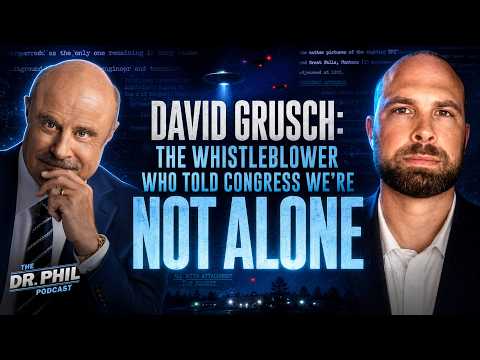

Probed ingest of: David Grusch: The Whistleblower Who Told Congress We're Not Alone
The Dr. Phil Podcast’s Phil McGraw questions former intelligence officer David Grusch about his UAP whistleblowing, alleged reprisals, and claims that the United States holds recovered non-human craft and biological material. Grusch distinguishes classified imagery he says he personally viewed from secondhand accounts of live occupants and telepathic communication, while McGraw presses for physical evidence, contextualized disclosure, and public-health planning.