1976 Tehran UFO Incident
The 1976 Tehran UFO incident involved Iranian F-4 intercepts of a bright object, later documented in U.S. defense-intelligence reporting.
The 1976 Tehran UFO incident occurred on September 18-19, 1976, when Iranian authorities responded to reports of a bright object over Tehran. The best-known version says Imperial Iranian Air Force F-4 Phantom II jets were scrambled to investigate, and that pilots reported unusual object behavior plus failures in communications, instrumentation, or weapons systems as they approached. The case became prominent because U.S. defense-intelligence reporting preserved the episode in an official channel.
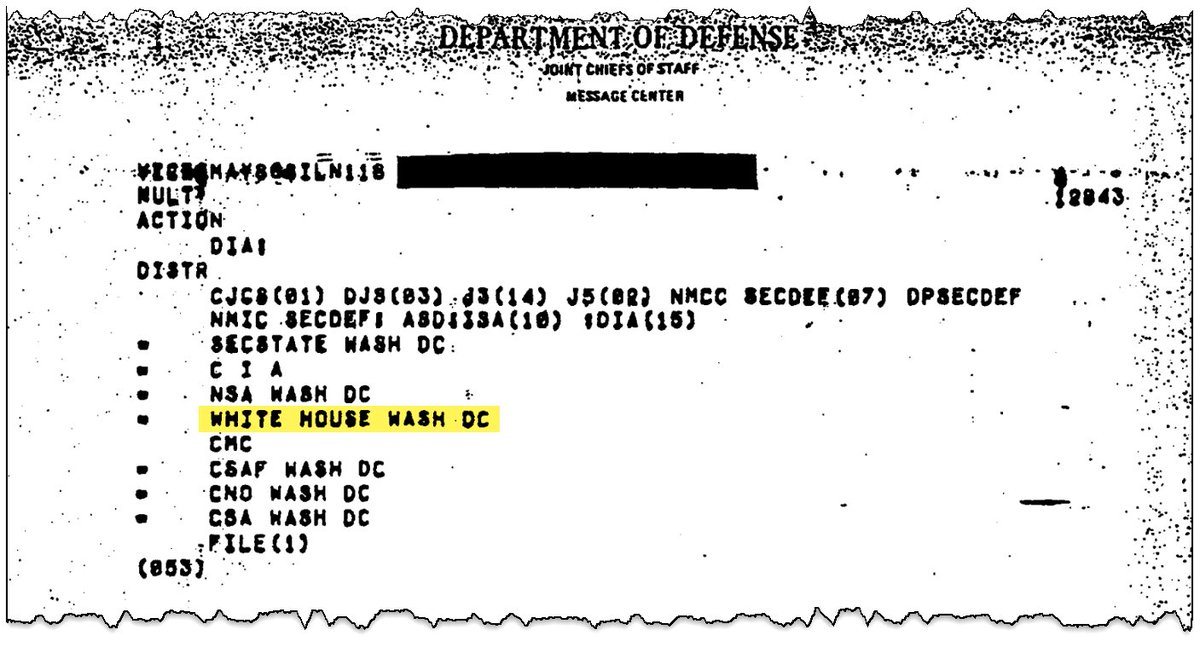
The central document is commonly described as a Defense Intelligence Agency or Joint Chiefs message summarizing information from U.S. military and diplomatic reporting. That document does not prove the object's identity. It does show that the event was taken seriously enough to circulate through U.S. defense channels, with details about radar, aircraft response, and reported system malfunctions. That places Tehran among classic Radar-Visual UFO Cases, although the public record still depends heavily on summarized reporting rather than raw sensor data.
The incident's narrative has several layers. Civilian and airport reports reportedly triggered the air-defense response. Iranian fighter crews then described seeing a bright object and, in some versions, a smaller object that appeared to separate from it. The most consequential claim is that avionics or weapons systems failed when an F-4 tried to close or engage, then returned after the aircraft turned away. Because that claim implies a possible operational hazard, Tehran is often cited in UAP & National Security discussions.
The disputed part is causation. A report that a system malfunction occurred near an unidentified object is not the same as proof that the object caused the malfunction. Aircraft maintenance condition, cockpit workload, radio conditions, instrument interpretation, and report translation all matter. A technical finding would require maintenance records, exact failure modes, time-synchronized cockpit or ground data, radar tapes, and independent reconstruction. Public versions usually do not provide those materials.
The event is stronger than many historical UFO reports because it has named military context, air-defense response, and U.S. government documentation. It is weaker than often advertised because the public record is not a full forensic file. The role of Iranian Air Defense and fighter response gives the case operational weight, but the extraordinary interpretations remain attributed claims rather than established conclusions.
Tehran also shows how old intelligence records can anchor later disclosure arguments. The record preserves a serious incident, but intelligence circulation is not endorsement of every interpretation. It means the event was worth reporting, not that all underlying observations were resolved.
Probed read: Tehran is a substantial historical military case with a real defense-reporting footprint and important reported effects. The strongest evidence is the official documentation of the intercept narrative. The weakest point is the lack of public raw technical data proving the object's performance or any causal link to reported malfunctions.
What would move the assessment: The assessment would improve with original Iranian air-defense logs, maintenance records for the F-4s, radar tapes, communications transcripts, U.S. embassy source handling notes, and a technical analysis of the reported system failures against ordinary aircraft-fault scenarios.


[Retweeted] New video up! I break down the viral Tehran UFO footage that’s been making the rounds. Real UFO or nah? https://t.co/bWpHEOcVdd

Unusual lights spotted over Tehran on September 20 have become the subject of heated online discussion after a video of the phenomenon began circulating on social media. The footage shows bright points of light in the dark sky, but lacks detail to determine what exactly was captured. This also attracted attention due to an interesting historical coincidence. Tehran had already been linked to one of the most talked-about UFO incidents involving military pilots in 1976.

▶️Everything you need to know about the viral Tehran UFO footage spreading online: Something unusual was filmed over Tehran, Iran this weekend, and the story is spreading quickly because there appears to be more than one angle of the same event. Several videos now circulating online show a bright, multicolored object or cluster of lights over the city. The footage has been picked up across Reddit, X, and mainstream reporting, but at this point there is still no verified identification for wha...

One of the very few UFO reports that had such a distribution list... https://t.co/Q5MShgBVq7 https://t.co/i6upjr6fAN [Quoted] The US Defense Intelligence Agency produced an official report on the 1976 Tehran incident. According to @theblackvault the report was of such interest to US intelligence that it was distributed to the “White House, State Department, CIA, NSA, and the Chiefs of Staff of the Army, https://t.co/LupWw8toag

Probed ingest of: Proof That NASA Censored Moon Photos (and The Astronauts Knew!)


Came across two military documents about the 1976 Tehran incident. One is a Joint Chiefs of Staff message circulated through the Department of Defense. The other is a later Air Force article that retells the encounter. According to the documents, an F-4 Phantom approaching a bright object north of Tehran reportedly lost its instruments and communications at about 25 nautical miles. A second fighter later obtained radar lock, reported additional objects separating from the primary target, and...

I applied the JOR Framework in PyMC to 30 well-known UAP cases spanning from 1947 to 2024. This approach combines witness credibility, environmental context, sensor/physical evidence, and flight behavior to generate a posterior probability for each case, along with a 95% credible interval (CI) - essentially showing both the strength of evidence for anomalous activity and how much uncertainty remains. Tier 1 / High Posterior (0.45+): - Tehran UFO (1976): 0.504 [0.411–0.589] - Yemen MQ-9 Orb (2...
The 1976 Iran UFO Incident document is one of the very few, post Project Blue Book records, that was distributed to the White House. Most UFO records in the present day remain highly classified, and it is a mystery on who they are fully disseminated to. With a documented, https://t.co/Fq5uATVPdi