Science Advances
OrgScience Advances
Org

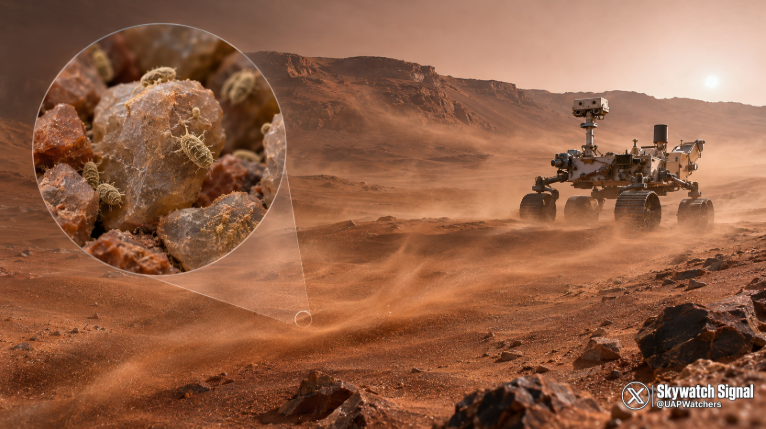
🚨SCIENTISTS DISCOVER THAT MARTIAN SAND COULD SPREAD BACTERIA BROUGHT FROM EARTH A new study published in Astrobiology has raised an interesting problem for ou [Quoted] 🚨SCIENTISTS FOUND NEW EVIDENCE THAT MARS COULD BE VOLCANICALLY ACTIVE, AND IT COULD CHANGE WHERE WE SEARCH FOR LIFE A new study published in Science Advances claims that Mars might not be as dead as we've been led to believe. Scientists analyzing data from the European Space Agency's ExoMars Trace Gas Orbiter have identified...
🚨SCIENTISTS FOUND NEW EVIDENCE THAT MARS COULD BE VOLCANICALLY ACTIVE, AND IT COULD CHANGE WHERE WE SEARCH FOR LIFE A new study published in Science Advances claims that Mars might not be as dead as we've been led to believe. Scientists analyzing data from the European Space Agency's ExoMars Trace Gas Orbiter have identified releases of hydrogen chloride gas around Alba Mons, one of the largest volcanoes in the solar system. The gas keeps appearing around the same volcanic fissures during th...


Saturn’s moon Enceladus sends signal flares into space that say, “Look here for life!” with every spray of its southern hemisphere geysers. The Cassini mission flew through and sampled the geyser spray in 2015, revealing that beneath Enceladus’s icy crust is a liquid water ocean with high concentrations of dissolved inorganic carbon (DIC), molecular hydrogen (H2), and methane (CH4). These properties make Enceladus a prime candidate for astrobiology missions. But Enceladus’s subsurface ocean i...

Saturn’s icy moon Enceladus may be doing something remarkably useful for scientists searching for extraterrestrial life. Its towering plumes could naturally sort and concentrate material from the hidden ocean below, making traces of biological material easier for future spacecraft to detect. A second experiment adds another reason for optimism. Researchers recreated important chemical conditions from Enceladus’s ocean and found that a methane-producing microorganism from Earth could continue...

This Color-Changing Material Could Give Robots a New Way to Detect Touch
Engineers at Queen Mary University of London have created a tactile sensor, described in a study published in Science Advances, that allows robots to detect touch using a simple camera.
