U.S. Senate Select Committee on Intelligence (SSCI)
OrgGovernment AgencyU.S. Senate Select Committee on Intelligence (SSCI)
OrgGovernment AgencyThe Senate Select Committee on Intelligence oversees U.S. intelligence activities, budgets, authorities, nominees, and compliance with law.
The Senate Select Committee on Intelligence oversees U.S. intelligence activities, budgets, authorities, nominees, and compliance with law.
 Christopher Mellon
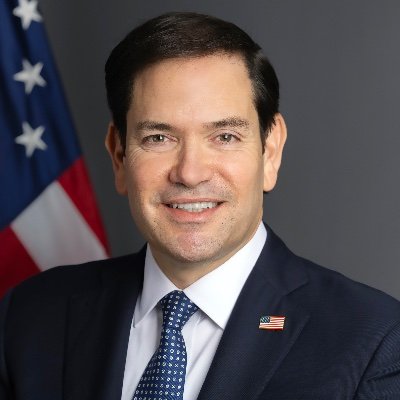 Marco Rubio
 Kirsten Gillibrand



The Senate Select Committee on Intelligence was created in 1976 to conduct continuing oversight of United States intelligence activities and programs. It reviews agencies, collection and analysis, covert action, budgets, legislation, and significant failures while seeking to ensure intelligence work complies with the Constitution and federal law. Its membership is structured to encourage bipartisan oversight.
SSCI holds frequent classified hearings, employs cleared professional staff, writes the annual intelligence authorization bill, investigates programs and events, and considers nominees for senior intelligence positions. The executive branch is generally required to keep it fully and currently informed. Public reports may state requirements or conclusions while protecting sources, methods, program details, and classified annexes. SSCI’s jurisdiction covers the ODNI, CIA, defense intelligence agencies, and intelligence activities elsewhere in government. Members also serve on related committees, helping coordinate national-security legislation. Classified annexes can direct spending or impose conditions invisible in public bill text, while unclassified reports provide the clearest public account of collectively adopted committee positions.
The committee has shaped recent congressional UAP oversight through authorization language, reporting requirements, whistleblower provisions, and proposals associated with the UAP Disclosure Act. Individual senators may discuss allegations or briefings publicly, but a member’s statement is not automatically a committee finding. Closed access also means silence cannot safely be interpreted as confirmation.
SSCI matters because claims involving intelligence compartments, contractors, and withheld records ultimately require competent legislative access. Its strongest tools are staff investigation, document demands, protected testimony, appropriations leverage, and statutory reporting. A rigorous record should distinguish adopted committee action from a proposal, member interview, or anonymous account and link claims to the actual legislative or oversight record.

"Whistling Mike" unmasked; PHOTO of alleged stealth craft material held by Senate intel committee


I’m Ben Schreckinger, a former POLITICO reporter who recently launched Paradigm.News to investigate UFOs I know “Whistling Mike” has been discussed here before. I've published his true identity along with some new details about his saga and his plans. Mike is Michael Spicer, a Wichita-area businessman. He says that more than 20 years ago he encountered a quiet, roughly triangular, fighter-jet-sized craft hovering low over public land in Kansas. He says he subsequently spent years trying to re...

2022 and 2023 were wild for me. Imagine, people you would trust with your life telling you these things. According to Caplan, members of Senate Intel were informed about the recovery of UAP craft. The implication is that Congress - or at least certain staffers and members -already knows this is real. [Quoted] Liberation Times previously reported in 2023 that Senate Intelligence Committee members had heard whistleblower testimony about hidden legacy UAP programs which, according to multiple so...

RT @ChrisUKSharp: Liberation Times previously reported in 2023 that Senate Intelligence Committee members had heard whistleblower testimony…
O’Neill’s account adds a striking new dimension to that reporting. During his interview with Gold, he said the congressional staffer told him that personnel exposed to classified information in SCIFs could suffer nightmares, and claimed that staffers with such access had been provided with psychological support to help them cope with what they had learned. [Quoted] Liberation Times previously reported in 2023 that Senate Intelligence Committee members had heard whistleblower testimony about h...
Liberation Times previously reported in 2023 that Senate Intelligence Committee members had heard whistleblower testimony about hidden legacy UAP programs which, according to multiple sources, had been verified to some extent. Sources also told Liberation Times in 2022 that classified UAP briefings and videos had “altered the lives of those involved.” [Quoted] NEW: Journalist Says Congressional Staffer Revealed “Recovered Crafts And Recovered Beings” https://t.co/o1zlC5Yao7

Here’s to my @_SolFoundation colleague and friend Kirk McConnell pursuing the truth! https://t.co/GuMR56Z0YJ [Quoted] Kirk McConnell: "I served for 37 years on the staff of the Senate Armed Services Committee, the Senate Intelligence Committee, and the House Intelligence Committee. I was among the staff, who collaboratively investigated the UAP issue on behalf of the senators from both parties and on both committee safter the seminal articles from the New York Times in 2017." "As extraordinar...

Kirk McConnell: "I served for 37 years on the staff of the Senate Armed Services Committee, the Senate Intelligence Committee, and the House Intelligence Committee. I was among the staff, who collaboratively investigated the UAP issue on behalf of the senators from both parties and on both committee safter the seminal articles from the New York Times in 2017." "As extraordinary as the claims sound about a crash retrieval and the recovery of non-human beings, behind the scenes, similar reports...

I'm a big fan of McConnell because he gives it to us straight, with no bs or hype. See my next retweet about firsthand sources. https://t.co/E1xKqDsg6b [Quoted] Mr. Kirk McConnell was on the staff of the Senate Armed Services Committee, and both Intelligence Committees in the House and Senate for 37 years. He was present with Senators from both parties in a SCIF during meetings w/highly credentialed 1st hand witnesses claiming both craft and bodies (we have in our possession) of nonhuman orig...

