Agreement on Measures to Reduce the Risk of Outbreak of Nuclear War (1971)
The September 30, 1971 U.S.–Soviet Accidents Measures Agreement establishes safeguards and rapid communication to reduce the risk of nuclear war. Its nine articles address unauthorized weapon use, unexplained nuclear incidents, missile-warning detections, advance launch notifications, the Direct Communications Link, consultations, and duration. The unidentified-object provision is conditional on a risk of nuclear war; it does not identify extraterrestrial craft.
Search extracted document text
Probed searches extracted/indexed text and can show matching pages when page indexing is available.
Document Intel
Source status, provenance, and extraction context.
- Source / agency
- United States and Soviet Union
- Type
- Document
- Classification
- Unclassified
- Reference #
- —
- Published
- 1971-09-30
- Content Type
- application/pdf
- Pages
- 3
Structured Analysis
Claims and source material extracted from the document text. Timeline context is surfaced in document intel.
Article I requires each party to maintain and improve safeguards against accidental or unauthorized nuclear-weapon use.
guard against the accidental or unauthorized use of nuclear weapons under its control.
Article II requires immediate notification of unexplained incidents involving a possible nuclear detonation that could create a risk of nuclear war.
notify each other immediately in the event of an accidental, unauthorized or any other unexplained incident involving a possible detonation of a nuclear weapon
Article II directs the party whose weapon is involved to try immediately to render it harmless or destroy it without damage.
render harmless or destroy such weapon without its causing damage.
Article III requires immediate notification of unidentified objects detected by missile-warning systems or interference with those systems or related communications when the circumstances could risk nuclear war.
missile warning systems of unidentified objects, or in the event of signs of interference with these systems or with related communications facilities, if such occurrences could create a risk of outbreak of nuclear war
Article IV requires advance notice of planned missile launches extending beyond national territory toward the other party.
notify the other Party in advance of any planned missile launches if such launches will extend beyond its national territory in the direction of the other Party.
Article V requires action that reduces misinterpretation during other unexplained nuclear incidents and permits information requests.
reduce the possibility of its actions being misinterpreted by the other Party.
Article VI gives the Direct Communications Link priority for urgent clarification, while allowing other channels according to urgency.
the Parties shall make primary use of the Direct Communications Link
Article VII provides mutually agreed consultations on implementation and possible amendments.
consider questions relating to implementation of the provisions of this Agreement, as well as to discuss possible amendments
Articles VIII and IX establish unlimited duration and entry into force upon signature in Washington on September 30, 1971.
This Agreement shall be of unlimited duration. Article 9 This Agreement shall enter into force upon signature.
Chronology extracted from the document text.
Accidents Measures Agreement signed
The United States and Soviet Union sign the agreement in Washington; it enters into force on signature. William P. Rogers and A. Gromyko are the listed signatories.
Referenced In Coverage
Investigative posts, source items, and other coverage that currently cite this document.
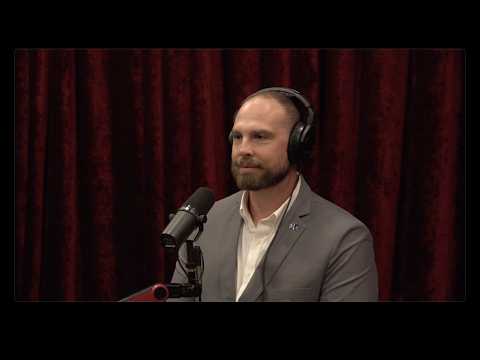

Probed ingest of: Joe Rogan Experience #2560 - David Grusch
The Joe Rogan Experience #2560 features David Grusch on his work with Eric Burlison, alleged threats and misconduct, footage he says showed humanlike recovered occupants, and colleagues’ accounts of other beings and underwater structures. The conversation also explores Trump-era disclosure, contractor liability, consciousness, historical UFO investigations, the 1971 U.S.–Soviet nuclear-risk agreement, and Beatriz Villarroel and Stephen Bruehl’s research on astronomical transients.