Stephenville Lights
The Stephenville Lights were January 2008 Texas sightings later tied to MUFON radar analysis, witness reports, and debate over restricted-airspace activity.
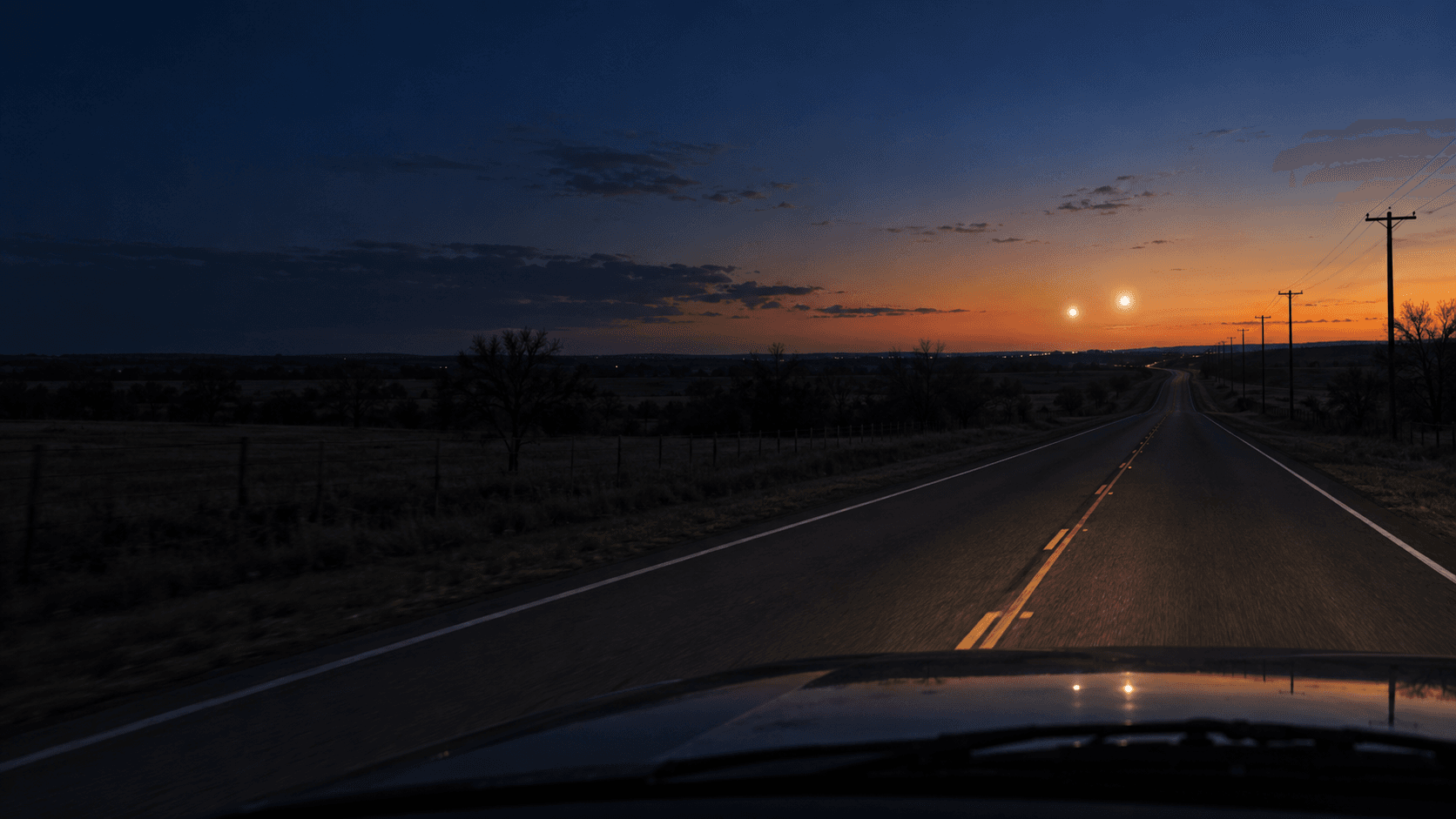
The Stephenville Lights were a cluster of January 2008 sightings in and around Stephenville and Dublin, Texas. Residents reported large, bright, often silent lights moving in ways they considered unusual. The event drew local and national attention because the witness pool included ordinary residents, business owners, and people familiar with aircraft in a region not far from military operating areas and restricted airspace.
The case became more than a lights-in-the-sky story after MUFON investigators Glen Schulze and Robert Powell obtained and analyzed FAA radar data through FOIA. Their report reviewed radar returns from multiple sites and compared them with witness testimony. The authors argued that some tracks were not readily attributable to known aircraft and that one or more anomalous tracks appeared near restricted airspace associated with then-President George W. Bush's Crawford ranch.
That radar claim is the case's strongest and most contested feature. Radar data can materially strengthen a sighting when it can be time-correlated to witnesses, aircraft logs, and sensor characteristics. It can also mislead when returns are ambiguous, when tracks are not continuous, or when analysts lack complete air-traffic context. The Stephenville report is therefore significant because it supplies more than anecdote, but it still depends on how the radar returns are interpreted.
The Air Force initially said no aircraft were operating in the area, then later acknowledged that F-16s from the 301st Fighter Wing had been training that evening. That reversal fed public suspicion, but it also illustrates the ordinary messiness of post-event accounting. Military aircraft can explain some sightings while leaving others disputed, especially when observers report size, silence, and speed from ground level at night.
The event is useful in comparison with the Cash-Landrum incident. Both are Texas cases where witness reports intersect with alleged military presence. Stephenville, however, has a more concrete technical paper trail through radar analysis, while Cash-Landrum turns on injury claims, helicopters, and a failed lawsuit. Neither case closes itself; each shows a different kind of evidentiary gap.
The January 8, 2008 timing is especially important because the strongest versions of the case try to correlate witness accounts with radar tracks and military activity on the same night. That is a higher bar than collecting anecdotes after publicity begins. It asks whether independent streams line up in time and space. The challenge is that radar returns, ground observations, and aircraft operations all have uncertainty, and small timing errors can make a persuasive-looking correlation much weaker.
Probed read: Stephenville is stronger than many mass-sighting cases because it has structured witness collection and a radar-analysis claim. It is weaker than proponents sometimes suggest because the public record still needs careful correlation between witnesses, tracks, known aircraft, and restricted-airspace context.
What would move the assessment: Original FAA radar files, all military training logs, ADS-B or flight-plan equivalents, witness timestamps, and an independent reanalysis of Schulze and Powell's conclusions would be decisive. A transparent official reconstruction would help separate aircraft activity from genuinely unexplained tracks.