VASCO
OrgVASCO
Org


[Retweeted] Steve Bruehl and I had lots of fun discussing the latest VASCO results with Gadi Schwartz on NBC News last night! We talked about: - The sizes, properties and possible altitudes of the transients. - What happens if we assume that the transients are caused by objects at geosynchronous distances and project their lines of sight back onto the Earth’s surface? Intriguingly, we find hotspots around White Sands, Sedona and Tampico, as well as several locations in the Pacific Ocean west...

[Retweeted] Steve Bruehl and I had lots of fun discussing the latest VASCO results with Gadi Schwartz on NBC News last night! We talked about: - The sizes, properties and possible altitudes of the transients. - What happens if we assume that the transients are caused by objects at geosynchronous distances and project their lines of sight back onto the Earth’s surface? Intriguingly, we find hotspots around White Sands, Sedona and Tampico, as well as several locations in the Pacific Ocean west...


Steve Bruehl and I had lots of fun discussing the latest VASCO results with Gadi Schwartz on NBC News last night! We talked about: - The sizes, properties and possible altitudes of the transients. - What happens if we assume that the transients are caused by objects at geosynchronous distances and project their lines of sight back onto the Earth’s surface? Intriguingly, we find hotspots around White Sands, Sedona and Tampico, as well as several locations in the Pacific Ocean west of Mexico an...


?is=D45TS2bFcT4hi7Cx Hey everyone! Over the last couple of weeks I’ve been catching up on the recent papers by Dr. Beatriz Villarroel, Dr. Stephen Bruehl, and the VASCO team on the pre-Sputnik optical transients on the historical Palomar Observatory Sky Survey (POSS-I) plates (1949-1958). I made a 30 minute documentary breaking down the optical physics, orbital mechanics and geospatial statistics from both papers (2609.05105 and 2609.09461) and wanted to share a qu...
Hey everyone! Over the last couple of weeks I’ve been catching up on the recent papers by Dr. Beatriz Villarroel, Dr. Stephen Bruehl, and the VASCO team on the pre-Sputnik optical transients on the historical Palomar Observatory Sky Survey (POSS-I) plates (1949-1958). I made a 30 minute documentary breaking down the optical physics, orbital mechanics and geospatial statistics from both papers (2609.05105 and 2609.09461) and wanted to share a quick summary of the core data points here for disc...


RT @DrBeaVillarroel: Dear everyone, Some new and very exciting news from the VASCO team! First, our machine-learning paper has been accepte…
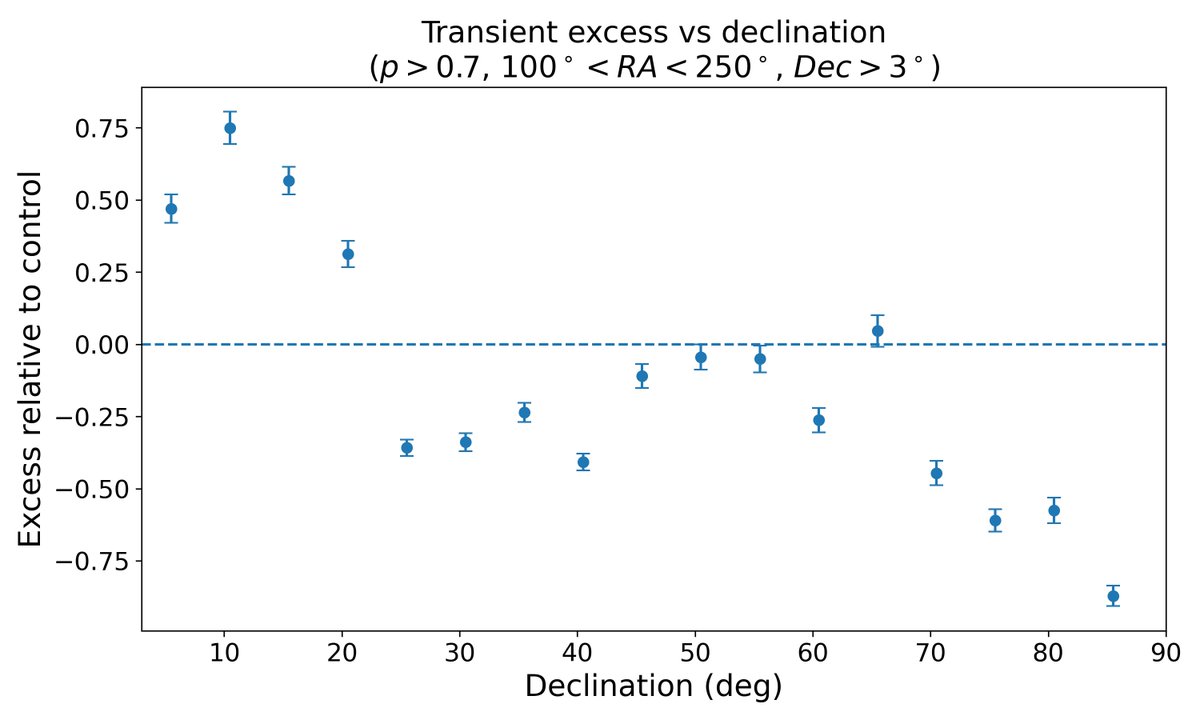

With the help of others, I started this subreddit years ago because I thought there was a serious scientific question buried beneath decades of stigma, ridicule and noise. I’d had an unusual observation myself, which led me to Peter Sturrock’s work, “pseudo-stars”, historical primary sources, and eventually the realisation that the subject had been taken far more seriously in some scientific and institutional circles than the public conversation suggested. This is the kind of work I hoped we...

RT @DrBeaVillarroel: Dear everyone, Some new and very exciting news from the VASCO team! First, our machine-learning paper has been accepte…

RT @DrBeaVillarroel: Dear everyone, Some new and very exciting news from the VASCO team! First, our machine-learning paper has been accepte…
Dear everyone, Some new and very exciting news from the VASCO team! First, our machine-learning paper has been accepted for publication following peer review and is now in press. In this paper, we used machine learning to address some of the criticism concerning plate defects and remove contaminants from the sample. We demonstrate that all the intriguing correlations become even stronger as the sample becomes cleaner. More on this once the final version is published. Second, we have two new p...