Beatriz Villarroel
PersonScientistBeatriz Villarroel
PersonScientistBeatriz Villarroel is an astronomer who leads searches for disappearing stars and brief historical transients in archival sky images, including observations near nuclear tests.
Beatriz Villarroel is an astronomer who leads searches for disappearing stars and brief historical transients in archival sky images, including observations near nuclear tests.
Beatriz Villarroel is a Swedish astronomer whose work uses archival and modern sky surveys to search for objects that appear, disappear, or change in ways that merit follow-up. She leads the Vanishing and Appearing Sources during a Century of Observations project, known as VASCO, which compares old photographic plates with contemporary digital catalogues to identify unusual astronomical transients.
Villarroel’s work developed into the Vanishing and Appearing Sources during a Century of Observations project, which compares modern surveys with older photographic plates. The program combines professional astronomy, archival preservation, image analysis, and citizen-science review. Its broader aim is to identify objects that appeared briefly or seem absent from later images, then test whether defects, moving objects, variable stars, or other ordinary mechanisms explain the discrepancy before more exotic interpretations are considered.
Villarroel and collaborators have studied short-lived, point-like sources recorded on plates made before the launch of Sputnik. Some papers examine whether clusters of these transients correlate in time with early nuclear tests or with reports of unidentified aerial phenomena. The observations are real features in archival imagery, but their causes remain under investigation; plate defects, reflections, conventional astronomical events, satellites, and other explanations must be separated before stronger conclusions can be drawn.
Her importance to the modern UAP record lies in converting a provocative historical question into a searchable dataset. Rather than relying only on testimony, VASCO looks for contemporaneous records that can be remeasured. Villarroel’s work intersects UAP, nuclear facilities and UAP, and technosignature research while remaining part of astronomy. Her public statements generally frame artificial or non-human explanations as hypotheses to test, not established findings.

Steve Bruehl and I had lots of fun discussing the latest VASCO results with Gadi Schwartz on NBC News last night! We talked about: - The sizes, properties and possible altitudes of the transients. - What happens if we assume that the transients are caused by objects at geosynchronous distances and project their lines of sight back onto the Earth’s surface? Intriguingly, we find hotspots around White Sands, Sedona and Tampico, as well as several locations in the Pacific Ocean west of Mexico an...

[Retweeted] 🚨🇺🇸 BREAKING: The White House has published NEW UFO files! 👽 Take a look at this footage that appears to show a drone swarm over Utah... Only problem: it happened in 1952!! The next clip shows mysterious orbs hovering over a sensitive "military installation" in Colorado... WTF! Idk about you guys, but I f***ing LOVE this stuff! 😂😂 Writer: Michael https://t.co/d5jHo39G5W

Today, I simply want to express my gratitude to the courageous whistleblowers who have taken enormous personal and professional risks and faced tremendous adversity by speaking openly about the UFO topic -- and who have helped shift public perception from stigma toward acceptance. Thanks to your courage, scientists in other countries can now investigate this subject openly and expand our understanding of a reality far more extraordinary than we could ever have imagined. My heartfelt thanks to...
Dear everyone, Some new and very exciting news from the VASCO team! First, our machine-learning paper has been accepted for publication following peer review and is now in press. In this paper, we used machine learning to address some of the criticism concerning plate defects and remove contaminants from the sample. We demonstrate that all the intriguing correlations become even stronger as the sample becomes cleaner. More on this once the final version is published. Second, we have two new p...
RT @dennis_asberg: This article was published by Expressen, one of Sweden’s largest newspapers, and includes an interview with Beatriz Vill…

RT @TheDefiantGhost: A CERN physicist just revealed: there were “satellites” in orbit before humans launched anything. 1950s Palomar plate…

Super honored to hear Jesse Michels discuss the VASCO team’s research on Joe Rogan. https://t.co/UIJYpqH80Z @AmericanALCHMY

RT @BrianRoemmele: HOW GROUNDBREAKING SCIENCE IS SUPPRESSED Science advances when claims are tested. It stalls when people are declared un…

RT @DrBeaVillarroel: @AdamFrank4 They have gone a little bit further that, Professor Frank. And so have you...
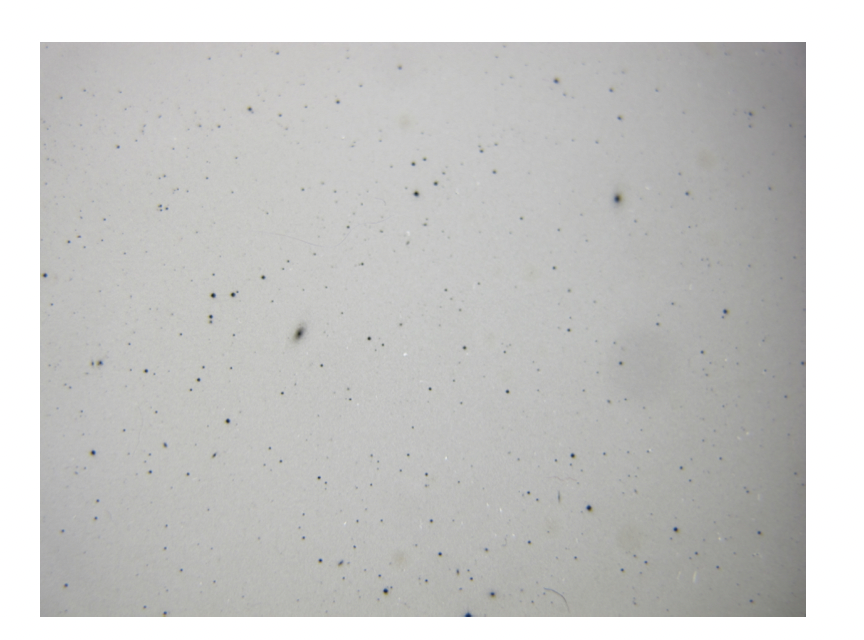
Jun Yang at Harvard University and I have submitted a paper. We examine the original photographic plate material for two famous multiple-transient events from the Palomar Sky Survey: the nine transients of April 12, 1950, and the triple transient of July 19, 1952. The candidates are present on the photographic material and appear sharp and compact. They look just as they do in the digitized images -- star-like, yet a little sharper and rounder than the other stars in the field, just as one wo...