Dr. Julia Mossbridge
PersonDr. Julia Mossbridge
PersonJulia Mossbridge is a cognitive neuroscientist and consciousness researcher known for studies of presentiment, time perception, and the psychology of anomalous experience.
Julia Mossbridge is a cognitive neuroscientist and consciousness researcher known for studies of presentiment, time perception, and the psychology of anomalous experience.
Julia Mossbridge is an American cognitive neuroscientist, author, and educator whose work examines attention, time perception, physiological anticipation, and experiences often placed at the boundary of mainstream psychology. She earned a doctorate in communication sciences and disorders and has held research or teaching affiliations with institutions including Northwestern University and the Institute of Noetic Sciences.
Mossbridge’s career has moved between conventional cognitive science and questions many academic departments avoid. She has worked with physiological data, attention, perception, and the subjective experience of time while also writing for general audiences and developing educational programs. That combination makes her less a laboratory specialist confined to one effect than a builder of bridges among research, personal practice, and communities seeking a scientific vocabulary for experiences they consider meaningful.
Mossbridge is particularly associated with meta-analyses and experiments on “presentiment,” the claim that physiological measures may change before an unpredictable emotional stimulus. The interpretation of that literature remains contested, with debate over methodology, publication bias, and mechanism. She also develops practical programs around wellbeing and explores how people make sense of intuition, synchronicity, and transformative experiences.
Books, courses, and public collaborations extended Mossbridge’s work beyond journal articles. She has presented anomalous cognition as a subject that can be studied while also becoming part of personal wellbeing practice, a blend that has made her visible to both experimental researchers and audiences approaching consciousness through lived experience.
Mossbridge contributes a research vocabulary to consciousness and psi, a domain that frequently overlaps with contact testimony. She is not a primary military-UAP witness and her consciousness work does not establish an extraterrestrial explanation. Her relevance is in asking whether anomalous human experiences can be studied with experiments and physiological data, while keeping the reported experience, the measured effect, and the proposed cause analytically separate.

Yesterday @The_Astral_ and @disclosureteamx suggested I give a listen to the Dr. Julia Mossbridge interview with @chrisramsay52. My God. I'm listening to this while mowing the lawn, and ideas I've been having randomly popping into my head are one by one being spoken about here. It is incredibly comforting to know that I am not the only person thinking the way that I do. Maybe these aren't weird ideas at all, maybe I'm picking up on the same exact things. Unbelievable conversation. Link in the...


GATE, NHI, PSI with Dr Julia Mossbridge. Out now! https://t.co/olEunOPCMr
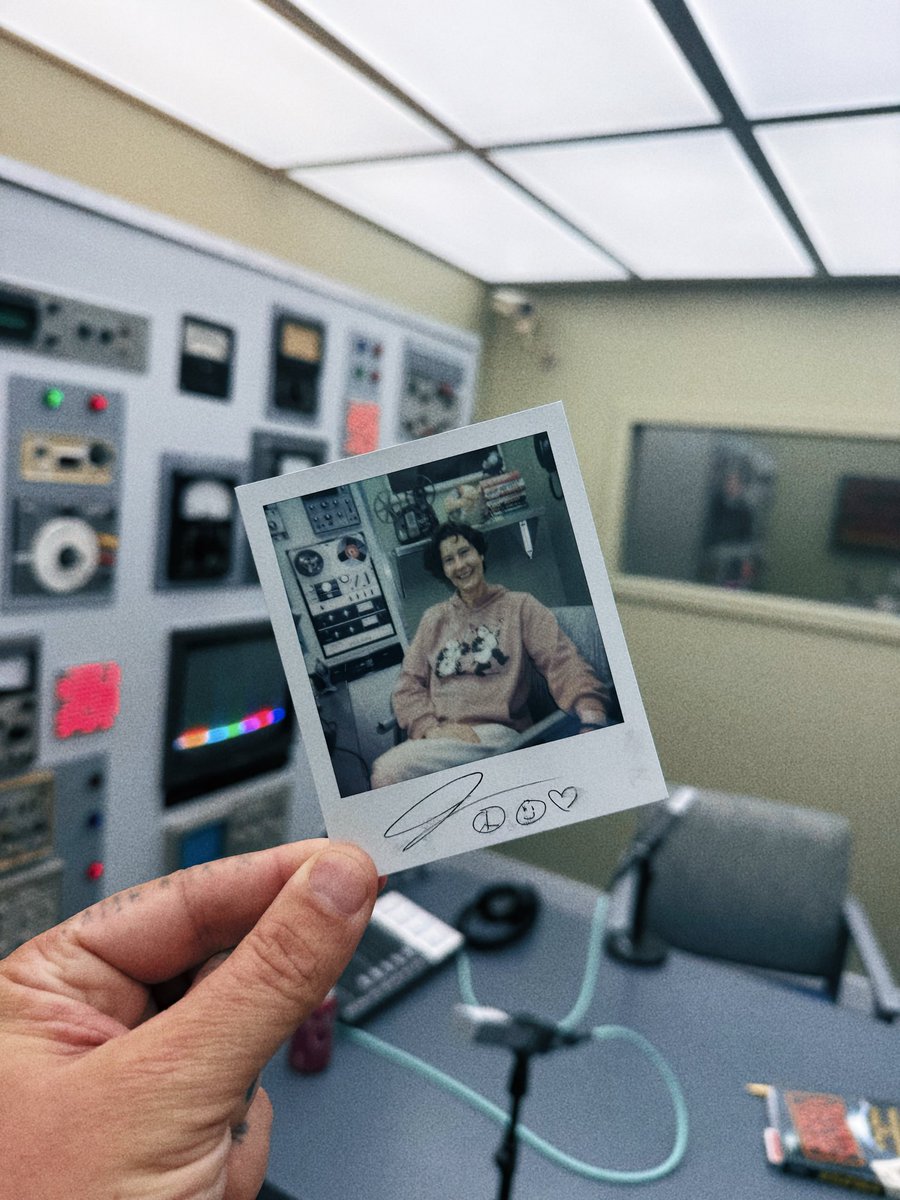
Live Now!! https://t.co/YzxCt3j8rO [Quoted] Tomorrow at 12pm et, Cognitive Neuroscientist and consciousness explorer, Dr Julia Mossbridge joins me in the SCIF. (Today for members) https://t.co/GYZ4m3Xv0z

Neuroscientist Breaks Silence on GATE Program and NHI - Dr. Julia Mossbridge | ep. 99

Would love to see a paper from Dr. M. that shows that the autistic kids from The Telepathy Tapes can demonstrate psi abilities under controlled conditions. Right now, there are other explanations other than telepathy, as discussed by @DrHennacy41125. https://t.co/MFsdHswbsx [Quoted] Tomorrow at 12pm et, Cognitive Neuroscientist and consciousness explorer, Dr Julia Mossbridge joins me in the SCIF. (Today for members) https://t.co/GYZ4m3Xv0z
Tomorrow at 12pm et, Cognitive Neuroscientist and consciousness explorer, Dr Julia Mossbridge joins me in the SCIF. (Today for members) https://t.co/GYZ4m3Xv0z
Probed ingest of: The Deep Ocean UFO That Caused the US Navy to Panic | Bob McGwier


Dr Julia Mossbridge, PhD: "Radiation gave me my psychic powers." The neuroscientist and remote viewer explains how her mother's uranium exposure may have given her psychic abilities. One of the effects of radiation might be extended capacities like psychic abilities. She discusses her experiences in government psychic programs including remote viewing and STARGATE.


RT @juliandorey: Remote Viewers Origin Story is TERRIFYING... I Julia Mossbridge There were programs studying human perception… Some tied…