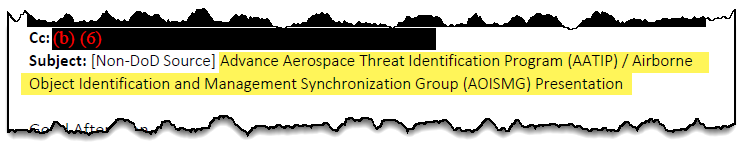
AATIP Program
TopicAATIP Program
TopicPentagon UAP investigation program (2007-2012) and its findings
Pentagon UAP investigation program (2007-2012) and its findings

The Advanced Aerospace Threat Identification Program (AATIP) was a U.S. government initiative, established in 2007 under the Defense Intelligence Agency (DIA), tasked with researching potential advanced aerospace threats—technologies that might be foreign in origin and not currently understood by U.S. defense systems. Its funding over its five-year span (2007-2012) totaled approximately $22 million, deployed mainly through a contract awarded to Bigelow Aerospace Advanced Space Studies (BAASS). The program gained public notoriety in 2017, after a media expose confirmed its existence and budgetary figures.
Congressman Harry Reid, with Senators Ted Stevens and Daniel Inouye, is credited with securing AATIP’s funding, under the label of the Advanced Aerospace Weapons System Applications Program (AAWSAP) in some accounts; these two names—AAWSAP and AATIP—are often used interchangeably in both official documents and public reporting. The contract charged with delivering “Defense Intelligence Reference Documents” covered a broad scope of futuristic scientific areas: advanced propulsion, unconventional materials, signature reduction, invisibility cloaking, and energy extraction from quantum vacuum, among others. A total of 38 technical reports were reportedly produced under the contract.
On-record facts include:
- AATIP ceased receiving appropriated funding in 2012, which the DoD cites as the endpoint of the formal program.
- The program was not officially public until its revelations in December 2017.
Claims attributed to program backers, especially Luis Elizondo (often identified as its director from around 2010), suggest that although formal funding ended, investigative work related to unidentified aerial phenomena (UAP) continued covertly through 2017, with some Navy and CIA involvement. This claim remains contested. The DoD has stated the examination of UAP “observations” was not the program’s primary purpose, though some reports and observers assert that UAP incidents were reviewed under AATIP’s umbrella.
Several open questions persist:
- Whether AATIP found any conclusive evidence of non-human origin technology or phenomena.
- The extent to which its investigative methods were scientific, peer-reviewed, or subject to oversight.
- How the program transitioned into its successors—UAP Task Force, then All-domain Anomaly Resolution Office (AARO)—in terms of mission continuity and institutional knowledge.
AATIP remains a crucial node in the U.S. government’s evolving UAP posture: formally ended as a funding line, but influential in setting the stage for later, more transparent investigations.
Been a bit since I wrote about an AATIP-related released document. Some of you may find this interesting... Finishing up now... dropping shortly. https://t.co/wkxfXk5Que