Project Grudge
TopicProgramProject Grudge
TopicProgramProject Grudge was the US Air Force's UFO investigation from 1949 to 1951, between Project Sign and Project Blue Book, whose 1949 report explained most sightings away and urged a smaller effort.
Project Grudge was the US Air Force's UFO investigation from 1949 to 1951, between Project Sign and Project Blue Book, whose 1949 report explained most sightings away and urged a smaller effort.



Project Grudge was the U.S. Air Force's official UFO investigation between Project Sign and Project Blue Book. An order of February 11, 1949 renamed Sign as Grudge because, Edward J. Ruppelt later wrote, the old name had been compromised, and the work stayed with Air Force intelligence at Wright-Patterson Air Force Base in Ohio. The project was announced as closed at the end of 1949, continued at a low level, and was revived in late 1951 before becoming Blue Book in March 1952.
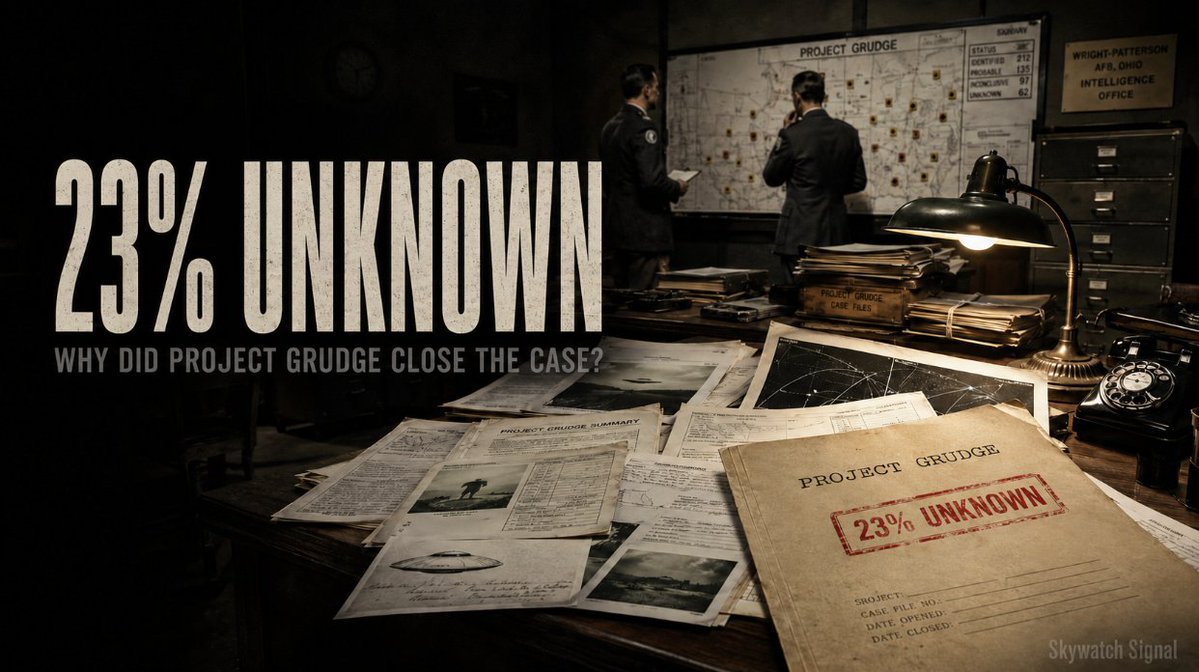
According to Ruppelt, the new name came with new personnel and a new objective, to "get rid of the UFO's." Grudge's only formal report, Technical Report No. 102-AC 49/15-100 of August 1949, studied 244 sighting reports, according to the Condon report's history. It found "no evidence" that the objects were "an advanced scientific foreign development" and so no direct threat to national security, and it attributed reports to misidentified conventional objects, "a mild form of mass-hysteria and war nerves," hoaxes and psychopathological persons. A residue of 23 percent remained unknown. The report recommended that the investigation be "reduced in scope," that agencies interested in psychological warfare be told of its results, and that its main conclusions be made public; a press release of December 27, 1949 announced the project's closure.
Ruppelt, who took over the revived project, likened the Grudge years to "the Dark Ages," and the Condon report noted that the Air Force was aware public concern "could be used in psychological warfare." After radar operators at Fort Monmouth, New Jersey, tracked a fast target in September 1951, Ruppelt wrote, the director of intelligence, Major General Charles Cabell, demanded to know who had been telling him that "every decent flying saucer sighting is being investigated." Cabell ordered Grudge reactivated as an expanded project under Ruppelt, and it took the name Blue Book in March 1952.
Grudge returned to view in 2026. The Department of War's June 12 release included a 1971 Australian assessment by scientist Harry Turner that retraced Sign, Grudge and Blue Book and argued that American investigators combined public discouragement with serious intelligence interest. Researcher Richard Dolan said that by early 1949 the Air Force had folded the green fireball reports from New Mexico into Grudge's work, and an August thread by Skywatch Signal revisited its 23 percent of unknowns. Grudge remains the clearest record of the Air Force's early decision to explain the reports away, and its unexplained residue and psychological-warfare recommendation are its most quoted legacy.

Part 32 of a series reassessing the documentary record behind the 1933 Magenta narrative. TL;DR Birds probably explain much of what the Texas Tech professors saw. William Ducker identified birds when the lights returned in 1952. How much of the 1951 series that explains is unclear. Hart’s four negatives show a repeating pattern of lights. Some lights shifted between frames. The Air Force lab couldn’t place them in the sky. An Albuquerque couple described a flying wing before Hart took his pic...

Part 33 of a series reassessing the documentary record behind the 1933 Magenta narrative. TL;DR Fort Monmouth produced a cluster of reports, not a demonstrated radar-and-visual track of one craft. On 10–11 September 1951, Army radar personnel reported unusual targets, while two Air Force officers in a T-33 reported a silver object over coastal New Jersey. The nearby Twin Lights radar was off the air; its monitor corroborated the crew’s radio conversation, not the object. The contemporary anal...
Part 21 of a series reassessing the documentary record behind the 1933 Magenta narrative. TL;DR Project Sign seriously considered interplanetary explanations, but its surviving reports remained inconclusive and described missing physical evidence. Edward Ruppelt and Dewey Fournet later said they had read an interplanetary “Estimate of the Situation.” No identified copy is available. Its contents, rejection and destruction rest on later accounts and remain unverified. A surviving Top Secret st...
Part 21 of a series reassessing the documentary record behind the 1933 Magenta narrative. TL;DR Sign investigated UFO reports and considered interplanetary explanations; McCoy’s March 1948 briefing wished for a recoverable crash. Sneider’s Chiles–Whitted analysis left the object unidentified; its aircraft calculations described possibilities. Ruppelt and Fournet claimed to have read an interplanetary “Estimate of the Situation.” No identified copy has been located; a 2025 transfer list’s “Est...

[Retweeted] NASIC - Air Force UFO Crash Retrieval & Reverse Engineering https://t.co/C5wo9J7kbS An exploration of the National Air and Space Intelligence Center (NASIC), the Air Force's primary intelligence center for scientific and technical analysis (S&TI) of foreign air, space, and missile threats, and vanguard of the National Foreign Materiel Program (FMP). NASIC's inception can be traced back all the way to World War One with the "Foreign Data Section", an intelligence operation at McCoo...
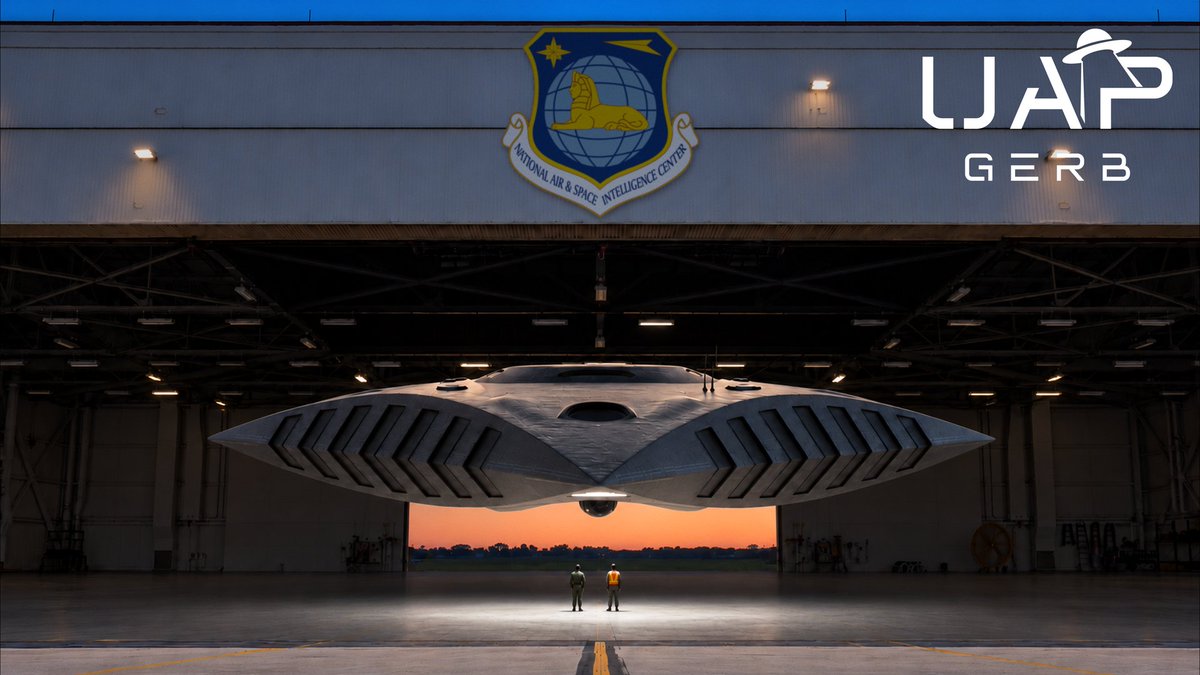

[Retweeted] NASIC - Air Force UFO Crash Retrieval & Reverse Engineering https://t.co/C5wo9J7kbS An exploration of the National Air and Space Intelligence Center (NASIC), the Air Force's primary intelligence center for scientific and technical analysis (S&TI) of foreign air, space, and missile threats, and vanguard of the National Foreign Materiel Program (FMP). NASIC's inception can be traced back all the way to World War One with the "Foreign Data Section", an intelligence operation at McCoo...

[Retweeted] NASIC - Air Force UFO Crash Retrieval & Reverse Engineering https://t.co/C5wo9J7kbS An exploration of the National Air and Space Intelligence Center (NASIC), the Air Force's primary intelligence center for scientific and technical analysis (S&TI) of foreign air, space, and missile threats, and vanguard of the National Foreign Materiel Program (FMP). NASIC's inception can be traced back all the way to World War One with the "Foreign Data Section", an intelligence operation at McCoo...

I have been recently conducting research into the origins of the modern UFO subject. A large part of that has been reading through these various lengthy historical declassified reports. Among them is a very interesting one, Project Twinkle. As I read the documents I write down quotes that I find interesting or significant. For my citations I use APA format and directly link to every source document cited. Some of the reports are hundreds of pages long. Project Twinkle is relatively manageable...
UFOs Government Knew UFOs Were Real

🧵23% UNKNOWN: WHY DID THE AIR FORCE CLOSE THE CASE? (1/13) In 1949, Project Grudge analyzed hundreds of UFO reports. After the astronomical explanations, balloons, hoaxes and insufficient cases were all removed, 23% of the selected reports remained unidentified. The Air Force responded by reducing the investigation and discussing the subject's value to psychological warfare.