This official transcript preserves a March 1952 presentation attributed to Captain Edward J. Ruppelt on the Air Force handling of unidentified-object reports. It records proposed data-collection methods, reported cases and alternatives, and repeated cautions that the available evidence did not establish the nature or origin of the reported phenomena.
Lincoln LaPaz
PersonScientistLincoln LaPaz
PersonScientistLincoln LaPaz was a University of New Mexico meteorite scientist who investigated the green fireballs over New Mexico for the Air Force in 1948 and 1949.
Lincoln LaPaz was a University of New Mexico meteorite scientist who investigated the green fireballs over New Mexico for the Air Force in 1948 and 1949.
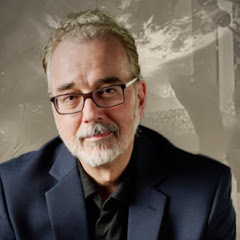
Lincoln LaPaz was an American mathematician and astronomer who founded the Institute of Meteoritics at the University of New Mexico and became one of the country's leading authorities on meteorites. In UFO history he is the scientist Air Force investigators turned to when bright green lights began crossing the skies over New Mexico's atomic installations in late 1948, and he never accepted that they were ordinary meteors.
Born in Wichita, Kansas, in 1897, LaPaz earned a mathematics degree from Fairmount College in 1920, a master's degree from Harvard in 1922 and a doctorate from the University of Chicago in 1928. He taught at Dartmouth and then at Ohio State University, where he rose to full professor in 1942. During World War II he worked as a research mathematician and then as technical director of an operations analysis section of the Second Air Force, and he studied the Japanese balloon bombs that reached the United States. That wartime work on ballistics drew him to meteorites. In 1945 he moved to Albuquerque, founded the Institute of Meteoritics, which he directed until 1966, and headed the university's department of mathematics and astronomy.
When the green fireballs appeared in December 1948, intelligence officers at Kirtland Air Force Base asked for his help. Edward Ruppelt, who later headed Project Blue Book, called LaPaz a "world-famous authority on meteorites" and wrote that after he plotted one fireball's path and searched its predicted impact area without finding anything, it was the first time LaPaz seriously doubted the objects were meteorites. LaPaz saw one himself on December 12, 1948, and argued from then on that their paths were too flat, their color too green and the absence of fragments too complete for a natural fall.
He was the principal speaker at the 1949 Los Alamos Conference on Aerial Phenomena, where the physicist Edward Teller questioned him closely and the meeting ended without an identification. Ruppelt later wrote that the conference judged the fireballs a natural phenomenon, but LaPaz held to the view that they were artificial; at various times he suggested secret military devices, foreign or American. The conference transcript released in 2026 lists those present, and neither Joseph Kaplan nor a Project Sign representative appears on it, although later retellings often place them there.
LaPaz passed away in 1985. His role returned to view in 2026, when the Pentagon's PURSUE releases published Sandia Base correspondence on the fireball reports in May and the Los Alamos transcript in July, and posts circulating the attendee list named him beside Teller and the laboratory director Norris Bradbury. Online researchers proposing new tests of the fireballs against archived White Sands ionosphere records cited his rejection of the meteor explanation. As the meteorite specialist who insisted that the green fireballs did not behave like meteorites, he gave the episode a scientific standing that few early UFO cases had.
Part 23 of a series reassessing the documentary record behind the 1933 Magenta narrative. TL;DR: The FBI’s 31 January 1949 memo was marked Confidential but reported that Army and Air Force intelligence officers considered the subject “top secret.” San Antonio said it was not investigating; G-2 and OSI were. The reports prompted conferences, searches and Project Twinkle’s camera program. Russian weapons were a hypothesis, not an identification. Copper particles were collected, including in sam...
Probed ingest of: I Confront The Secretary of Energy On UFOs
The "Green Fireballs" over Los Alamos, Sandia, and White Sands Proving Ground may still offer a compelling research opportunity. For background, see https://www.nicap.org/nmexico/newmexicosightings.htm and https://www.war.gov/medialink/ufo/052226/release_02/documents/DOW-UAP-D017_General_Correspondence_Of_Sandia.pdf Dr. Lincoln LaPaz considered the fireballs deeply and thought they might be artificial energy projections due to their horizontal vectors, silent travel, and zero physical remnant...
DOW-UAP-PR160, Presentation by Captain Edward J. Ruppelt, 1952
This audio file records a March 1952 presentation by Captain Edward J. Ruppelt, outlining the U.S. Air Force’s reorganized investigation into unidentified flying objects (UFOs). The presentation previews prospective technical methodologies, such as diffraction-grating photography and radar-scope synchronization, that were subsequently incorporated into Project Blue Book, a U.S. Air Force program active from 1952 to 1969 that investigated the nature and origin of UFOs. Ruppelt explains that out of approximately 800 historical cases reviewed by the Air Force, approximately 20% remained unexplained after technical analysis. These unresolved reports were sourced from credible military personnel, commercial pilots, and other qualified technical observers. He highlights geographic report concentrations around sensitive national security and nuclear weapons installations (including Los Alamos, Albuquerque, and Oak Ridge National Laboratories) and notes recurring anomalous characteristics, including silent high-speed flight and radar detections indicating unconfirmed air speeds between 1,000 and 3,500 miles per hour. Emphasizing that the Air Force found no conclusive evidence regarding the nature or origin of the phenomena, Ruppelt underscores the national security need for a systematic physical data collection effort to better evaluate these sightings.
Edward Teller worked through the physics and hit a wall. Too bright to be as small as the silence required. Too quiet to be as large as the brightness implied. A flat contradiction he could not resolve. Then La Paz just said: this does not behave like any meteorite. That was 1949.
🚨 JUST RELEASED The full transcript of the TOP SECRET 1949 Los Alamos Conference on Aerial Phenomena discussing GREEN FIREBALLS 👽🛸 Edward Teller. Norris Bradbury. Lincoln LaPaz. FBI + military brass all gathered at the heart of the atomic bomb project. Discussing eerie **Green Fireballs** with flat trajectories, no sound, no debris swarming over Los Alamos & Sandia nuclear sites. LaPaz: Not meteors. They were genuinely concerned for national security. 77 years later and still unexplained....

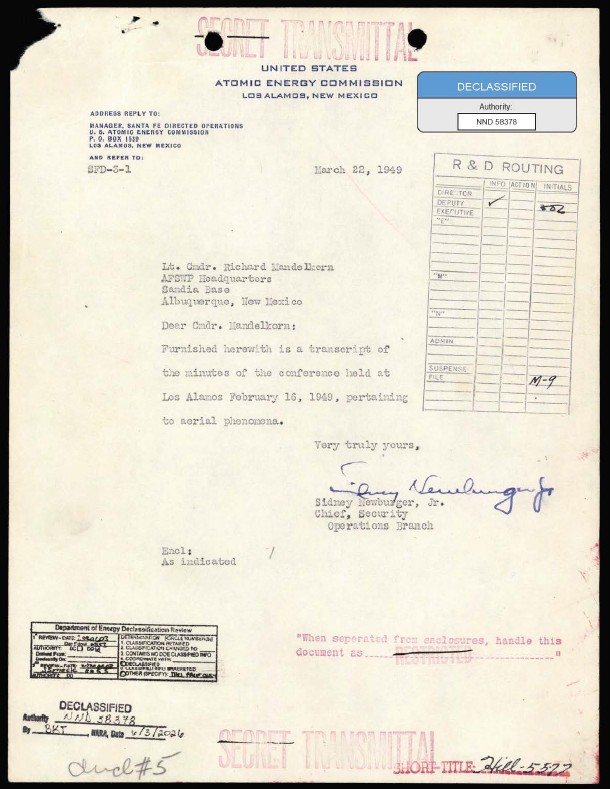
A 1949 Los Alamos conference transcript records scientists and federal officials comparing green-fireball reports, conventional precedents, and competing meteor, material-body, and electrical explanations without reaching an identification. The transcript is valuable primary evidence for how early atomic-era scientists evaluated unusual aerial observations: as an unresolved technical problem requiring better photography and measurements, not as proof of an extraordinary origin.