HMNZS Southland USO Incident
HMNZS Southland is best understood less as a single “thing” than as a recurring locus of naval activity that can be mistaken for an event when records are incomplete, secondhand, or stripped of context. On the record, “HMNZS” designates a commissioned unit of the Royal New Zealand Navy, which typically points to a ship or a shore establishment rather than a one-off occurrence. The term “Southland” itself can function as a ship’s name, a regional marker, or a shorthand used in communications that assume shared operational awareness. In an intelligence-focused UAP/disclosure setting, the significance is mostly procedural: maritime platforms generate large volumes of sensor data, watchkeeping logs, and incident reporting, but those artifacts are rarely public by default and are often summarized in ways that erase the distinctions investigators rely on.
With no signals attached here, the risk is overfitting—treating a label as evidence of an anomalous event rather than as a pointer to a platform, a posting, or a routine operational trace.
A key constraint is definitional. Verified, on-record facts about any “HMNZS [Name]” entity depend on whether the reference is to a commissioned vessel, a decommissioned platform, a shore facility, or an informal label used in a message. Without corroborating signals—dates, locations, participating units, or quoted source material—this entity remains a name string that could be miscategorized as “event” when it may be an asset or institution.
This matters because maritime “events” often enter public discourse in compressed form: a sighting, a near-miss, a radar track, an unusual light reported by a watch officer. The underlying documentation, if it exists, typically lives across multiple systems: navigation records, radar plots, bridge logs, aviation coordination messages, and incident reports. When a name like “HMNZS Southland” is all that survives into an open-source retelling, it is easy to mistake the platform identifier for the event itself.
The first analytic fork is whether “HMNZS Southland” is being used to denote a ship or a shore establishment. If it is a ship, the likely paper trail is operational: sailing schedules, tasking orders, port calls, and maintenance periods, each of which constrains when and where any claimed incident could have occurred. If it is a shore establishment, the relevant trail shifts toward administrative records, training activity, base security reporting, and hosted exercises—still potentially relevant to unusual reports, but with different sensor and witness characteristics.
In the absence of signals, nothing can be responsibly asserted about UAP involvement, anomalous encounters, or unusual sensor tracks tied to this entity. Any claim that “HMNZS Southland” was involved in a specific incident would be, at best, an attributed report requiring verification; at worst, it would be an invented linkage. That discipline is especially important in maritime contexts, where “mystery” narratives frequently conflate multiple platforms over months or years.
What can be said, conservatively, is how such an entity would intersect with UAP-style allegations if credible reporting emerged. Naval units typically have structured watch routines and hierarchical reporting, which can produce consistent contemporaneous notes but also strong incentives to normalize ambiguity (“unknown contact,” “unidentified light,” “uncorrelated radar return”) rather than elevate it. A vessel underway also has a dense sensor stack—navigation radar, surface search radar, AIS receivers, EO/IR where fitted, radio direction finding, and visual lookouts—which makes multi-source correlation possible in principle, even if not preserved in a form that survives later scrutiny.
If the entity is instead a base or administrative command, the pattern changes. Many “events” in that environment are secondhand: a pilot’s report relayed through a duty officer, a civilian call to base security, or an after-action note from an exercise. The data is often thinner—fewer raw sensor artifacts, more narrative summaries—and the chain of custody for any imagery or recordings becomes harder to establish.
From an investigative perspective, the most useful approach is not to speculate about what happened, but to specify what would need to be true for “HMNZS Southland” to be a meaningful event node rather than a mislabel. Minimal identifiers that would convert this from a name into a traceable incident would include:
- A date or date range narrow enough to check watch logs and movement records
- A location (coordinates, named operating area, or nearest coastline/port)
- The role of the entity (witness platform, reporting authority, responding unit, or merely referenced in passing)
- The originating source type (official report, media account, personal testimony, or leaked document)
- Any sensor modality claimed (visual only, radar, EO/IR, AIS anomaly, radio interference)
Without those, “HMNZS Southland” is best treated as an indexing term whose reliability is unknown. It could be accurate but incomplete, or it could be a transcription artifact (for example, a confusion between “Southland” as a regional term and a ship name). It could also be a proxy label used by an author who did not have access to the actual unit designation and substituted what sounded plausible.
A disciplined posture also recognizes the asymmetry of availability. Navy records, where they exist, are not typically designed for later public reconstruction of anomalous claims; they are designed for safe navigation, operational accountability, and command awareness. Even if a genuine “unidentified” entry existed, it might be logged in a mundane way, then filed under routine operational documentation that is never digitized for public discovery.
For a disclosure-oriented platform, the practical value of this profile is as a guardrail against narrative drift. Until a concrete signal appears—an on-record mention, a document excerpt, a witness statement with time/place anchors—this entity should remain in a holding category: a potentially mis-typed event label that could later resolve into (a) a specific naval platform, (b) a shore establishment, or (c) a true event reference with enough metadata to verify. Any stronger framing would be speculative and, given the current inputs, not defensible.

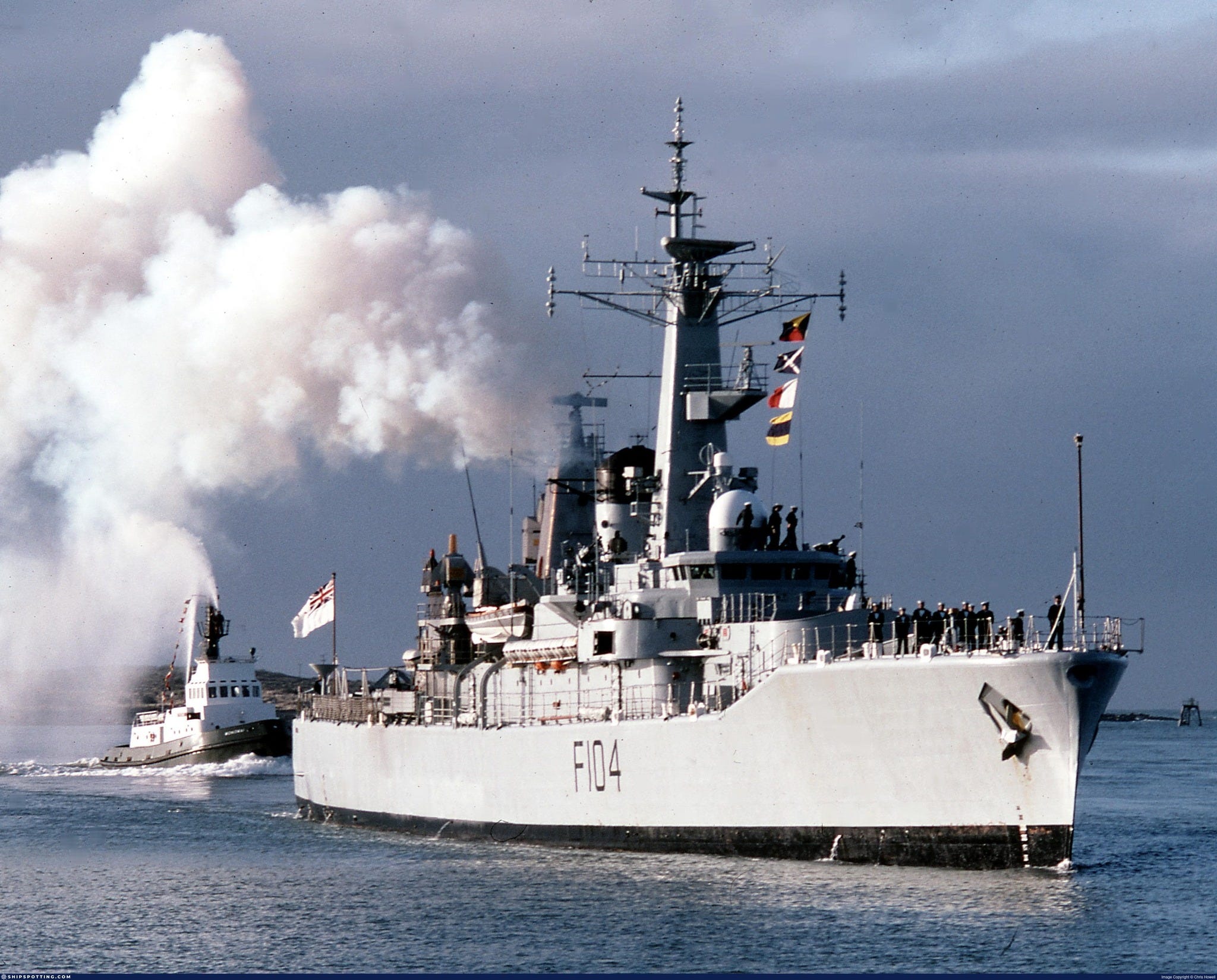
The HMNZS Southland "800 Foot" USO Incident
Exploring the case brought up by Kevin Knuth