Starfish Prime
Starfish Prime was a high-altitude nuclear test conducted by the United States on July 9, 1962, which inadvertently contributed to increased interest in UAPs due to the unexpected electromagnetic effects and auroral phenomena it produced, sparking
Starfish Prime was a U.S. high-altitude thermonuclear test detonated on July 9, 1962, approximately 400 kilometers above Johnston Atoll in the Pacific Ocean. Yielding about 1.4 megatons, it was part of Operation Fishbowl within Operation Dominic. The test produced electromagnetic, optical, and radiation effects far beyond what technicians and scientists had anticipated. These included a large electromagnetic pulse (EMP) that disrupted electrical systems in Hawaii nearly 1,450 kilometers away, vivid auroral displays seen across broad swaths of the Pacific, and the creation of artificial radiation belts that damaged several satellites.
These tangible, measured outcomes make Starfish Prime a benchmark in understanding exoatmospheric nuclear effects.
Starfish Prime’s unexpected scope in visual and electromagnetic phenomena has since been repeatedly referenced in literature and commentary connected to unidentified aerial phenomena (UAP). Although no verified UAP signals have been linked directly to Starfish Prime, its effects—particularly the ionization of the upper atmosphere and dramatic auroral displays—are occasionally cited to explain anomalous sky-glows or sensor anomalies. These references are typically speculative or anecdotal, lacking rigorous verification.
The technical profile of the event is well documented: the warhead was a W-49 thermonuclear device launched by a Thor rocket. The explosion’s altitude (≈400 km), timing (at 09:00:09 UTC), and geographic coordinates are known. Its EMP effects knocked out approximately 300 streetlights in Hawaii, set off burglar alarms, and disrupted a microwave telephone link. The artificial radiation belts induced by the test persisted long enough to damage early satellites, including British-U.S.
Ariel 1 and Telstar I, introducing significant real risks to space infrastructure. In the years since, researchers have analyzed data from Starfish Prime to model interactions between artificial high-energy electrons and Earth’s magnetosphere. Studies showed that the explosion injected roughly 10^29 energetic electrons, which temporarily altered the Van Allen radiation belts. The rates of ionospheric disturbance and electron density in various atmospheric layers were measured, particularly via photometric observations in New Zealand and electrical instrumentation around Johnston Atoll and Hawaii.
The connection to UAP interest arises from two overlapping factors: dramatic visual phenomena that in some accounts could resemble unexplained luminescent aerial events; and sensor effects (optical, radio, ionospheric) that might be misinterpreted or poorly understood. However, despite speculative commentary, there is no credible documentation that Starfish Prime triggered or was directly associated with UAP encounters or investigations.
Key open questions include:
- To what extent did Starfish Prime’s optical and auroral phenomena contribute to public or official misattribution of unknown lights or aerial anomalies?
- How resilient were observational sensors of the era (ground-based and airborne) to the EMP and ionospheric effects induced, and do gaps in their performance explain reports of “unidentified” signatures?
- Could modern UAP protocols benefit from declassified datasets detailing the test’s atmospheric and electromagnetic signatures, to distinguish between exotic technology and known physical disturbances?
The legacy of Starfish Prime is anchored in its empirical shock to scientific assumptions: the magnitude of electromagnetic coupling, the visual reach of high-altitude detonations, and the vulnerability of space systems. It remains a reference point for what human activity in near space can manifest—both for expected strategic consequences and for how anomalous phenomena may later be perceived.
Case Claims
1These statements reflect the cited record and are not independent verification.
- Source reportedUnverified
The film says DeLonge claimed the 1962 Starfish Prime nuclear test disabled a UFO and revealed how electromagnetic pulses could affect such craft.
The narrator says DeLonge claimed advisers identified the 1962 high-altitude nuclear explosion as a moment when the United States brought down a UFO and learned that an electromagnetic pulse could affect such craft.


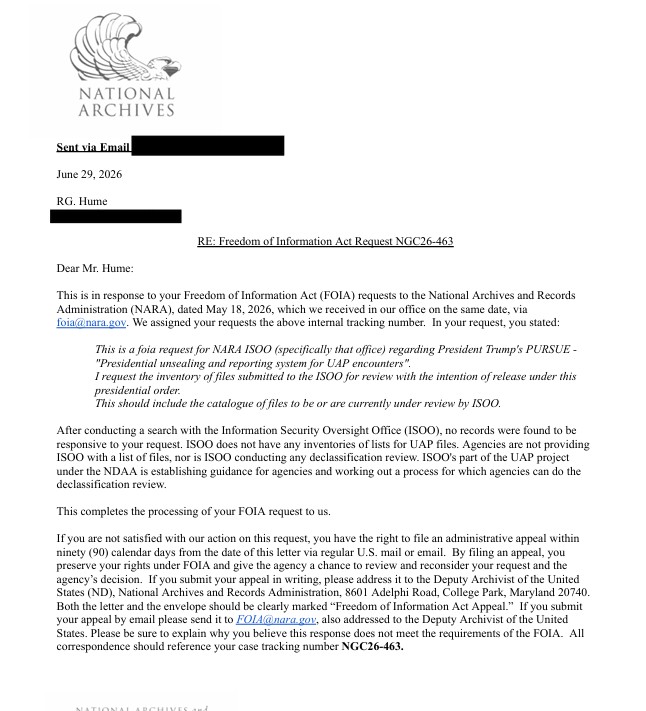
Important correction. And adds even more credibility. Go follow @rgh_ufos https://t.co/WabxMmBvMh [Quoted] Jesse Michel's has mentioned my foia work regarding the NNSA response to a request regarding Starfish prime & UFOs. I am not anonymous & all my work is 100% legit. my name is out there. its on some requests, Its been in BBC & mail online. Even in Geoff Cruickshanks stuff on BG3P https://t.co/h2hFP8q5kU

I will be quick about it. Red regulus in front of sphinx? Someone once posted Regulus was a name of an old nuke bomber. Its on wikipedia. Sphinx is looking directly towards iran. If you nuke Iran, atomic shroom will be in front of the gaze of the sphinx. People have been having dreams regarding orange sky or two suns (r/orangeskycollective). This is in line with nukes, at least nukes in stratosphere? Google "starfish prime" When USA nukes iran, we will get new knowledge - I assume that 1) we...
RT @AmericanALCHMY: Starfish Prime was a U.S. military operation where a nuclear weapon was detonated 250 miles above the Pacific Ocean. Th…


RT @AmericanALCHMY: Starfish Prime was a U.S. military operation where a nuclear weapon was detonated 250 miles above the Pacific Ocean. Th…
Starfish Prime was a U.S. military operation where a nuclear weapon was detonated 250 miles above the Pacific Ocean. The goal was to rip a hole in the Earth's magnetosphere. Former presidential advisor Harold Malmgren says what came out were UFOs and he even held one in his https://t.co/YWclbC4dig
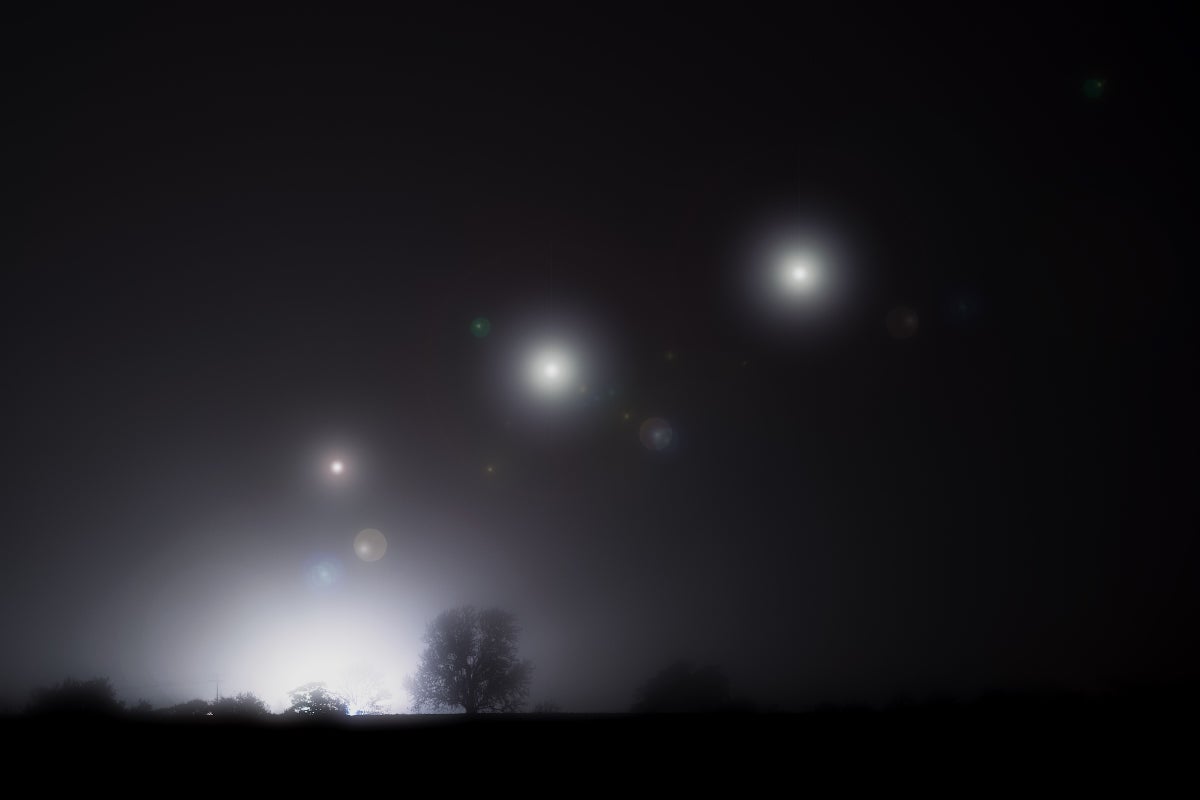
Some Scientists See UFOs in Old Telescope Data. Others See a Teachable Moment
New peer-reviewed research reporting strange lights in the pre-space-age sky is sparking curiosity and controversy
Lue Elizondo & Tom Delonge on UFO Connection to Operation Starfish Prime

The Hidden Truth Behind a 1960s Nuclear Test: A Non-Human Craft Fell Down To Earth — Liberation Times | Reimagining Old News
On October 26, 1962, the United States conducted the Bluegill Triple Prime nuclear test as part of Operation Fishbowl, a subset of Operation Dominic.

Russia Might Just Have Itself a Space Nuke, Which Is Incredibly Illegal
Troubling new intelligence suggests Putin could be pushing the boundaries of cosmic militarization.