NICAP
OrgAdvocacy GroupNICAP
OrgAdvocacy GroupNICAP, the National Investigations Committee on Aerial Phenomena, was a Washington civilian group that collected UFO reports and lobbied Congress against secrecy from 1956 to 1980.
NICAP, the National Investigations Committee on Aerial Phenomena, was a Washington civilian group that collected UFO reports and lobbied Congress against secrecy from 1956 to 1980.

The National Investigations Committee on Aerial Phenomena (NICAP) was a private, nonprofit American organization that collected UFO reports and campaigned for disclosure of what the government knew about them. Based in Washington, D.C., it operated from 1956 until 1980 and, under its longtime director Donald Keyhoe, became one of the largest and best-connected civilian UFO groups of its era.
NICAP's charter was approved on October 24, 1956, and its founder was the inventor Thomas Townsend Brown. Within months the board, which judged Brown financially inept, asked him to step aside. Retired Rear Admiral Delmer Fahrney led the group briefly and told a January 1957 press conference that UFOs were under intelligent control but neither American nor Soviet. After Fahrney resigned that April, Keyhoe, a retired Marine Corps major and author of the best-selling The Flying Saucers Are Real, became director and started the monthly newsletter The U.F.O. Investigator. The board included former Director of Central Intelligence Roscoe Hillenkoetter, who served until 1962 and wrote in a 1960 letter to Congress, as reported by The New York Times, that "high-ranking Air Force officers are soberly concerned about UFOs."
The committee combined case collection with lobbying. Membership passed 5,000 by 1958 and peaked at roughly 14,000 to 15,000 in the 1960s. It pressed for congressional hearings, with occasional success, and placed a UFO report in the Congressional Record in 1960. On a live CBS broadcast in January 1958, Keyhoe's microphone was cut as he began saying that a congressional committee was weighing evidence that UFOs were "real machines under intelligent control"; CBS said the program had been cleared for security reasons. In 1964 it published The UFO Evidence, edited by Richard Hall, a compilation of hundreds of unexplained reports investigated through 1963.
NICAP initially helped the Air Force-funded University of Colorado study run by the Condon Committee, but Keyhoe grew disillusioned and the group cut ties in early 1968. The committee's negative conclusion helped drive a steep fall in public interest, and membership dropped to about 5,000. In December 1969 the board, led by Joseph Bryan III, forced Keyhoe to retire. Bryan was a former CIA official who had not disclosed that background and was later named as a suspected agency infiltrator; his son, the writer C. D. B. Bryan, argued instead that NICAP "simply self-destructed." Under John Acuff and then Alan Hall, membership kept falling amid infighting, and NICAP dissolved at the end of 1980.
The Center for UFO Studies bought NICAP's case files, and in November 2020 they moved with the center's collection to New Mexico, where the National UFO Historical Records Center founded by David Marler curates them. The name also lives on in a case website Francis Ridge created in 1997. In 2026 a Scientific Coalition for UAP Studies analysis of sightings from 1945 to 1975 drew on Project Blue Book unknowns and NICAP data, and American Alchemy used the committee's 1974 records to trace police reports around John Lennon's reported sighting in New York. NICAP's two decades of lobbying made congressional hearings a central aim of civilian UFO advocacy, one that later disclosure campaigns have continued to pursue.

Part 37 of a series reassessing the documentary record behind the 1933 Magenta narrative. TL;DR The press did report shooting orders and alleged attempts. Contemporary accounts distinguish conditional air-defense instructions from an unconditional saucer-shooting order; one story says no jet reached shooting range. The reviewed operational records document no firing, hit, ammunition expenditure or recovery party. Missing original interceptor reports limit how far that negative result can be t...
Part 32 of a series reassessing the documentary record behind the 1933 Magenta narrative. TL;DR The professors’ observations, Hart’s photographs, Albuquerque’s “flying wing,” and Larson’s radar target are separate reports; no continuous track connects them. Birds are a substantial explanation for the professors’ lights. Other witnesses identified their own sightings as birds. Ducker’s important follow-up occurred in 1952; its application to every 1951 flight remains uncertain. Hart’s photogra...

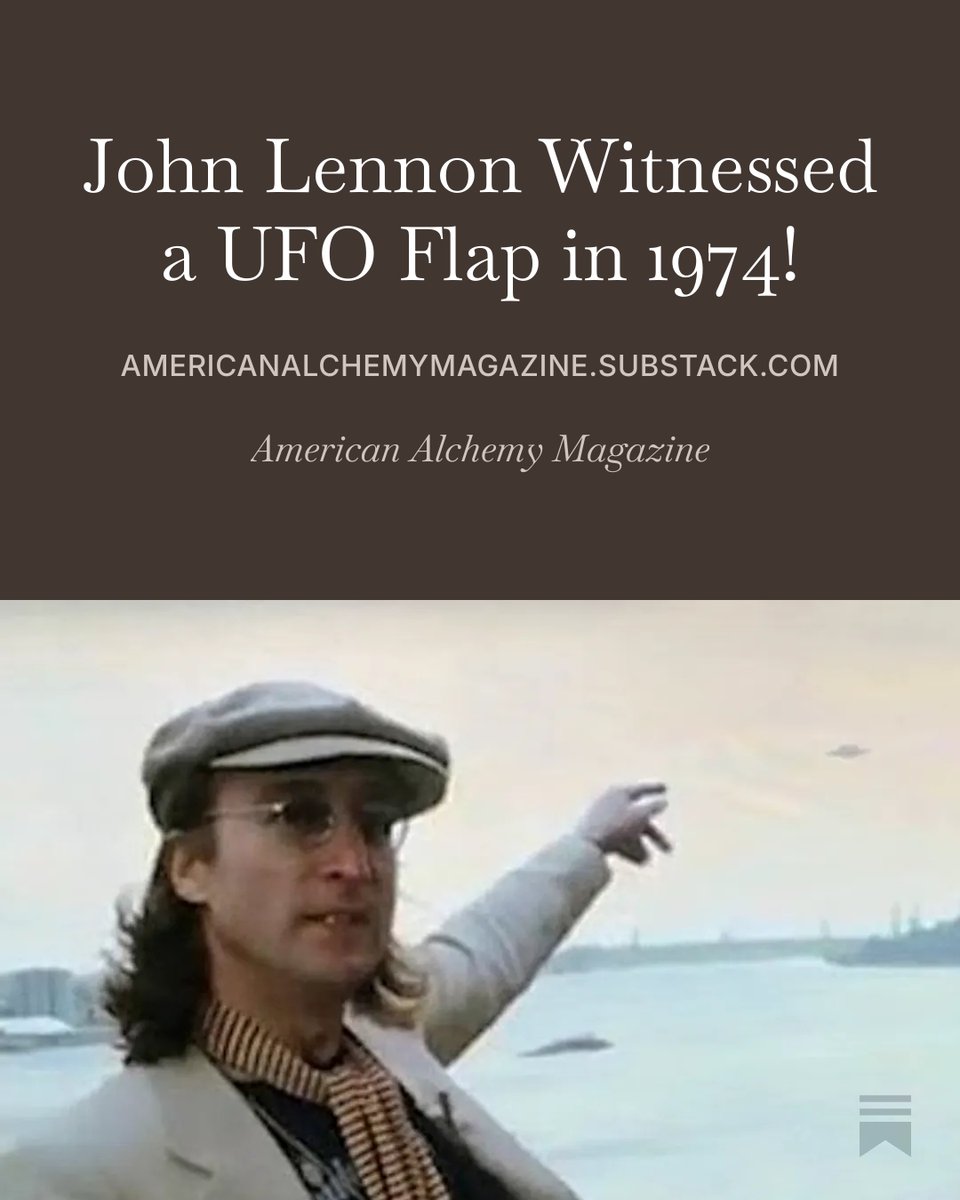
In 1974 John Lennon said he saw a #UFO from his New York apartment. We went through that summer’s NICAP records and found police officers and state troopers across New York and New England reporting the same kind of craft in the weeks around it, including one tracked on radar near Albany three days earlier!! Latest article free to all subscribers: https://t.co/J14dUJSOBo

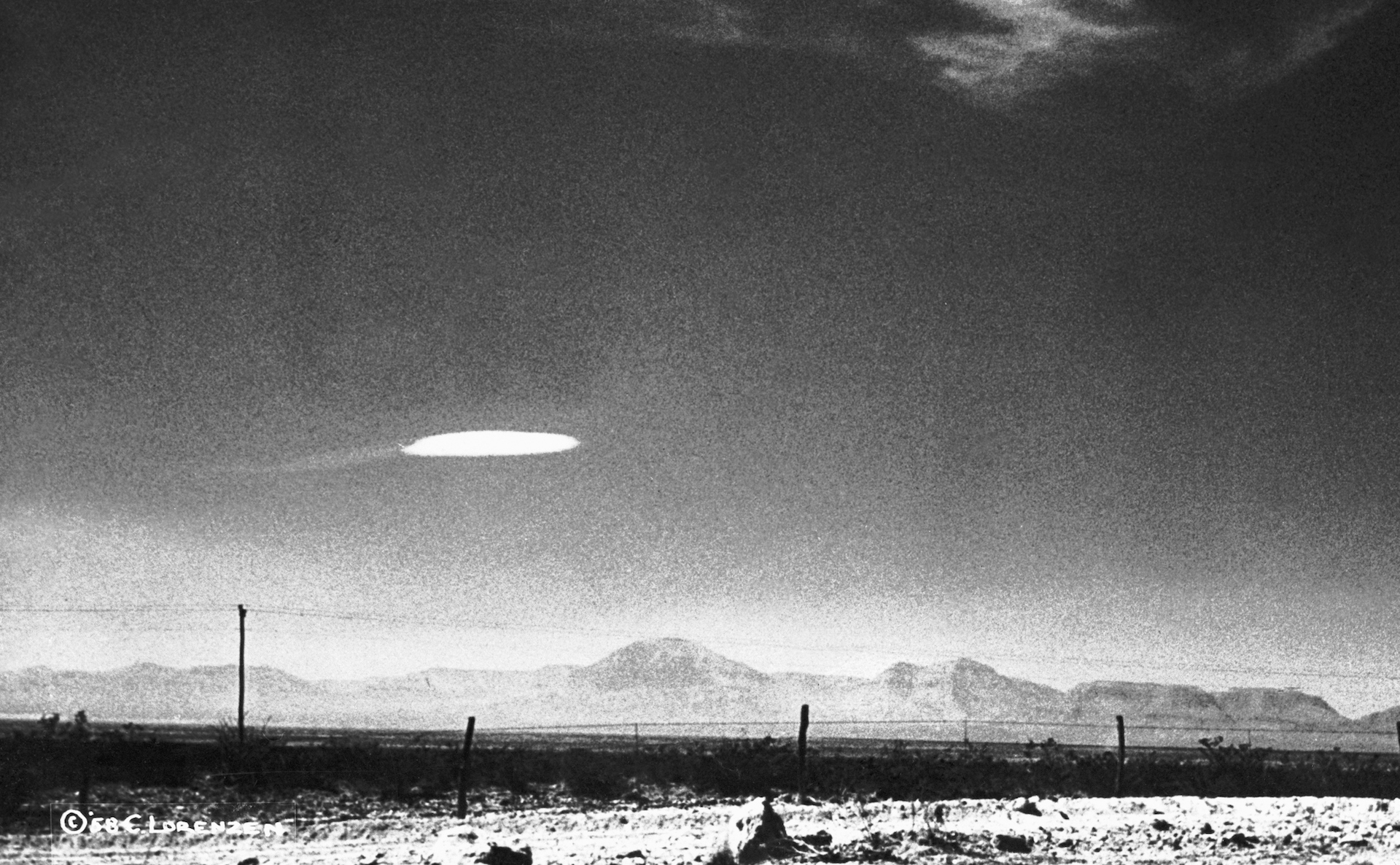
The "Green Fireballs" over Los Alamos, Sandia, and White Sands Proving Ground may still offer a compelling research opportunity. For background, see https://www.nicap.org/nmexico/newmexicosightings.htm and https://www.war.gov/medialink/ufo/052226/release_02/documents/DOW-UAP-D017_General_Correspondence_Of_Sandia.pdf Dr. Lincoln LaPaz considered the fireballs deeply and thought they might be artificial energy projections due to their horizontal vectors, silent travel, and zero physical remnant...

The Access Problem: Presidents, Congress, and the Agencies Between Them Previous essays examined the alleged retrieval pipeline and its compartmentation. This installment asks how such a program, if it exists, would interact with presidents, Congress and oversight agencies. Prior posts: The Alleged UAP Crash-Retrieval Pipeline Part 1: Retrieval, Funding, Selection, and Corporate Custody Part 2: Surveillance, Retaliation, and Institutional Concealment The thesis is a program interfacing with g...

The history of organisations such as NICAP, APRO, and CSI reveals a determined effort to investigate UFO reports and challenge government secrecy. During the 1950s and ’60s, these groups pursued different strategies for engaging with US officials, pushing for greater transparency and a more open approach to the phenomenon. @disclosureteamx Watch the full interview https://t.co/RAQQ9uv4eC

This is a scan of “The Ufologist Establishment,” an article by Jesse Kornbluth from the November 1976 issue of OUI magazine. Written in the immediate aftermath of the Travis Walton case, it examines the competing roles of APRO, NICAP, MUFON, and independent researchers—along with the personality clashes, competing methods, and credibility concerns within 1970s UFO investigation.

Probed ingest of: Pentagon seeks access to vast private UFO records collection
Brandi Vincent’s DefenseScoop report examines AARO’s proposed subscription to the National UFO Historical Records Center, led by David Marler. The linked federal notice specifies pre-1990 data, metadata and analysis, a one-year base with four options, and a sole-source justification built around unique archive holdings. The central distinction is access for AARO researchers versus public disclosure; the notice itself promises no public release.

Probed ingest of: “I Saw a Triangle Shaped UFO At a NASA Hangar!” -Dylan Borland Tells All

Gene Sticco’s August 1 X post carries a Blackgrove Business News analysis of Washington Headquarters Services’ reported plan to sole-source AARO a multi-year subscription to the National UFO Historical Records Center’s pre-1990 archive. It examines the notice’s commercial-product language against the Center’s public statements about continuing digitization and cloud-access funding, separating reported procurement terms from Blackgrove’s interpretation and the records still needed to verify the award.