
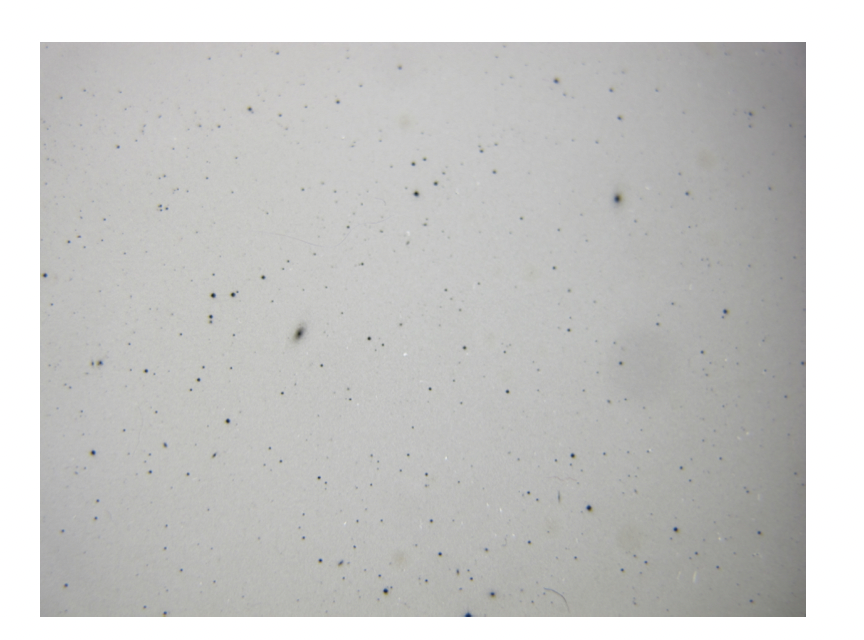

Palomar Observatory Sky Survey

TopicProgram

The Palomar Observatory Sky Survey (POSS-I) was a 1949–1958 photographic atlas of the northern sky whose plates now anchor a disputed debate over star-like flashes recorded before Sputnik.

1
Mentions (30d)
3
Active Signals
5
Sources
28
Co-mentions
30-Day Activity1 mentions
Oct 14Nov 12
Source material mix
Named sources5Opinion2
Claim Types
analysis8
Key Developments
Nov 4
The Vanishing Stars: The Only Thread With New Data
socialr/UFOs
Sep 30
Probed ingest of: Joe Rogan Experience #2560 - David Grusch
independentPowerfulJRE
Sep 20
Dr. Beatriz Villarroel Discovers Pre-Sputnik, Non-Human Craft Orbiting The Earth
socialr/UFOs
Aug 28
Jun Yang at Harvard University and I have submitted a paper.
socialDr. Beatriz Villarroel
Relationships
Agencies & Organizations (1)
Organizations explicitly connected to this program.
Probed Analysis

The Palomar Observatory Sky Survey, formally the National Geographic Society–Palomar Observatory Sky Survey and now usually called POSS-I, was a photographic atlas of the sky from the north celestial pole to about 30 degrees south. Funded by a National Geographic Society grant to Caltech, it was made with the 48-inch Schmidt telescope, now the Samuel Oschin telescope, at Palomar Observatory. Each of 936 fields, about six degrees on a side, was photographed twice, on blue-sensitive and red-sensitive glass plates.

The first plate was exposed in November 1949, nearly all were finished by mid-1956, and the last was taken in December 1958. Issued as 1,872 photographic prints, with glass copies for major observatories, the survey served for decades as a standard reference atlas, and a southern extension followed in 1962. The Space Telescope Science Institute's Digitized Sky Survey, released in 1994, put the plates into digital form, making it possible to compare the 1950s sky with modern surveys.

That comparison underlies the VASCO project led by astronomer Beatriz Villarroel, which searches the plates for transients, star-like sources seen on one exposure and never again. In October 2025 her team reported aligned groups of transients and a shortage of them inside Earth's shadow, consistent, they argued, with sunlight glinting off reflective objects in high orbit before Sputnik; a companion Scientific Reports paper associated the transients with nuclear-test dates and UFO reports while disclaiming causation. Nigel Hambly and Adam Blair had concluded in 2024 that such sources are probably emulsion flaws, possibly introduced in copying, and a critique by Wesley Andrés Watters, Kevin Knuth and colleagues, accepted by the Publications of the Astronomical Society of Australia, found no significant shadow deficit and traced the nuclear link to Palomar's observing schedule.

In September 2026 the team posted preprints modeling the reflectors at roughly 20,000 to 35,000 kilometers and mapping apparent hotspots beneath the transients over the Pacific off Central America, the southern Gulf of Mexico and the American Southwest, while acknowledging simplified assumptions. Villarroel also said that original plate material, examined with Harvard's Jun Yang, showed the best-known candidates as sharp and compact, but that such inspection cannot rule out emulsion defects. An atlas made to map stars and galaxies has become a contested record of what the sky held before the first satellite.

Filters
Time Range

Part 25 of a series reassessing the documentary record behind the 1933 Magenta narrative. TL;DR Historical Palomar plates contain unexplained, star-like marks. Some have been recovered by a separate detection pipeline; that establishes reproducible marks in the scans, while their physical origin remains disputed. The Earth-shadow claim has several reported significances under different comparisons. The original paper’s coverage-adjusted result is 7.6σ, rather than its idealized 22σ headline....

independent
Deep ingest
Sep 30

Probed ingest of: Joe Rogan Experience #2560 - David Grusch

Hey everyone! Over the last couple of weeks I’ve been catching up on the recent papers by Dr. Beatriz Villarroel, Dr. Stephen Bruehl, and the VASCO team on the pre-Sputnik optical transients on the historical Palomar Observatory Sky Survey (POSS-I) plates (1949-1958). I made a 30 minute documentary breaking down the optical physics, orbital mechanics and geospatial statistics from both papers (2609.05105 and 2609.09461) and wanted to share a quick summary of the core data points here for disc...

Jun Yang at Harvard University and I have submitted a paper. We examine the original photographic plate material for two famous multiple-transient events from the Palomar Sky Survey: the nine transients of April 12, 1950, and the triple transient of July 19, 1952. The candidates are present on the photographic material and appear sharp and compact. They look just as they do in the digitized images -- star-like, yet a little sharper and rounder than the other stars in the field, just as one wo...

independent
Deep ingest
Aug 25

Probed ingest of: Joe Rogan Experience #2545 - Jesse Michels

independent
Deep ingest
Jul 9

Probed ingest of: I Debated UFOs With America’s Top Skeptic (It Got Ugly…)

🚨SOLID EVIDENCE for Alien Craft in orbit! Dr Villarroel's new UAP breakthrough! There's a new replication paper out looking at those Palomar sky survey plates from the 1950s. Using the same dataset Villarroel and Bruehl worked with, but this time Brian Doherty ran the analysis independently to see if the claims hold up, and they did. https://t.co/WVcLG4YcFn Source: https://t.co/WikDN99ouV #ufotwitter #uapX #Astronomy #Disclosure

🚨Nuclear Tests, Missing Objects, and a New Paper That Corroborates Vasco's Findings There's a new replication paper out looking at those Palomar sky survey plates from the 1950s. Using the same dataset Villarroel and Bruehl worked with, but this time Brian Doherty ran the analysis independently to see if the claims hold up, and they did. We're talking about thousands of one off light events captured on photographic plates between 1949 and 1957. They show up once, then they're gone. No matchi...

ReportAnalyzed
govOct 20, 2025
Transients in the Palomar Observatory Sky Survey (POSS-I) may be associated with nuclear testing and reports of unidentified anomalous phenomena
Scientific Reports9 pagesOct 20, 202510.1038/s41598-025-21620-3

Stephen Bruehl and Beatriz Villarroel examine pre-Sputnik Palomar Observatory Sky Survey transients against nuclear-test dates and UFOCAT reports across 2,718 days. They report a 45% higher likelihood of transients within a three-day nuclear-test window and an 8.5% increase in modeled transient counts per additional UAP report. The paper treats proposed origins as hypotheses, disclaims identification and causality, and discusses automated detection, unvalidated witness reports, geographic mismatch, and possible multiple causes.

Mention Velocity
30d agoToday
Source Mix
8items
r/UFOs2
PowerfulJRE2
Skywatch Signal2
Dr. Beatriz Villarroel1
American Alchemy1