1952 Washington D.C. UFO Flap
In July 1952, radar and pilot reports over Washington, D.C. triggered Air Force scrutiny and national UFO headlines.
The 1952 Washington, D.C. UFO flap was a series of July 1952 reports involving radar returns and visual sightings around the U.S. capital. The key events centered on Washington National Airport, Andrews Air Force Base, and the airspace over Washington, DC. Controllers tracked unidentified returns, pilots were asked to look for lights or objects, and the story became national news during a summer already marked by high public interest in flying saucers.
The first major weekend came on July 19-20, 1952, when radar operators at Washington National Airport reported unexplained targets. A second wave followed on July 26-27. Fighter aircraft were scrambled, though the timing and effectiveness of the interceptions remain part of the historical debate. Some pilots reported lights; in other moments, radar returns appeared without matching visual confirmation. That mixed sensor-and-witness pattern is exactly why the case became famous.
The U.S. Air Force investigated through Project Blue Book, with astronomer J. Allen Hynek later becoming part of the broader Blue Book story. Official explanations emphasized temperature inversions and radar propagation effects as likely causes for at least some returns. Critics argued that the explanation did not fit every report and that the Air Force moved too quickly to calm public concern. The case prompted a major Air Force press conference, one of the largest since World War II, showing how seriously the public-relations problem was taken.
What is documented is strong enough to establish a real official response: radar reports occurred, pilots and interceptors were involved, the press covered the events intensely, and the Air Force addressed the public. What is disputed is whether the radar and visual reports described one coherent unknown object, multiple ordinary stimuli, atmospheric effects, or a reporting cascade intensified by national attention.
The flap entered UAP history because it paired the most symbolically sensitive airspace in the United States with a moment of apparent radar confirmation. It also became a lesson in ambiguity. Radar is powerful but not self-explanatory; visual sightings can be sincere but still miscorrelated; and official statements can be shaped by a need to reassure the public. Later congressional and media references to a Washington flyover show that the event still anchors disclosure-era arguments about old files and missing evidence.
Probed read: The strongest part is the documented convergence of radar reports, pilot involvement, military response, and public Air Force attention. The weakest part is correlation: the public record does not cleanly prove that every radar return and every light report described the same physical object.
What would move the assessment: Original radar logs, controller recordings, interceptor reports, weather data, and unredacted Blue Book files would sharpen the case. A complete atmospheric reconstruction matching the timing and behavior of the main returns would strengthen the conventional explanation.
Case Claims
1These statements reflect the cited record and are not independent verification.
- Source reportedUnverified
Burlison says MIT Lincoln Laboratory acknowledged a circa-1952 reel-to-reel audio file in which a senior Department of Defense official briefed MIT scientists about saucers, but the episode does not present the audio itself.
MIT Lincoln Labs acknowledged the audio exists and is processing it so Congress can listen to it.



Eric Burlison forces out a crucial audio of the 1952 UFO Flap in the recent drop - Psicoactivo #1159

Full 1952 Washington Flyover 'Flying Saucer Talk' Transcript - Captain Edward J Ruppelt - 1952 🇺🇸🛸👽 “We’ve gone through these reports and come up with the fact that about 20% are very good reports offered by very reliable people and are just absolutely no conclusions can be drawn.” In a newly released official transcript of his Boston presentation, the Air Force officer who later ran Project Blue Book laid out what the service actually knew after reviewing about 800 cases. Only about 2% w...
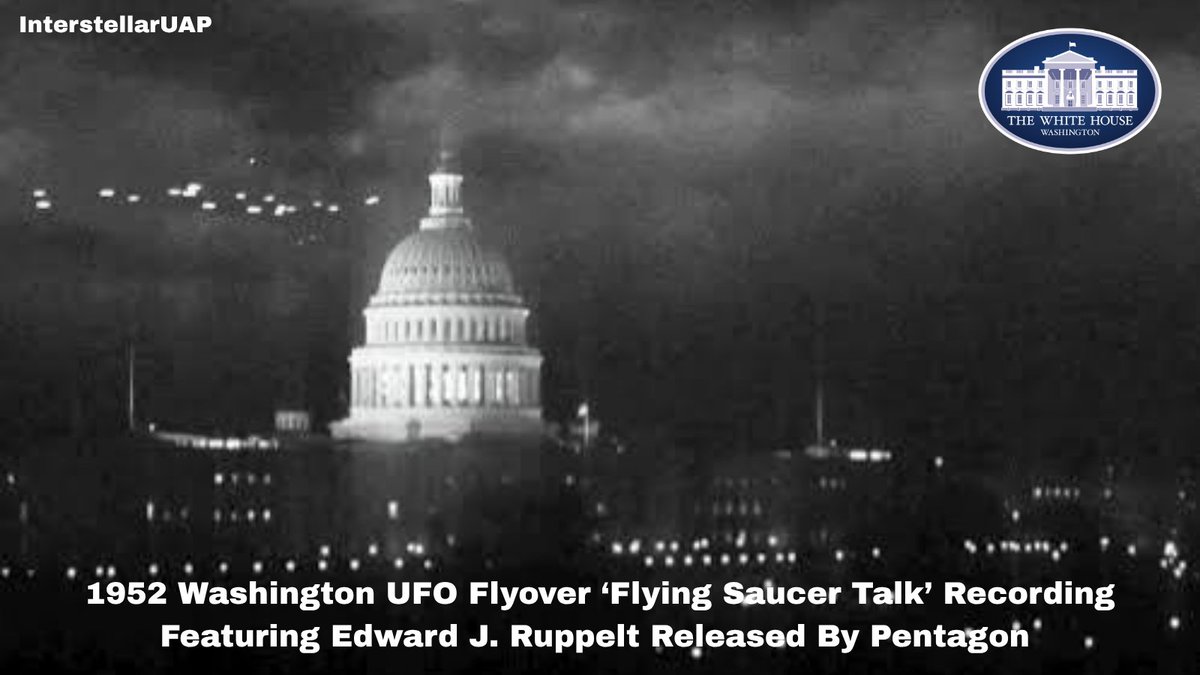
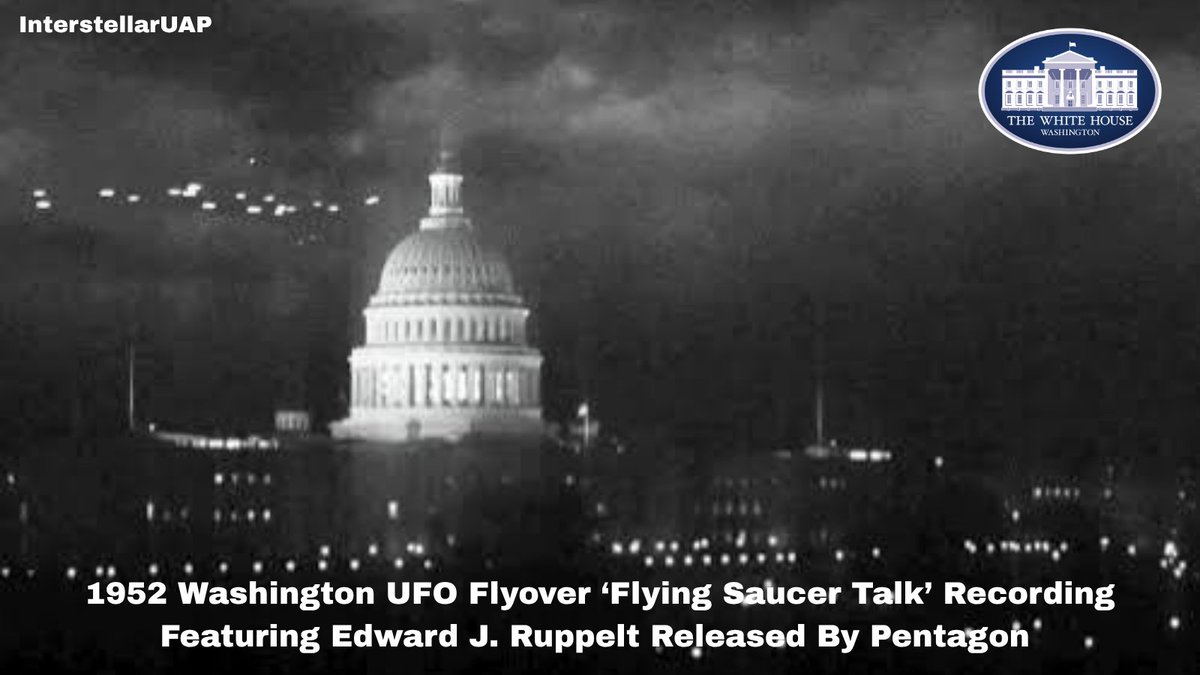
1952 Washington UFO Flyover ‘Flying Saucer Talk’ Recording Featuring Captain Edward J. Ruppelt Released By Pentagon 🇺🇸👽🛸 **Link In Comments** This audio file records a March 1952 presentation by Captain Edward J. Ruppelt, outlining the U.S. Air Force’s reorganized investigation into unidentified flying objects (UFOs). The presentation previews prospective technical methodologies, such as diffraction-grating photography and radar-scope synchronization, that were subsequently incorporated i...

Very cool. https://t.co/CWUyZyF2ax [Quoted] 🚨Here is Harry Turner who wrote the 1971 Australian Intelligence UFO Memo that David Grusch referenced. Harry Turner tells how his boss at the Woomera Prohibited Area, Colonel Richard Durance, was in the Washington DC radar room, during both weekends of the 1952 Washington DC UFO flyovers. Richard Durance was the Australian Army Attache for the US at the time. Durance confirmed he was shown the radar data himself during the Washington DC 1952 UFO f...


RT @TheUfoJoe: The Prediction - Plus, Why Did Ruppelt Flip? A few days before the infamous 1952 UFO flap over DC, a scientist predicted:…


Great historical post from Joe! https://t.co/KDGnrNDFx6 [Quoted] The Prediction - Plus, Why Did Ruppelt Flip? A few days before the infamous 1952 UFO flap over DC, a scientist predicted: "Within the next few days, you're going to have the granddaddy of all UFO sightings. The sighting will occur in Washington or New York - probably Washington." (Thanks, to @RepEricBurlison, we may hear a 1952 recording of U.S Air Force Captain Edward Ruppelt, who ran Project Blue Book for 1.5 years, briefing s...
The Prediction - Plus, Why Did Ruppelt Flip? A few days before the infamous 1952 UFO flap over DC, a scientist predicted: "Within the next few days, you're going to have the granddaddy of all UFO sightings. The sighting will occur in Washington or New York - probably Washington." (Thanks, to @RepEricBurlison, we may hear a 1952 recording of U.S Air Force Captain Edward Ruppelt, who ran Project Blue Book for 1.5 years, briefing scientists about that DC "Invasion." But which version of Ruppelt...
RT @InterstellarUAP: 🚨 Rep. Eric Burlison reveals the recording from the 1952 Washington UFO Flyover will be released by President Trump Im…

RT @InterstellarUAP: Rep. Eric Burlison: “We have requested the video of the 1952 Washington flyover flying saucer UFO video and they are c…


