

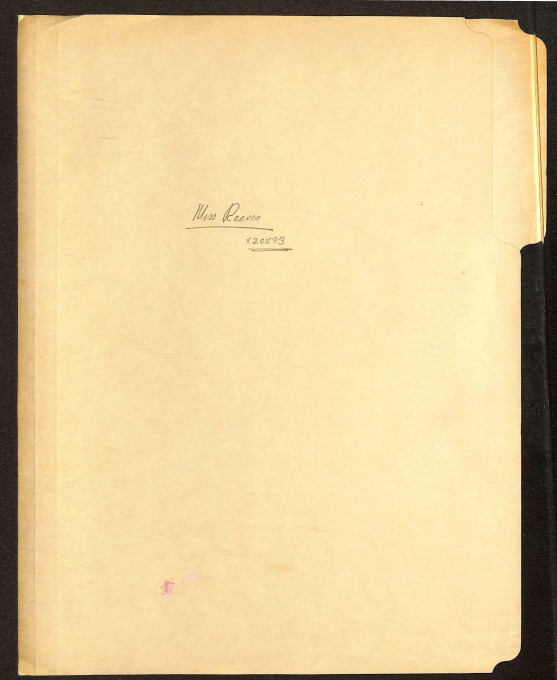
This released document records that col. Glenn observed luminous particles during the MA-6 flight. The file preserves the source account or analysis but does not independently establish interpretations beyond the cited record. This document is useful as an officially released artifact because it preserves the file's provenance and lets its claims be compared with related Release 03 records.
NASA’s Johnson Space Center
LocationFacilityNASA’s Johnson Space Center
LocationFacilityNASA's Johnson Space Center is the Houston home of Mission Control and astronaut training, where Gemini 7's 1965 "bogey" report was received and Donna Hare says UFOs were airbrushed from photos.
NASA's Johnson Space Center is the Houston home of Mission Control and astronaut training, where Gemini 7's 1965 "bogey" report was received and Donna Hare says UFOs were airbrushed from photos.
The Lyndon B. Johnson Space Center is NASA's center for human spaceflight, a campus of about 100 buildings on 1,620 acres in the Clear Lake area of Houston, Texas. It trains American and international partner astronauts, houses the Neutral Buoyancy Laboratory, and runs the Christopher C. Kraft Jr. Mission Control Center, which has handled flight control for NASA's crewed missions since Gemini 4 in 1965 and now directs U.S. operations aboard the International Space Station and Artemis flights.
NASA chose the site in September 1961 to house its Space Task Group, and the center opened in September 1963 as the Manned Spacecraft Center. It was renamed for Lyndon B. Johnson in February 1973. Through the Gemini, Apollo and Skylab years, controllers there talked with crews in flight and returning astronauts were debriefed on site, producing recordings and transcripts that later entered UAP records.
The first PURSUE release, on May 8, 2026, included audio of Gemini 7 commander Frank Borman reporting to mission control in Houston on December 5, 1965, a sighting he called a "bogey"; controllers asked whether it was the booster, and the source has never been established. Release 04 added Apollo 14 and Apollo 17 debriefings recorded at the center, in which crews discussed light flashes that the release attributes to cosmic rays striking the retina. The center is also the setting of Donna Hare's Disclosure Project testimony. Hare, a former employee of the contractor Philco-Ford, has said that in the early 1970s a technician in Building 8 showed her an aerial photograph with a round white object and told her such objects were airbrushed out before images were sold to the public. Gary McKinnon, accused by U.S. prosecutors of breaking into 97 military and NASA computers in 2001 and 2002, has said Hare's account sent him looking through NASA systems, where he says he saw a cigar-shaped object in an image he could not save.
No photograph, technician's name or written policy supporting Hare's account has been produced, McKinnon's image was never preserved, and no NASA response to either claim has been reported. NASA's broader position came in its 2023 independent UAP study, chaired by astrophysicist David Spergel, which found no evidence that extraterrestrial life was responsible for unexplained sightings. Both accounts drew renewed attention in 2026 after McKinnon's interview on American Alchemy, as recordings made at the center entered an official UAP records program.
NASA-UAP-D029, Apollo 17 Crew Medical Debriefing (Continued), 1972 This file contains segment 2 of 2 of the Apollo 17 post-mission medical debriefing at the Manned Spacecraft Center (now Johnson Space Center), Houston, Texas. In this continued segment, crew members and debriefers further discuss the “light flash phenomena,” a then novel, now well-documented biological effect where high-energy cosmic rays pass through the eye and strike the retina, causing the perception of light streaks or fl...
NASA-UAP-D028, Apollo 17 Crew Medical Debriefing, 1972 This file contains segment 1 of 2 of the Apollo 17 post-mission medical debriefing at the Manned Spacecraft Center (now Johnson Space Center), Houston, Texas. In the recording, crew members discuss the “light flash phenomena,” a then novel, now well-documented biological effect where high-energy cosmic rays pass through the eye and strike the retina, causing the perception of light streaks or flashes. Two of the three crew members reporte...
NASA-UAP-D027, Apollo 14 Debriefing (Continued), 1971 This file contains segment 2 of 2 of the Apollo 14 post-mission crew debriefing at the Manned Spacecraft Center (now Johnson Space Center), Houston, Texas. In this continued segment, crew members and debriefers further discuss the “light flash phenomena,” a then novel, now well-documented biological effect where high-energy cosmic rays pass through the eye and strike the retina, causing the perception of light streaks or flashes.
NASA-UAP-D026, Apollo 14 Debriefing, 1971 This file contains segment 1 of 2 of the Apollo 14 post-mission crew debriefing at the Manned Spacecraft Center (now Johnson Space Center), Houston, Texas. In the recording, crew members and debriefers discuss the “light flash phenomena,” a then novel, now well-documented biological effect where high-energy cosmic rays pass through the eye and strike the retina, causing the perception of light streaks or flashes. The questioners attempt to distinguish...
NASA-UAP-D026, Apollo 14 Debriefing, 1971
This file contains segment 1 of 2 of the Apollo 14 post-mission crew debriefing at the Manned Spacecraft Center (now Johnson Space Center), Houston, Texas. In the recording, crew members and debriefers discuss the “light flash phenomena,” a then novel, now well-documented biological effect where high-energy cosmic rays pass through the eye and strike the retina, causing the perception of light streaks or flashes. The questioners attempt to distinguish the characteristics of the observed phenomena. The debriefing continues in the next file (NASA-UAP-D027), which contains some overlapping audio content.
NASA-UAP-D027, Apollo 14 Debriefing (Continued), 1971
This file contains segment 2 of 2 of the Apollo 14 post-mission crew debriefing at the Manned Spacecraft Center (now Johnson Space Center), Houston, Texas. In this continued segment, crew members and debriefers further discuss the “light flash phenomena,” a then novel, now well-documented biological effect where high-energy cosmic rays pass through the eye and strike the retina, causing the perception of light streaks or flashes.
NASA-UAP-D028, Apollo 17 Crew Medical Debriefing, 1972
This file contains segment 1 of 2 of the Apollo 17 post-mission medical debriefing at the Manned Spacecraft Center (now Johnson Space Center), Houston, Texas. In the recording, crew members discuss the “light flash phenomena,” a then novel, now well-documented biological effect where high-energy cosmic rays pass through the eye and strike the retina, causing the perception of light streaks or flashes. Two of the three crew members reported observing these flashes at various points during the mission, including in lunar orbit and while on the lunar surface. The debriefing continues in the next file (NASA-UAP-D029).
NASA-UAP-D029, Apollo 17 Crew Medical Debriefing (Continued), 1972
This file contains segment 2 of 2 of the Apollo 17 post-mission medical debriefing at the Manned Spacecraft Center (now Johnson Space Center), Houston, Texas. In this continued segment, crew members and debriefers further discuss the “light flash phenomena,” a then novel, now well-documented biological effect where high-energy cosmic rays pass through the eye and strike the retina, causing the perception of light streaks or flashes. Two of the three crew members reported observing these flashes at various points during the mission, including in lunar orbit and while on the lunar surface.
🚨NASA Wants Volunteers to Live Like Astronauts for a Year NASA is recruiting volunteers for a year long simulated Moon and Mars mission beginning no earlier than August 2027. Participants will live in isolated habitats at Johnson Space Center, carry out mock Mars walks, operate a rover and experience the resource limits and pressures expected during deepspace missions. The research will help NASA prepare astronauts for extended stays on the Moon and the first crewed journey to Mars. Does thi...


