U.S. Army
OrgMilitary UnitU.S. Army
OrgMilitary UnitThe United States Army is the land warfare service, responsible for sustained ground operations, air and missile defense, intelligence, research, logistics, and support to joint forces.
The United States Army is the land warfare service, responsible for sustained ground operations, air and missile defense, intelligence, research, logistics, and support to joint forces.
 Pete Hegseth

The United States Army is the country’s principal land warfare service, tracing its founding to the Continental Army in 1775. It organizes, trains, and equips forces for ground combat and joint operations while maintaining intelligence, aviation, air defense, research, logistics, medical, and engineering capabilities. Civilian leadership sits within the Department of the Army under the Department of Defense.
Army organizations include operational commands, laboratories, intelligence units, ranges, and specialized schools. Records concerning an unusual event may arise through military police, aviation safety, intelligence, or technical research. Those channels have different missions and do not imply a unified institutional conclusion. The Army is organized into operational commands, installations, laboratories, intelligence elements, aviation units, and acquisition organizations with different records and authorities. Historical UAP connections range from early military investigations to the transfer of alleged materials and later consciousness research. Naming the responsible command is therefore more informative than attributing an activity to the service as a whole. The service’s scale likewise means that policy issued at headquarters may coexist with local reports that never became an Army-wide finding.
The Army appears in UFO history through missile-site reports, Fort Monmouth, technical intelligence, alleged debris analysis, and Cold War remote viewing programs. A declassified study shows authorized interest, not proof of its strongest claimed result. Personal accounts by soldiers likewise require case-specific records and corroboration.
The Army’s relevance to UAP and national security lies in protected facilities, mobile sensors, and land-based operational context. Its institutional scale makes precise unit and date attribution essential. “Army intelligence” is too broad to substitute for a program name, authority, and surviving record.

I no longer think the best way to read Philip J. Corso is either “everything he said was true” or “he invented the entire subject from nothing.” Corso really did work in Army intelligence and, late in his career, in the Army’s foreign-technology apparatus. The military really did have systems for recovering unusual foreign hardware and routing it to technical centers, including Wright-Patterson. There is also a contemporaneous paper trail showing that the Roswell debris was supposed to go to...

Pat Price describing human-looking NHIs working incognito on "alien bases" established on earth never gets old. To establish such a base, one would think an agreement would have needed to be chartered, firstly. 😏 - It is also of incidental interest to note some circumstantial evidence provided by the late Patrick Price, an exceptionally gifted psychic employed by a CIA contractor in the 1970s. - According to Captain Frederick H. Atwater, a retired US Army officer also involved at the time in...
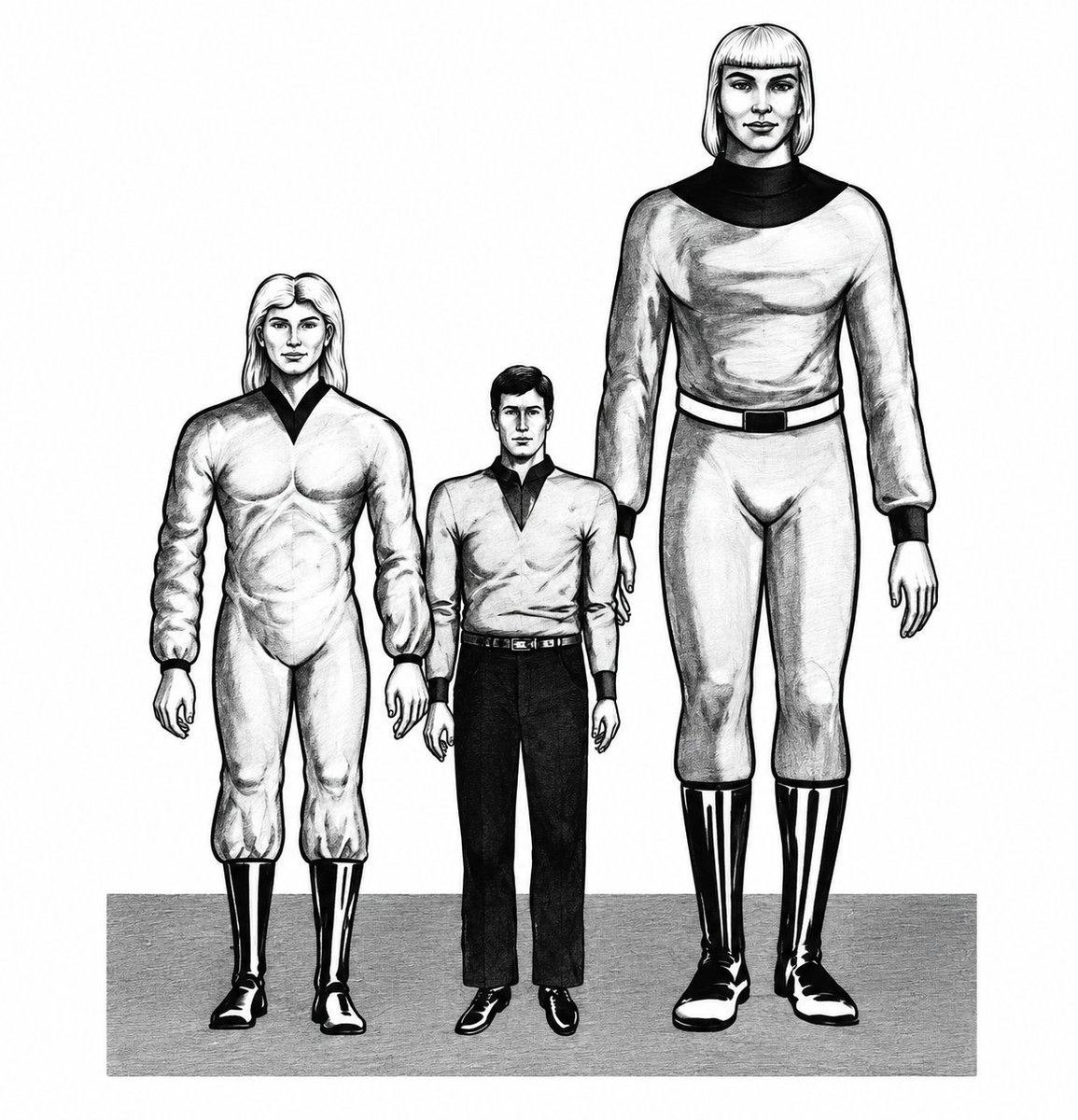

A lot research went into the story testing the allegations. I spoke to one descendent of a Paperclip Engineer. They did not seem surprised by the allegations a [Quoted] In Peter Santenello’s 2024 film on Paperclip, a retired Army officer identified only as “Theo” said he was the grandson of engineer Theodor Vowe. He recalled a family story that Wernher von Braun was “immediately secreted away” to Roswell after the incident. https://t.co/7Nnsfcgc24


Part 1 argued that Corso has a genuine institutional kernel and an account that cannot carry its own weight. He was a real intelligence officer who ended his career in the Army’s foreign-technology office, inside a military that really did run recovery, transport and exploitation channels pointing at Wright-Patterson. But that was not the Air Force organization that received Blue Fly material; his manuscript, Dawn of a New Age, is hedged and inconclusive where the published book is categorica...
I no longer think the best way to read Philip J. Corso is either “everything he said was true” or “he invented the entire subject from nothing.” Corso really did work in Army intelligence and, late in his career, in the Army’s foreign-technology apparatus. The military really did have systems for recovering unusual foreign hardware and routing it to technical centers, including Wright-Patterson. There is also a contemporaneous paper trail showing that the Roswell debris was supposed to go to...

Tonight: Join us for a members-only AMA with Caison Best, 6 to 7:30 p.m. Central Time. For this AMA, ALL paid membership tiers get access, including Observer. Bring your questions. Sign up: https://t.co/J3J2ffrlJz https://t.co/wF5ip5BYRP https://t.co/azN8nsB4tQ [Quoted] "Like an AirPod case from thousands of years in the future." That is how former Army Intelligence Officer Caison Best describes the massive, white-porcelain craft with shifting geometric panels that he and his team witnessed o...


No Longer Science Fiction, the U.S. Army is Moving a High-Energy Laser Weapon Into Production for the First Time
The US Army has authorized its first contract for a directed energy weapons system, designed to take down threats with high-energy lasers.


Dr. Annette Ryan, a former Army surgeon, examined the 1969 Soviet alien autopsy footage and said two things: These were medical doctors. This was a real medical procedure. If Grusch was right about “biologics,” why assume the Soviets never recovered any? https://t.co/aNGGl0fQ9u


Us and Them - Agreements? LB: "I have seen extraterrestrials working 𝑤𝑖𝑡ℎ humans in black op areas. In human, black op areas." LH: "Doesn't that imply they might...be working together?" LB: "I would say they're working together, if they'e right there working together." [Quoted] 1 #ufotwitter - As promised. Lyn Buchanan was one of the original remote viewers (and trainers) in the Army's program @ Ft. Meade from 1984-1992. I took his 3-day, Basic Controlled Remote Viewing (RVing) class in Au...

https://open.spotify.com/episode/3JNgiFbYpIFDcH522wI94o?si=32c33b11b6ea4635 Watcher of Cappy Army on Youtube, who's put out some great videos on UFO files so far (surprising because they're a military and geopolitics channel). Just caught that they put up a podcast with Lou, I think it's going to be an episode too? Idk. Not sure there's anything new, but if you're interested in defense topics it's interesting to see him answer some of the questions framed around UFO/UAP and its impact on nati...
