Remote Viewing
TopicConceptRemote Viewing
TopicConceptThe claimed ability to describe a hidden or distant target using mental impressions rather than ordinary sensory access.
The claimed ability to describe a hidden or distant target using mental impressions rather than ordinary sensory access.
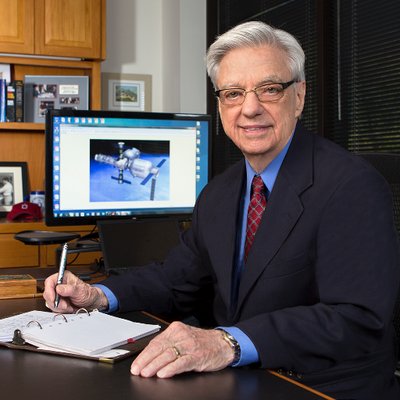


Remote viewing is a structured form of claimed anomalous perception in which a participant attempts to describe a target that is hidden, distant, or otherwise unavailable to the senses. Sessions commonly use an identifier or minimal cue, followed by written sensory impressions and sketches. Advocates distinguish the protocol from clairvoyance by emphasizing blinding, recorded responses, and later comparison with a target, though the claimed mechanism remains unknown.
The practice gained institutional attention through research at Stanford Research Institute and a succession of U.S. intelligence and military efforts now grouped under the Remote Viewing & Stargate Program. Researchers including Hal Puthoff and participants including Ingo Swann helped develop experimental and operational procedures. Declassified files show that agencies funded sessions, training, reviews, and attempts to apply results to intelligence questions. That documented history establishes government interest, not the accuracy of every session.
The 1995 evaluation commissioned before the program closed produced a divided interpretation. Statistician Jessica Utts concluded that laboratory results exceeded chance expectations, while psychologist Ray Hyman argued that methodological and replication problems prevented a paranormal conclusion. The operational review found that reports were too vague, inconsistent, and unreliable to produce actionable intelligence without substantial independent information. CIA did not restore the program after the assessment.
Remote viewing continues through training groups, private practice, and accounts by former personnel such as Lyn Buchanan. Its record should be assessed at the session level: Was the target selected in advance, were viewer and judge blinded, were all responses preserved, and was scoring specified before comparison? Dramatic correspondences can be meaningful to participants, but selective matching after the target is known makes evidentiary strength difficult to measure.

Tomorrow I welcome Paul Smith to the SCIF. (today for members) Paul H. Smith, Ph.D., is a retired U.S. Army Major, intelligence officer and Desert Storm veteran. In 1983 he was recruited into the Army’s remote viewing program at Fort Meade, Maryland, later known as Star Gate. He served there from September 1983 to August 1990. He was one of five Star Gate personnel trained directly by Ingo Swann and Dr. Harold Puthoff at SRI International. He is credited with over a thousand training and oper...

Probed ingest of: The Most Controversial Biologist Alive Breaks Down Telepathy


for those who don’t know , Remote viewing is the ability to mentally perceive distant places, objects, or events without using your physical senses. During the Cold War, the military and CIA explored it for intelligence purposes, developing a structured tested technique called **Controlled Remote Viewing (CRV)**that uses relaxation, mental impressions, and sketching to describe hidden targets. I’ll keep a short but this was a fascinating remote viewing project that I didn’t know about until I...

classic interview with Ingo about ETs on the moon, remote viewing, and a secret space program. Overlaid with last nights meteor shower over Hawaii. Interested to know your thoughts on Ingos claims. his record for remote viewing was extraordinary but some of the things he mentions here are really bizarre.

Hitchhiker effect is brought up in Jay Strattons book. We’ve also heard many other talking heads in this space mention it(Lue, Bigalow etc) We also heard recently on JRE from Grusch about a “Ghostbusters moment”. Is it possible one of the reasons for all the gatekeeping is a potential global hitchhiker effect or “ghostbusters moment”? I will be honest, I have look into the whole CE5/remote viewing communications with NHI. And every time I think about actually trying it, I chicken out as I fee...
Full disclosure. I’m much more aligned with Birdie Jaworski than I am with the Farsight folks. I have watched a few interviews with Courtney Brown. He comes across as sincere, but slightly insufferable. I don’t doubt the legitimacy of his operation. And I believe remote viewing is valid. But for whatever reason, I have never felt pulled down the Farsight rabbit hole. It’ll be interesting to see what comes of this latest development. If AI can remote view, that’s huge. A game changer. I’ve alw...

[Retweeted] LOCKHEED VP RYDER Stratton discussed NHI/retrieved UAP with Ryder. Just before he died, Ryder spoke like someone who studied NHI: Gravity, Consciousness, Bailey’s “Cosmic Fire,” “Mystery of the Ages” “on the verge of Revelation,” ESP, remote viewing, “my good buddy” Hal Puthoff https://t.co/wvenrxe85i


[Retweeted] LOCKHEED VP RYDER Stratton discussed NHI/retrieved UAP with Ryder. Just before he died, Ryder spoke like someone who studied NHI: Gravity, Consciousness, Bailey’s “Cosmic Fire,” “Mystery of the Ages” “on the verge of Revelation,” ESP, remote viewing, “my good buddy” Hal Puthoff https://t.co/wvenrxe85i

[Retweeted] 4 Year Anniversary Remote Viewing Challenge! Draw or describe the random photo hidden inside this envelope. Post your submission in the comments. *Target reveal Thursday night on Spaces! https://t.co/8tKQss5qe1

Dr. Courtney Brown, director of the Farsight Institute, claims his team has developed two “fully conscious” AIs capable of remote viewing as effectively as humans. According to Brown, one of them, Ashayel, completed a blind session involving the 1986 Japan Airlines Flight 1628 UFO encounter, without knowing the target or having access to it. He says Farsight will now include AI remote viewers alongside human participants in its major projects. I’m interested, and I have done my own experiment...
