VERA Rubin Observatory
OrgResearch OrgVERA Rubin Observatory
OrgResearch OrgVera C. Rubin Observatory is an NSF–DOE astronomy facility in Chile that repeatedly images the southern sky for the Legacy Survey of Space and Time.
Vera C. Rubin Observatory is an NSF–DOE astronomy facility in Chile that repeatedly images the southern sky for the Legacy Survey of Space and Time.


The NSF–DOE Vera C. Rubin Observatory is a ground-based astronomy facility on Cerro Pachón in Chile. Jointly funded by the National Science Foundation and the Department of Energy’s Office of Science, it is operated by NSF NOIRLab and SLAC National Accelerator Laboratory. The observatory entered operations in 2025 after a long international construction effort.
Its 8.4-meter Simonyi Survey Telescope and 3.2-gigapixel LSST Camera repeatedly image the southern sky. The ten-year Legacy Survey of Space and Time is designed to create a time-domain record of changing and moving objects, including asteroids, comets, supernovae, variable stars, galaxies, and signatures related to dark matter and dark energy. Rubin’s data system processes a vast stream of images and issues rapid alerts when objects change position or brightness. Researchers around the world can use those alerts for follow-up with other telescopes. The observatory’s open scientific ecosystem gives NASA, SETI researchers, and planetary scientists a common, time-stamped survey rather than isolated photographs.
Rubin may contribute to SETI and searches for unusual solar-system objects because its cadence and scale can reveal phenomena missed by narrower surveys. It does not monitor Earth’s atmosphere as a dedicated UAP instrument, and image artifacts, satellites, aircraft, cosmic rays, and processing effects must be filtered from astronomical detections.
The observatory matters in the public record because its public, repeated, calibrated observations can turn a transient claim into a testable astronomical record. A compelling anomaly would need a traceable exposure, astrometry, photometry, pipeline history, and independent follow-up. Rubin expands discovery space dramatically, but its scientific value comes from documented data and reproducible analysis rather than from labeling every unfamiliar image as evidence of technology.

RT @TheZignal: A new image from the Vera C. Rubin Observatory. The points of light are mostly ENTIRE GALAXIES and there are about 650,000…
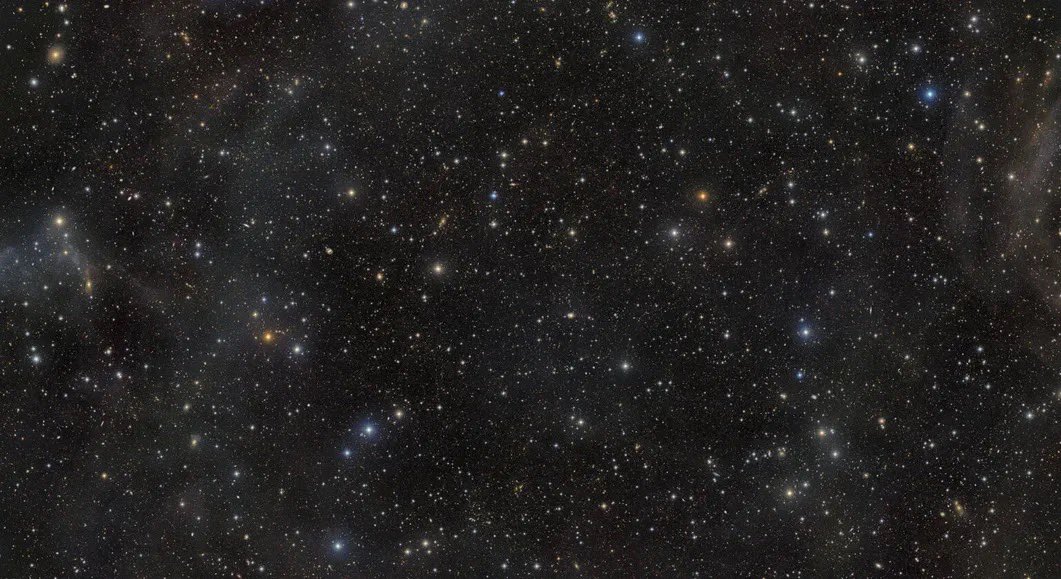

Rubin Observatory Reveals More Than Half a Million Galaxies in Landmark First Science Image
A breathtaking view of the cosmos featuring more than half a million galaxies has been released by the Vera C. Rubin Observatory.

Probed ingest of: This Top General Pushed UFO Disclosure. Now He’s Missing [Here’s Why…]

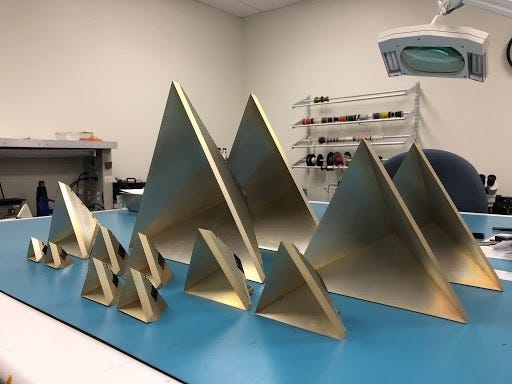
The Rubin Observatory Could Discover Corner Reflectors or Artificial Lights in the Outer Solar…


The Atlantic did an interesting article on the Rubin telescope named When a Telescope is a National Security risk: When a Telescope Is a National-Security Risk - The Atlantic Obviously the telescope is for the purpose of astronomy, but the implications for finding UAP is staggering. Even if they did ever find something of unknown origin, I doubt they would ever release it publicly anyway, which is a very sad but realistic possibility. 800,000 objects in a single night is amazing and just show...
