Statement of Alexandro C. Wiggins for Restoring Public Trust Through UAP Transparency and Whistleblower Protection
In this September 2025 congressional statement, Navy Senior Chief Alexandro C. Wiggins gives his personal account of a February 2023 USS Jackson encounter off Southern California. He says four Tic-Tac-like objects were observed and tracked with shipboard sensors, while making clear that the statement represents his views rather than an official Navy or Defense Department position.
Search extracted document text
Probed searches extracted/indexed text and can show matching pages when page indexing is available.
Document Intel
Source status, provenance, and extraction context.
- Source / agency
- United States House Committee on Oversight and Government Reform
- Type
- Testimony
- Classification
- Unclassified
- Reference #
- —
- Published
- 2025-09-09
- Content Type
- application/pdf
- Pages
- 5
Structured Analysis
Claims and source material extracted from the document text. Timeline context is surfaced in document intel.
Wiggins identifies himself as an active-duty Navy senior chief with about 23 years of service and says he served aboard USS Jackson during the reported incident.
I am an active-duty U.S. Navy Senior Chief Petty Officer (Operations Specialist) with approximately 23 years of service. During the incident described below, I was serving aboard USS Jackson (LCS-6).
Wiggins places the reported encounter at about 7:15 p.m. PST on February 15, 2023, in the W-291 Warning Area off Southern California.
Date/Time/Place: 15 February 2023 at approximately 1915 PST in the W-291 Warning Area off the Southern California coast.
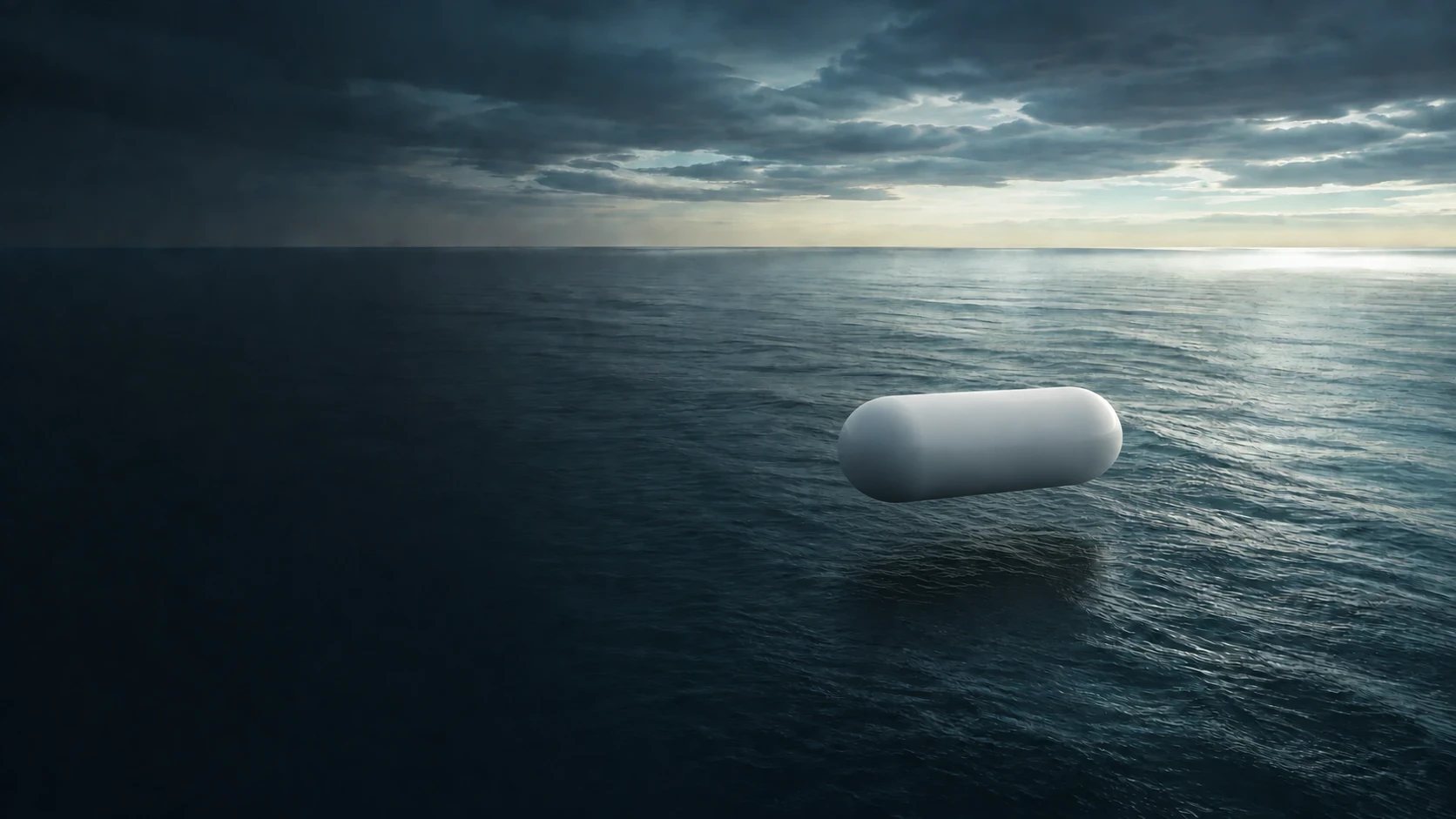
Wiggins reports that a self-luminous Tic-Tac-shaped object emerged from the ocean, joined three similar objects, and that all four departed together without an observed sonic boom or conventional propulsion signature.
A self-luminous, “Tic-Tac”-shaped object was observed emerging from the ocean (transmedium), then linking up with three similar objects. All four departed simultaneously in a highly synchronized, near-instantaneous manner. No sonic boom or conventional propulsion signatures were observed.
Wiggins says the objects appeared on multiple sensors, including radar, and that video was recorded in the combat information center with a Star SAFIRE multispectral system.
Objects were detected on multiple sensors, including radar, and video was recorded inside CIC using a Star SAFIRE multi-spectral EO/IR system; location and time stamps are visible in the source video frames published by journalists.
Wiggins says he visually observed a light rising from the waterline and that the Star SAFIRE display corroborated his impression that it emerged from the ocean.
I visually observed a light rising from the waterline, consistent with a platform emerging from the ocean rather than distant surface lights or celestial rise. This was corroborated by what was being viewed on the SAFIRE display.
Wiggins reports that the emerging object joined three others and that the four maintained a relative geometry he interpreted as a controlled formation.
The emerging object linked up with three additional “Tic-Tac”-like objects. The four maintained relative geometry consistent with a controlled formation.
Wiggins says the four objects departed simultaneously with apparently near-instantaneous acceleration and disappeared from the radar picture immediately afterward.
All four objects departed at the same moment, with an acceleration profile that, subjectively, appeared near-instantaneous. No sonic boom or other acoustic signature associated with high-speed flight was perceived. Radar picture no longer displayed the objects immediately after departure.
Wiggins says the combat information center recorded handheld EO/IR video of at least two objects and that stabilized footage contains time, location, and platform readouts consistent with the encounter.
CIC crew recorded hand-held EO/IR video of at least two of the objects. The released, stabilized footage includes timestamps, lat/long, and platform readouts consistent with USS Jackson’s location in W-291 at the time of the encounter.
Wiggins says the recorded observation lacked standard heat-plume, exhaust, and control-surface signatures associated with conventional aircraft.
Across EO/IR, we did not observe standard propulsion signatures (heat plumes, exhaust) or control surface articulation commonly associated with fixed-wing or rotary-wing craft.
Wiggins says he later described the encounter publicly with Jeremy Corbell and George Knapp to preserve a first-hand record and reduce stigma for other service members.
I subsequently described the encounter publicly with journalists Jeremy Corbell and George Knapp to ensure an accurate, first-hand record exists and to reduce stigma for other service members who may have similar observations.
Wiggins summarizes his account as four Tic-Tac-like objects, one emerging from the ocean, departing in synchronized fashion without conventional signatures while shipboard sensors recorded the event.
I witnessed—corroborated by shipboard sensors—four Tic-Tac-like objects, one emerging from the ocean, then departing in synchronized fashion without conventional signatures. The event was recorded from within CIC
Chronology extracted from the document text.
Wiggins submits congressional statement
Wiggins submits his written account for the House hearing on UAP transparency and whistleblower protection.
Wiggins account published in Weaponized Episode 73
The statement cites an April 15, 2025 episode in which Wiggins publicly described the encounter with Jeremy Corbell and George Knapp.
Weaponized publishes USS Jackson report
The statement’s references identify an April 8, 2025 Weaponized news post about the USS Jackson Tic Tac UAP account.
USS Jackson encounter reported
Wiggins says the USS Jackson encounter occurred at about 1915 PST in the W-291 Warning Area off Southern California.


Referenced In Coverage
Investigative posts, source items, and other coverage that currently cite this document.


Probed ingest of: He Saw Four TIC TAC UFOs - Then AARO Came Calling
WEAPONIZED hosts Jeremy Corbell and George Knapp revisit Senior Chief Alexandro Wiggins’s account of four Tic Tac-shaped UAPs near USS Jackson in February 2023. In a conversation recorded at Contact in the Desert, Wiggins describes coordinated movement, an aircraft comparison, Navy support for his congressional testimony, and alleged AARO pressure to repeat his story in a SCIF. The episode also examines witness protection, government UFO releases, alternative explanations, and the limits of the publicly available footage.


Probed ingest of: Top Navy Admiral: “The Ocean is FULL OF UFOs!”
Jesse Michels interviews retired Rear Admiral Tim Gallaudet about why the ocean may be the strongest place to test UAP claims. Gallaudet revisits the Navy’s 2015 GoFast episode, relays secondhand reports of transmedium objects and recurring ocean hotspots, discusses submarine and USS Jackson accounts, and weighs Bluegill Triple Prime, Atlantis, undersea reconnaissance, remote viewing, and deep-ocean exploration while repeatedly distinguishing evidence from speculation.


Probed ingest of: They Told UAP Whistleblowers To Come Forward. The Last Man Who Did Says It's A Trap.
The Good Trouble Show’s Matt Ford interviews national-security whistleblower Matthew Brown about whether AARO, ODNI, the ICIG, and PURSUE provide safe channels for UAP disclosures. Brown recounts a failed protection briefing, alleged intimidation and reputation attacks, and his view that official intake systems can be used to map or contain witnesses. The episode also examines Sean Kirkpatrick, Alexandro Wiggins, defense contractors, disputed domestic-influence claims, retaliation fears, and Brown’s Vanguard Enterprise support network.