
Probed ingest of: They Told UAP Whistleblowers To Come Forward. The Last Man Who Did Says It's A Trap.
The Good Trouble Show’s Matt Ford interviews national-security whistleblower Matthew Brown about whether AARO, ODNI, the ICIG, and PURSUE provide safe channels for UAP disclosures. Brown recounts a failed protection briefing, alleged intimidation and reputation attacks, and his view that official intake systems can be used to map or contain witnesses. The episode also examines Sean Kirkpatrick, Alexandro Wiggins, defense contractors, disputed domestic-influence claims, retaliation fears, and Brown’s Vanguard Enterprise support network.
PROBED ASSESSMENT
Matt Ford’s interview with Matthew Brown argues that formal UAP disclosure channels can become containment mechanisms when the same institutions receive testimony, investigate witnesses, and control access to the resulting information. Brown’s ODNI meeting is the episode’s central case study.
- 1.Brown says a promised protection briefing became questioning about his knowledge and sources; after he supplied documents, he says officials stopped responding and an officer spread damaging claims.
- 2.He alleges AARO treated Wiggins adversarially after congressional testimony and argues that its overlapping intake, investigation, review, and contracting roles conflict with independent witness protection.
- 3.Ford and Brown extend the critique to alleged entrapment and domestic influence operations, but the episode does not establish their interpretation of Smith–Mundt or Executive Order 12333.
- 4.The gravest claims—industry-directed violence, concealed crimes, and a shadow structure—receive little documentary support; Ford provides the specific Northrop Grumman theory, while Brown gives guarded agreement.
The episode frames institutional design as the central oversight issue: a reporting channel may exist on paper while secrecy rules and retaliation fears prevent accountable disclosure. Brown presents courts, Justice Department action, and Vanguard support as alternatives.
Official records confirm that Wiggins testified on September 9, 2025, and that Kosloski described zero-stigma reporting and transparency as AARO priorities. They do not substantiate intimidation, entrapment, coordinated smears, or industry-linked violence; Brown’s ODNI meeting and home break-in remain first-person accounts.
- 1.What safeguards governed the ODNI meeting Brown describes?
- 2.Do records of AARO’s Wiggins contact support claims of an adversarial interview and threatened escalation?
- 3.Can Brown’s documents, communications, and claimed officer-role changes be authenticated without exposing protected identities?
Claims remain attributed to the source unless independently documented. Reviewed and edited by an editor.
Source Claims
12- InterpretationAsserted
Matthew Brown argues that AARO, ODNI, and PURSUE may offer authorized channels for classified UAP information without giving witnesses a practically safe route to public disclosure or ensuring their evidence reaches the public.
an authorized channel is not necessarily a safe one in practice
- Source reportedUnverified
Brown alleges that AARO investigators subjected U.S. Navy Senior Chief Petty Officer Alexandro C. Wiggins to an adversarial interview after his congressional testimony and threatened escalation when he resisted; Brown characterizes the reported contact as intimidation.
calls AARO a “catch-and-kill” mechanism for sensitive UAP testimony
- InterpretationContested
Brown argues that AARO’s combined roles in case collection, witness intake, historical review, data integration, and sensor contracting prevent it from acting as an independent protector; Ford interprets contractor experience in deception, insider-threat, and perception-management work as evidence of narrative control.
AARO combines too many functions
- Source reportedContested
Brown claims Sean M. Kirkpatrick knowingly denied awareness of alleged legacy UAP programs, crash retrievals, and reverse engineering in briefings to Senators Marco Rubio, Kirsten Gillibrand, and Mark Warner; Ford adds an unverified gatekeeping theory involving Glenn Gaffney and Kirkpatrick’s later Oak Ridge employment.
Brown calls those denials knowingly false.
- Source reportedUnverified
Brown says an ODNI meeting presented as a UAP whistleblower-protection briefing instead questioned him about his UAP and prior WMD knowledge, sources, and disclosure plans; he interpreted it as intelligence collection and network mapping, provided documents afterward, and says officials then stopped responding.
the promised protection briefing never appeared
Structure Across Time
How the key people and organizations in this source are involved as events unfold. Built from the extracted timeline — co-appearance here reflects the source’s narrative, not verified coordination.
The Good Trouble Show publishes the interview
Matt Ford interviews Matthew Brown about official UAP intake channels, alleged retaliation, oversight failures, and Vanguard Enterprise.
Alexandro Wiggins testifies before Congress
Wiggins appears at the House hearing on UAP transparency and whistleblower protection, where he calls for stigma-free reporting and protection from retribution.
Brown alleges adversarial AARO contact with Wiggins
Brown says AARO investigators questioned Wiggins about his observation and a possible video leak, then threatened escalation if he would not meet; no record shown in the episode independently establishes the contact.
Jon Kosloski takes over AARO
AARO’s public statement records Kosloski’s arrival as director in August 2024; Brown argues in the episode that later events show institutional problems persisted under the new leadership.
Brown reports a break-in at his home
Brown says a forced basement window, arranged identity documents, and a missing passport preceded his approach to Congress; the episode does not establish who entered the home or why.
RELATED ENTITIES
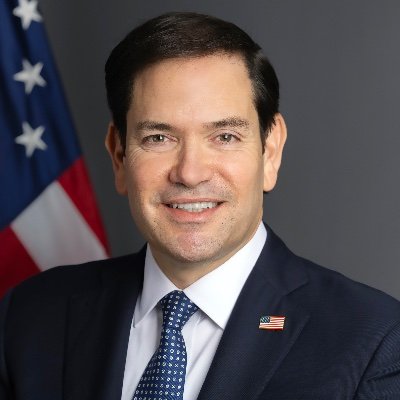
(66)

Referenced Material
4Research Map
Entities are linked when they share a claim or a dated event in this source. Tap any node to see why it’s here.
 The Good Trouble ShowFederal Bureau of InvestigationU.S. Air ForceU.S. Air Force Office of Special InvestigationsIntelligence Community Inspector GeneralU.S. Department of StateDirector's Initiatives GroupArlo SolutionsSanCorp ConsultingUnited States CongressIntelligence CommunityDepartment of WarUnited States NAVYWEAPONIZED PodcastAll-domain Anomaly Resolution OfficeCentral Intelligence AgencyOffice of the Director of National Intelligence
 Jeremy Corbell
 Matt Ford
 Matthew Brown
 Kirsten Gillibrand
 George Knapp