
Probed ingest of: The Basement: Rizwan Virk | Reality Is a Video Game. Here's the Evidence
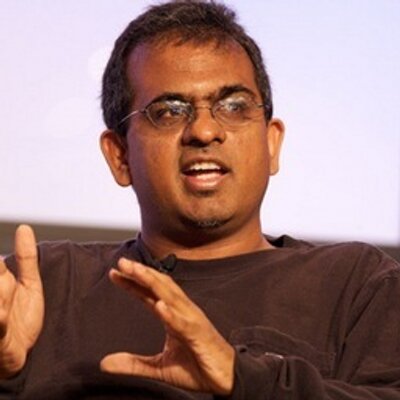
Rizwan Virk joins The Why Files to connect his background in video games, VR, AI, and early computing with his broader simulation hypothesis. The episode explores his view that quantum physics, mystical traditions, altered states, and some UAP high-strangeness reports may point toward reality being information-based or simulation-like. The material is framed as Virk’s interpretations, personal experiences, and speculative frameworks, not as independent verification.
Source Claims
14- InterpretationAsserted
Virk argues that reality may be information-based or simulation-like
The episode presents Virk’s view that physical reality may not be the base layer of existence, but could instead be rendered from underlying information in a way loosely analogous to a video game or virtual world.
- Source reportedAsserted
Virk says his Sausalito VR experience helped trigger his simulation-theory thinking
Virk describes trying an HTC Vive table-tennis demo in Sausalito in 2016 and briefly reacting as if a virtual table were physically present, which led him to ask how long VR might eventually fool users.
- InterpretationAsserted
Virk compares quantum measurement to rendering information on demand
Virk argues that the observer effect, superposition, and wave-function collapse resemble game-engine techniques where only the observed or needed portion of a world is rendered.
- Source reportedAsserted
Virk says game engines avoid simulating every detail at all times
Virk uses examples from 3D engines, procedural generation, caching, lazy loading, and level-of-detail systems to argue that advanced simulations optimize by generating information only when needed.
- InterpretationAsserted
Virk connects delayed-choice experiments to the idea of an unfixed past
Virk interprets John Wheeler’s delayed-choice framework as suggesting that past events may remain in a kind of unresolved informational state until measurement or observation.
- InterpretationAsserted
Virk proposes a simulated multiverse rather than an infinite physical multiverse
Virk suggests that a simulation-like system could run, prune, cache, or merge multiple possible histories without requiring every possible branch to exist as a full physical universe.
- InterpretationAsserted
Virk uses the Mandela effect as a framework for discussing possible alternate histories
Virk discusses examples such as Nelson Mandela, Moonraker, The Thinker, Tank Man, and remembered Bible verses as possible signs of faulty memory, merged timelines, or simulation reruns.
- Source reportedAsserted
Virk discusses Philip K. Dick’s claim that reality could be computer-programmed
Virk and the host discuss Dick’s 1977 Metz speech, where Dick described the possibility of a computer-programmed reality and changes in variables producing altered memories or déjà vu.
- Source reportedAsserted
Virk reports that Tessa Dick described Philip K. Dick’s beliefs about altered timelines
Virk says Tessa Dick told him that Philip K. Dick believed different JFK-assassination timelines had been altered or rerun, with worse outcomes emerging in alternate versions.
- InterpretationAsserted
Virk distinguishes between NPC and RPG models of reality
Virk explains that humans could be interpreted either as generated non-player characters, as avatars controlled by consciousness outside the simulation, or as some mixture of both roles.
- Source reportedAsserted
Virk warns against treating other people as literal NPCs
Virk says it is healthier to assume each person has their own storyline, challenges, and inner life rather than using simulation language to dehumanize others.
- InterpretationAsserted
Virk connects simulation theory to reincarnation-like life planning
Virk compares life selection, soul groups, quests, and challenges from reincarnation literature to choosing characters, roles, campaigns, and difficulty levels in a role-playing game.
- InterpretationAsserted
Virk connects Eastern mysticism to simulation-like metaphors
Virk relates concepts such as Maya, Lila, Buddhist awakening, and Yogananda’s film-projector analogy to the idea that human life may be a staged, dreamlike, or rendered experience.
- InterpretationAsserted
Virk speculates that some UFOs may be avatars or projections into this reality
Virk interprets selected high-strangeness UFO reports through a simulation lens, suggesting some phenomena could be rendered or projected into human perception from outside the normal physical layer.
Structure Across Time
How the key people and organizations in this source are involved as events unfold. Built from the extracted timeline — co-appearance here reflects the source’s narrative, not verified coordination.
Virk discusses UAP stigma, the Galileo Project, and the SOL Foundation
Virk says he has been involved in UAP-related academic and research circles and argues that stigma has eased for nuts-and-bolts UAP discussions but remains around consciousness and high-strangeness claims.
Virk discusses AI-driven NPCs and virtual characters
Virk says large language models and AI voice systems are moving virtual characters closer to a metaverse-style Turing test.
Virk visits Yogananda’s Encinitas hermitage
Virk says he received special access to the hermitage while writing about Paramahansa Yogananda and had a vision that helped him move past writer’s block.
Virk works on the revised edition of The Simulation Hypothesis
Virk says the revised edition adds material on AI, brain-computer interfaces, religion, and frequently asked questions that emerged after the first edition.
First edition of The Simulation Hypothesis is published
Virk says he intentionally released the first edition on the 20th anniversary of The Matrix.
Virk writes his long article on simulation theory
Virk says a visit to Arthur C. Clarke’s preserved office in Sri Lanka helped push him back toward writing and led him to develop the article that became part of his simulation-theory work.
Virk has VR table-tennis experience in Sausalito
Virk says an HTC Vive sports demo briefly fooled his body into reacting as if a virtual table were physically present.
Virk invests in the company that becomes Discord
Virk says Discord began as a communication tool inside a game company before growing through organic gamer adoption.
MIT hosts invite-only alien abduction conference
Virk says an invite-only abduction conference involving John Mack, Budd Hopkins, and others took place at MIT around the time he graduated.
Virk uses MIT Project Athena and networked Unix systems
Virk describes working with Sun workstations, Solaris, X Windows, and early networked messaging environments at MIT.
Philip K. Dick gives Metz speech
Virk and the host discuss Dick’s speech in France, where Dick described the possibility of living in a computer-programmed reality.
Quantum interpretations and many-worlds debates develop
Virk discusses John Wheeler, Hugh Everett, Niels Bohr, Einstein, the Copenhagen interpretation, and many-worlds as background to his simulation framework.
RELATED ENTITIES
(31)
Referenced Material
3Research Map
Entities are linked when they share a claim or a dated event in this source. Tap any node to see why it’s here.
Deep probes
5Probed ingest of: The Basement: Travis Taylor | Skinwalker Ranch, Disclosure & the Pentagon Cover-Up
The Why Files · Aug 10Probed ingest of: The Basement: John B. Alexander | Green Beret, Spoon Bender, UFO Investigator
The Why Files · Jul 27Probed ingest of: The Basement: Jeremy Corbell | Betrayal, Surveillance, and the Secret Higher Than Nuclear Weapons
The Why Files · Jul 20Probed ingest of: The Basement: Andrew Gallimore | DMT Didn't Take You Somewhere New — It Unlocked What's Always There
The Why Files · Jun 22Probed ingest of: The Basement: Jeffrey Mishlove | Your Brain Doesn't Create Consciousness. It Filters It
The Why Files · Apr 27 Galileo Project
 The Why Files
 Rizwan Virk