O. H. (Harry) Turner’s May 27, 1971 Joint Intelligence Organization minute and accompanying assessment argue that American UFO investigations combined public discouragement with serious intelligence interest. The report reconstructs SIGN, GRUDGE, BLUE BOOK, the Robertson Panel, gravity research and the Condon study, criticizes RAAF case identifications, and recommends a scientifically competent Australian investigation. Its claims about covert programs and motives are Turner’s interpretations, not admissions by the agencies discussed. This 19-page release includes duplicated printed page 4 and a 1947–1969 chronology.

Princeton University
OrgAcademic InstitutionPrinceton University
OrgAcademic InstitutionUFO witnesses have been describing communication without words for decades. The U.S. government spent roughly two decades testing whether minds could reach beyond the senses. After mapping the alleged legacy program, I followed those two histories through declassified Army documents, Princeton experiments and accounts from people who say contact changed their lives. For American Alchemy Magazine, I went back through the sources to ask whether the psychic side of the UFO story has an evidentia...

Probed ingest of: Joe Rogan Experience #2545 - Jesse Michels

Probed ingest of: THE WIDE ANGLE: Princeton's 64 Telescopes Just Broke the Comet Model
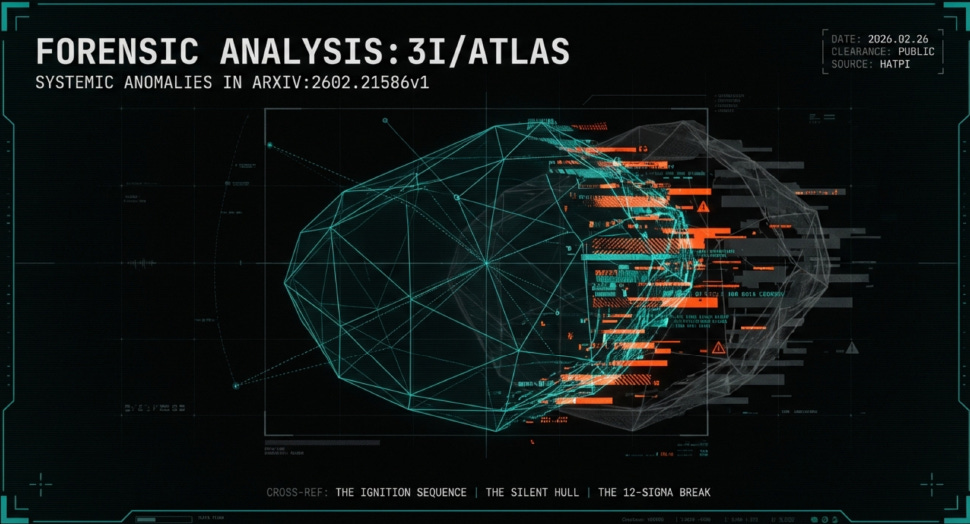
Sentinel argues that Princeton’s HATPI observations of 3I/ATLAS contain photometric features and model tensions that are difficult to reconcile with a standard comet interpretation.

This document contains the Princeton team's analysis of 3I/ATLAS using the HATPI telescope.
Brenda Dunne and Robert Jahn review PEAR’s 1976–1999 remote-perception program: 653 formal trials and multiple scoring systems produced a positive aggregate statistic, but later FIDO results weakened and 150 distributive-protocol trials were indistinguishable from chance. The authors interpret the decline as a possible tension between analytical structure and subjective response.