Sensor Evidence & Military Video
TopicSensor Evidence & Military Video
TopicRadar, infrared, electro-optical, and other instrument records used to evaluate military UAP encounters, with conclusions shaped by metadata and sensor geometry.
Radar, infrared, electro-optical, and other instrument records used to evaluate military UAP encounters, with conclusions shaped by metadata and sensor geometry.


Sensor evidence is information recorded by instruments rather than by unaided vision alone: radar tracks, infrared or electro-optical video, radio-frequency detections, satellite observations, and aircraft mission data. In military UAP cases, a sensor can preserve timing and pointing information that memory cannot. It can also introduce its own ambiguities, because the display is a processed measurement rather than a direct view of an object.
The best-known examples are the Navy videos publicly called FLIR1, Gimbal, and Go Fast. The Defense Department formally released the three files in 2020 and said the phenomena shown remained characterized as unidentified at that time. Cockpit audio and targeting-pod symbology made the footage unusually compelling, but the public clips did not include every radar track, mission record, or original metadata element needed to reconstruct the encounters in full.
Interpretation depends on geometry. A distant target can appear fast because the observing aircraft is moving; glare can rotate within an optical system; autofocus, infrared polarity, compression, and atmospheric conditions can alter apparent form. AARO later used aircraft parameters and weather data to assess that Go Fast did not display anomalous speed, while the Gimbal clip continues to support competing analyses of rotation, range, and flight path. “Multi-sensor” is strongest when systems are synchronized and calibrated, not simply when several devices are mentioned.
Military video matters because it anchors debate in a recoverable artifact and can expose airspace or flight-safety concerns even when the object is ordinary. Yet the evidentiary unit is the complete observation package, not the most dramatic frame. NASA’s UAP study emphasized standardized metadata and purpose-built collection for exactly this reason. UAP research advances when analysts can distinguish target behavior from sensor behavior and show each step from raw measurement to conclusion.

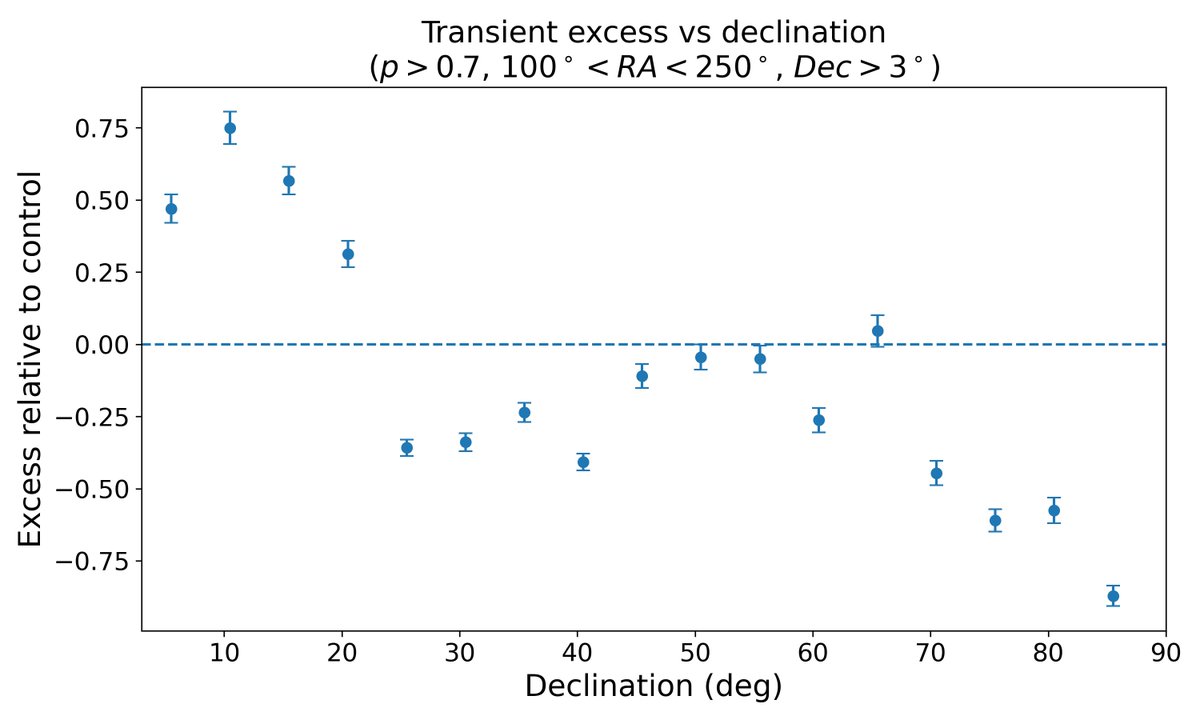
[Retweeted] Steve Bruehl and I had lots of fun discussing the latest VASCO results with Gadi Schwartz on NBC News last night! We talked about: - The sizes, properties and possible altitudes of the transients. - What happens if we assume that the transients are caused by objects at geosynchronous distances and project their lines of sight back onto the Earth’s surface? Intriguingly, we find hotspots around White Sands, Sedona and Tampico, as well as several locations in the Pacific Ocean west...


Steve Bruehl and I had lots of fun discussing the latest VASCO results with Gadi Schwartz on NBC News last night! We talked about: - The sizes, properties and possible altitudes of the transients. - What happens if we assume that the transients are caused by objects at geosynchronous distances and project their lines of sight back onto the Earth’s surface? Intriguingly, we find hotspots around White Sands, Sedona and Tampico, as well as several locations in the Pacific Ocean west of Mexico an...


It’s not the object that bothers me. It’s what appears to keep dropping out of it. Police helicopter FLIR footage. California, 2004. #UAP #UFO https://t.co/3K0QKk2Uve


RT @DrBeaVillarroel: Dear everyone, Some new and very exciting news from the VASCO team! First, our machine-learning paper has been accepte…

With the help of others, I started this subreddit years ago because I thought there was a serious scientific question buried beneath decades of stigma, ridicule and noise. I’d had an unusual observation myself, which led me to Peter Sturrock’s work, “pseudo-stars”, historical primary sources, and eventually the realisation that the subject had been taken far more seriously in some scientific and institutional circles than the public conversation suggested. This is the kind of work I hoped we...

RT @DrBeaVillarroel: Dear everyone, Some new and very exciting news from the VASCO team! First, our machine-learning paper has been accepte…

RT @DrBeaVillarroel: Dear everyone, Some new and very exciting news from the VASCO team! First, our machine-learning paper has been accepte…
Dear everyone, Some new and very exciting news from the VASCO team! First, our machine-learning paper has been accepted for publication following peer review and is now in press. In this paper, we used machine learning to address some of the criticism concerning plate defects and remove contaminants from the sample. We demonstrate that all the intriguing correlations become even stronger as the sample becomes cleaner. More on this once the final version is published. Second, we have two new p...

Conceptual imagery has been omitted from this post to abide by this subreddit's concern/adversity towards AI generated imagery. If you follow the debate over the Gimbal object's flight path, you know there are essentially two different interpretations that can fall out of the video analysis: a distant aircraft/jet, or a closer object performing the so-called J-Hook (essentially a vertical U-turn). Here is a video explanation if you're not caught up: [?si=CJVM-H2-CQ...

If you follow the debate over the Gimbal object's flight path, you know there are essentially two different interpretations that can fall out of the video analysis: a distant aircraft/jet, or a closer object performing the so-called J-Hook (essentially a vertical U-turn). Here is a video explanation if you're not caught up: [?si=CJVM-H2-CQWN8cs5](?si=CJVM-H2-CQWN8cs5)). I've already presented my speculative explanation for the distant-je...