Harvard University
OrgAcademic InstitutionHarvard University
OrgAcademic InstitutionHarvard University is a private research university founded in 1636 whose faculty and institutes span science, law, policy, medicine, and the humanities.
Harvard University is a private research university founded in 1636 whose faculty and institutes span science, law, policy, medicine, and the humanities.
 Galileo Project
 Avi Loeb
 Neil deGrasse Tyson


Harvard University is a private research university based in Cambridge and Boston, Massachusetts. Founded in 1636, it is the oldest institution of higher education in the United States. Its schools, museums, libraries, hospitals, and research centers operate with substantial academic autonomy across fields ranging from astronomy and engineering to law, public policy, medicine, and religion.
Harvard’s relevance to controversial subjects comes through individual scholars and projects rather than a single university position. Faculty can pursue research, publish hypotheses, create outside organizations, and speak publicly without those activities becoming an institutional finding. Universities provide laboratories, appointments, students, grant administration, and scholarly review, while claims still stand or fall on the methods and evidence of the specific work.
Astrophysicist Avi Loeb leads the Galileo Project, which uses instruments and data analysis to search for unusual aerial and interstellar objects. Harvard researchers also contribute to astronomy, planetary science, SETI, psychology, national-security law, and public discussions about UAP. Loeb’s high-profile interpretations of ‘Oumuamua, recovered spherules, and UAP have attracted both attention and substantial scientific criticism; his affiliation does not imply university endorsement.
Harvard’s institutional role is to make disputed ideas available to research, teaching, and criticism within an established academic environment. That can reduce stigma and attract technical expertise, but prestige cannot substitute for reproducibility. Its contribution to scientific UAP research will be measured through published methods, accessible data, peer engagement, and results that remain persuasive beyond the authority of the university’s name. Debate within Harvard and the wider scholarly community is part of that process, not evidence that the university has reached a collective conclusion about anomalous phenomena. Institutional independence protects both unconventional inquiry and rigorous criticism of it.

Professor Avi Loeb: “President Trump’s directive to understand UAP would reverberate for millions of years” 🛸👽 Harvard astrophysicist Avi Loeb, chair of the UAP Science Advisory Council, says he attended a UAP Governance Board meeting on 11 September 2026 at the Office of the Director of National Intelligence. The room held officials from across the executive branch. He described the mood as sober and serious, following White House interest in unexplained aerial phenomena. In his presentati...

Probed ingest of: Jacques Vallée: Lessons Learned after Lifetime of Investigation | Bigelow Podcast Ep. 6


MIT engineering grad, Harvard med grad, space entrepreneur, and founder of the XPRIZE Foundation Peter Diamandis says: "There is evidence mounting, and it has been significant enough that it has captured my attention ... The level of prominent government officials and DoD officials who have come forward disclosing their experiences, at potentially great harm to their own reputation and career, is itself a signal worth paying attention to. ... I am not asking you to believe. I am asking you to...
RT @InterstellarUAP: Avi Loeb on Aliens: “Where is everybody? They are here. We just have not realized it.” 👽🛸 The Harvard astrophysicist…

Avi Loeb on Aliens: “Where is everybody? They are here. We just have not realized it.” 👽🛸 The Harvard astrophysicist told Jesse Weber that Fermi’s paradox has a simple answer. Earth has had only about a century of modern science since quantum mechanics. Most stars are billions of years older than the Sun and had far more time to develop technologies we cannot yet recognize. “We are really ignorant about most of the constituents in the universe, including technologies well beyond what we hav...
'They're here' — a Harvard scientist on UFOs | Jesse Weber Live


RT @DrBeaVillarroel: Jun Yang at Harvard University and I have submitted a paper. We examine the original photographic plate material for t…
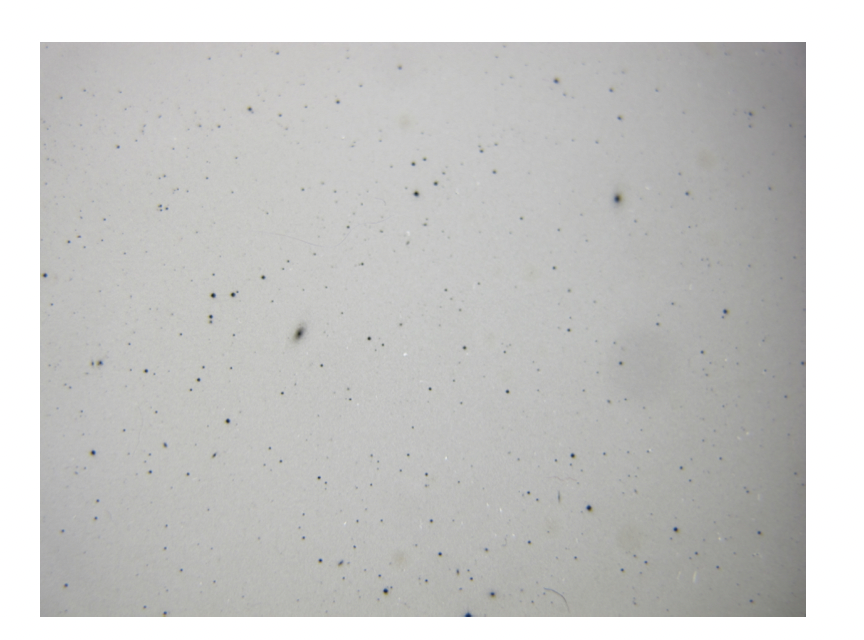

Jun Yang at Harvard University and I have submitted a paper. We examine the original photographic plate material for two famous multiple-transient events from the Palomar Sky Survey: the nine transients of April 12, 1950, and the triple transient of July 19, 1952. The candidates are present on the photographic material and appear sharp and compact. They look just as they do in the digitized images -- star-like, yet a little sharper and rounder than the other stars in the field, just as one wo...

This is interesting. I have asked ODNI and AARO again and again about an alleged UAP baiting operation at White Sands. Zero response. They play ball when they want to. https://t.co/b6F4Njen1n [Quoted] I reached out to the Office of the Director of National Intelligence (ODNI) to ask about Harvard Professor Avi Loeb's UFO council and its relationship with the government. 🟢Question 1: Was Professor Loeb tasked by ODNI to establish and lead the UAP Science Advisory Council? 🔴Avi Loeb has led t...

I reached out to the Office of the Director of National Intelligence (ODNI) to ask about Harvard Professor Avi Loeb's UFO council and its relationship with the government. 🟢Question 1: Was Professor Loeb tasked by ODNI to establish and lead the UAP Science Advisory Council? 🔴Avi Loeb has led the UAP Science Advisory Council, one of several informal groups ODNI has worked with to gather information from outside the U.S. Government. 🟢 Question 2: Is the UAP Science Advisory Council an offici...