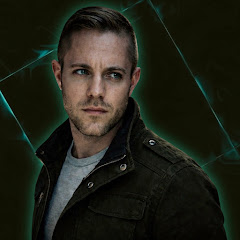
Richard Haines
PersonScientistRichard Haines
PersonScientistRichard Haines is a former NASA research scientist who served as chief scientist of NARCAP and has studied pilot UFO reports and photographs, including the 1971 Lake Cote image.
Richard Haines is a former NASA research scientist who served as chief scientist of NARCAP and has studied pilot UFO reports and photographs, including the 1971 Lake Cote image.
Richard F. Haines is an American research psychologist who spent two decades on NASA-sponsored studies of human vision and pilot performance and became one of the most active scientists investigating reports of unidentified aerial phenomena by aircrews. He served for many years as chief scientist of the National Aviation Reporting Center on Anomalous Phenomena (NARCAP), a nonprofit founded in 1999 that treats pilot sightings as an aviation-safety issue.
Born in 1937, Haines worked for NASA and other research organizations from 1967 to 1988, much of that time at the Ames Research Center in California, and continued to publish Ames research reports into the 1990s. His technical reports covered how pilots shift their gaze between head-up displays and the runway during low-visibility approaches, the design of windows for space station proximity operations, and later the effects of video compression on images used to monitor experiments in orbit. He also wrote Night Flying (1992), a guide for pilots.
Haines took up the UFO subject by the late 1970s. He edited UFO Phenomena and the Behavioral Scientist (1979) and wrote Observing UFOs (1980), followed by Melbourne Episode (1987), a case study of the 1978 disappearance of the pilot Frederick Valentich, and Advanced Aerial Devices Reported During the Korean War (1990). With Jacques Vallée he published two papers in the Journal of Scientific Exploration, in 1989 and 1990, analyzing the 1971 Lake Cote photograph, a frame from a Costa Rican government mapping flight that shows a disc-shaped object over the lake. In a 1992 report on the Montreal UFO incident of November 1990, he and the computer-graphics specialist Bernard Guénette concluded that witnesses had seen a large, silent, hovering object, a finding later skeptical reviews dispute in favor of light pillars, in which ice crystals reflect ground lights.
At NARCAP he wrote or co-wrote most of the group's early technical reports, beginning with a 2000 paper presenting unidentified phenomena as an overlooked aviation-safety factor and including a 2001 study, with Dominique Weinstein, of 57 pilot reports of electromagnetic effects on aircraft. NARCAP also issued a 2007 technical report on the O'Hare Airport sighting of the previous November. His papers, including pilot interview tapes and photo analyses, are held by Rice University's Archives of the Impossible.
His Lake Cote work drew new attention in 2026. The documentary The Cote Photo, directed by Adam Pillon, was released that September on the photograph's 55th anniversary, and the researcher Richard Dolan's podcast episode with Pillon and the Costa Rican investigator Esteban Carranza revisited the early investigations by Haines and Vallée. Haines's work, built on decades of pilot interviews and image analysis, is best known for treating unexplained sightings by aircrews as a flight-safety matter to be recorded rather than dismissed.

In 1951, about one year into the Korean War, American troops positioned near Chorwon, roughly 60 miles north of Seoul. Soldiers, preparing to bombard a nearby village, noticed something strange in the hills—something Private First Class Francis P. Wall would later describe as objects or lights resembling “jack-o’-lanterns” moving across the mountain. One of the objects even approached the battlefield, forcing the Americans to engage. According to Wall’s account, artillery couldn’t damage the...


[Retweeted] Esteban recounts discovering the contact negative of the Cote photo. Watch the @I_D_Official interview: https://t.co/cj8HyUMg7H We explore the government mapping flight that captured it, the investigations by Richard Haines and Jacques Vallée, and the high-resolution drum scan that brought it renewed attention. We also discuss the attempts to explain it away, Costa Rica’s openness in making the photographic evidence available, and the remarkable personal experiences of the people...

In September 1971, an official Costa Rican government mapping aircraft captured a metallic, disc-shaped object over Lake Cote. Decades later, a high-resolution drum scan brought the photo back into the spotlight. In our latest episode, I’m joined by investigator Esteban Carranza & filmmaker Adam Pillon @TheCotePhoto to explore: • The original government mapping flight. • Early investigations by Richard Haines & Jacques Vallée. • Debunking attempts & Costa Rica's open evidence sharing. • Perso...