Probed ingest of: THE ARCHITECT: A Lockheed Martin Vice President Proposed Transferring Crash Retrieval Hardware to the Pentagon. He Died Without a Record.
Source Claims
5- Source reportedAsserted
The Sentinel reports that Dr. James T. Ryder proposed transferring alleged crash-retrieval material from a Lockheed Martin facility to government custody through a DIA-linked mechanism.
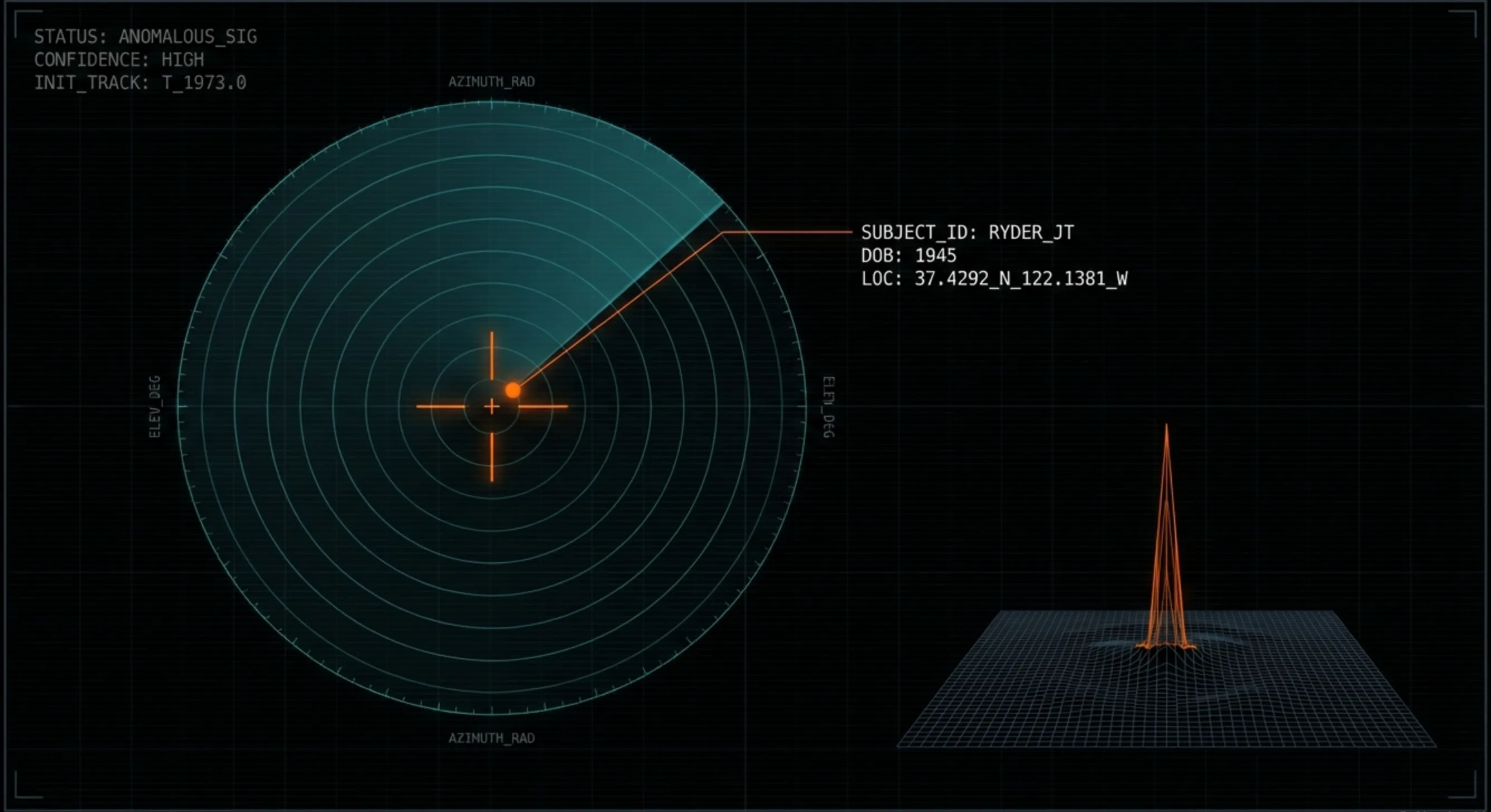
A sitting Vice President of Lockheed Martin Space Systems Company, the man commanding $9 billion in annual R&D, walked into a DIA program and said: we have physical material. It has been in our custody since the 1950s. Here is where it is. Here is what it is. I want to move it to you.
- Source reportedAsserted
The Sentinel reports that Glenn Gaffney, then head of the CIA’s Directorate of Science and Technology, disapproved the proposed transfer.
Glenn Gaffney, serving as Director of the CIA’s Directorate of Science and Technology from approximately 2007 to 2015, personally disapproved the transfer.
- Source reportedAsserted
The Sentinel reports that Dr. James T. Ryder died on May 28, 2018, and that it found only limited public documentation of his death.
Dr. James T. Ryder died on May 28, 2018. Memorial Day. Here is everything that exists in the public record confirming that this happened.
- InterpretationAsserted
The Sentinel argues that the limited documentary record surrounding Dr. Ryder’s death represents an unusually severe public-record gap.
The absence of a death record for Dr. James T. Ryder across multiple authoritative state and national databases, combined with the absence of any corporate, institutional, or media acknowledgment of his death, represents the most complete documentary erasure we have encountered in the ATTRITION series.
- Source reportedAsserted
The Sentinel reports that after retiring, Dr. Ryder remained connected to researchers associated with AAWSAP-related networks, including Eric Davis and Hal Puthoff.
Through SAFIRE and its adjacent networks, Ryder maintained direct connections to Dr. Eric Davis and Dr. Hal Puthoff.
Structure Across Time
How the key people and organizations in this source are involved as events unfold. Built from the extracted timeline — co-appearance here reflects the source’s narrative, not verified coordination.
Reported death of Dr. James T. Ryder
The Sentinel reports that Dr. James T. Ryder died on May 28, 2018, and cites limited public documentation of the event. 
Retirement from Lockheed Martin Space Systems
According to the source material, Ryder retired from Lockheed Martin Space Systems in February 2011 after serving as Vice President beginning in May 2005.
AAWSAP activation
The source places Ryder’s later reported contacts and transfer proposal in the broader context of the DIA’s Advanced Aerospace Weapon System Applications Program. 
RELATED ENTITIES
(38)Source Material
4Source Documents
1Research Map
Entities are linked when they share a claim or a dated event in this source. Tap any node to see why it’s here.
Deep probes
20Probed ingest of: THE COMPLEX: The Pentagon Just Published the 1949 Green Fireball Files. Our 2026 Coverage Says They Are Returning.
The Sentinel Network · May 27Probed ingest of: THE SIGNAL #007: THE PROBABILITY
The Sentinel Network · May 26Probed ingest of: THE CORPUS: NSA Argued This File Would Damage National Security. Page 236 Reads “Thirteen MIGs Chased One UFO.”
The Sentinel Network · May 21Probed ingest of: THE PRIORS: Kevin Patrick Childress Created a Reddit Account Before AATIP Broke.
The Sentinel Network · May 20Probed ingest of: THE MISSING BIN: We Said SETI Couldn’t Hear a Probe. We Spent 163 Hours Reprocessing Their Data.
The Sentinel Network · May 14Probed ingest of: THE REFRACTOR: A Pentagon Deadline for 46 UAP Videos Lapsed in Silence. The Same 46 Surfaced Elsewhere.
The Sentinel Network · May 7Probed ingest of: THE VIEWPORT: We Built 3I/ATLAS.
The Sentinel Network · May 6Probed ingest of: THE BAIT: A Fabricated Jupiter Impact Reached Our Inbox. Two Weeks of Verification Said No.
The Sentinel Network · May 4 The Sentinel NetworkUniversity of WashingtonCentral Intelligence AgencyLockheed Martin Space Systems CompanyLiberation Times
 Hal Puthoff