Russian UAP Encounters
TopicRussian UAP Encounters
TopicSoviet and Russian UAP reports span public mass sightings, military testimony, scientific committees, and later archival claims whose documentation varies sharply in quality.
Soviet and Russian UAP reports span public mass sightings, military testimony, scientific committees, and later archival claims whose documentation varies sharply in quality.


Russian UAP encounters are reports of unexplained objects or lights made within the Soviet Union and the Russian Federation. Their history is unusually difficult to reconstruct because state media, military secrecy, changing political conditions, and later commercial ufology all shaped what reached the public. The record includes genuine contemporary documents, but it also contains retrospective stories that cannot be traced to an original report.
The Petrozavodsk phenomenon of September 1977 is the best-known Soviet example. TASS described a luminous, jellyfish-like display over the city lasting roughly ten to twelve minutes, while observers across northwestern Soviet territory reported related lights. A launch from Plesetsk occurred in the same general period, and later technical discussion considered rocket exhaust, upper-atmospheric effects, and plasma among the possible explanations. The episode helped stimulate official scientific attention to anomalous atmospheric reports rather than establishing an extraterrestrial event.
By the late Soviet period, press and scientific bodies could discuss the subject more openly. A 1990 Moscow broadcast, preserved in a CIA translation, described Soviet and Chinese specialists meeting at Dalnegorsk to exchange photographs and investigate reported anomalies. Such records establish that researchers discussed and catalogued sightings; they do not validate every dramatic story later attributed to the KGB or the Soviet military. Claims of crash retrievals and secret reverse-engineering programs generally rest on fragmentary documents, unverifiable interviews, or material released without a secure archival chain.
The subject therefore sits between documented aerospace history and a far less certain disclosure narrative. Russia operated vast missile, space-launch, air-defense, and nuclear networks capable of generating observations as well as collecting them. Soviet UFO investigations are historically significant when a dated report, named institution, and original record can be identified. Connections drawn to Chernobyl or other disasters require separate evidence, because geographical or chronological proximity alone does not establish a relationship.

In 1998, the TNT documentary The Secret KGB UFO Files, hosted by Roger Moore, presented two films said to have been obtained in Russia from former KGB sources. The program also showed Soviet documents, film cans and other material presented as accompanying the footage. The first film shows Soviet military personnel recovering a damaged disc-shaped object from a snow-covered forest near Sverdlovsk, now Yekaterinburg. The second shows the autopsy of unidentified remains described in the accompa...

Secret Soviet UFO Files


This is not a regular interview. This is an exceptionally well-produced documentary featuring Ross Coulthart , exploring what is known about Soviet UFOs and alleged crashed saucers. It brings together a wealth of new information, historical context, and details about the Soviet UFO investigations and crash-retrieval program. Please enjoy. @rosscoulthart @dennis_asberg @g_knapp [Quoted] This is a really, really good episode on Soviet UFOs with @rosscoulthart and Reality Check. Proud to be part...


The Russian UFO files might be the most overlooked chapter in the history of the phenomenon. A few remarkable pieces of military footage, largely forgotten today. #SovietUFO #UAP https://t.co/5RJHQ9UC7I

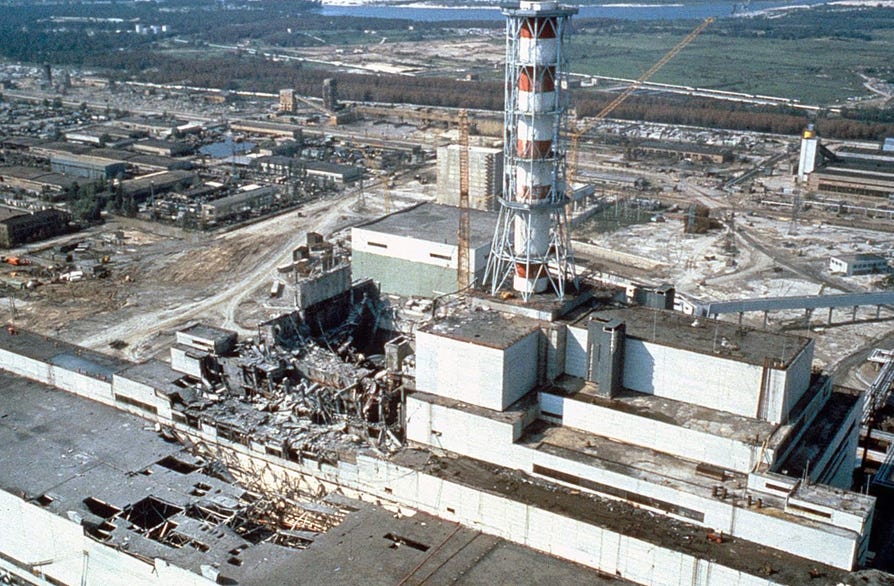
Something In The Sky Above Chernobyl
Petrozavodsk, Chernobyl & Fukushima -- are "they" here to help?