UAP Records Collection
TopicDocument CollectionUAP Records Collection
TopicDocument CollectionThe UAP Records Collection is Record Group 615 at the National Archives, created under the FY2024 NDAA to gather government UAP records; nine agencies had transferred material by September 2026.
The UAP Records Collection is Record Group 615 at the National Archives, created under the FY2024 NDAA to gather government UAP records; nine agencies had transferred material by September 2026.


The Unidentified Anomalous Phenomena Records Collection, catalogued as Record Group 615, is the National Archives collection created to bring U.S. government records on UAP into a single public archive. It rests on sections 1841 to 1843 of the National Defense Authorization Act for Fiscal Year 2024, signed on December 22, 2023, which directed the Archivist to establish the collection. The law says it is to hold copies of all "Government, Government-provided, or Government-funded records" relating to unidentified anomalous phenomena, "technologies of unknown origin, and non-human intelligence."
The provisions were what survived of the UAP Disclosure Act that Senators Chuck Schumer and Mike Rounds introduced in July 2023. Negotiators dropped its eminent-domain power over recovered material held by private entities and its proposed review board, a loss Schumer called "really an outrage," leaving a records mandate described in the NDAA's UAP provisions: government offices were to review, identify and organize their UAP records within 300 days of enactment, transmit copies to the Archivist and make disclosable records public. NARA accessions the transfers on a rolling basis and posts them in the National Archives Catalog. By April 2025 the first electronic series, from the Federal Aviation Administration, the Nuclear Regulatory Commission, the Office of the Director of National Intelligence and the Office of the Secretary of Defense, were available for bulk download. By September 21, 2026, the collection's page listed series from nine bodies, adding the National Security Agency, the State Department, the FBI, the Department of the Air Force and U.S. Customs and Border Protection.
NARA preserves what agencies send; it does not investigate cases or rule on the claims in the files, and the collection holds only what offices choose to identify and transfer. That limit drives the 2026 debate. In June, Representative Eric Burlison offered an amendment to the House defense bill that would repeal the 2024 subtitle and rebuild the collection under a nine-member, presidentially appointed review board, with disclosure due 25 years after a record's creation and eminent domain over recovered technologies. In September, the Disclosure Foundation argued in a policy brief that government-funded records held by federally funded research and development centers also belong in the collection.
The collection is the first permanent statutory home for UAP records in the federal archives, separate from the Department of War's PURSUE releases that began in May 2026. Its agency-by-agency listings form a running public record of which parts of the government have handed over UAP records under the 2024 law.

I have a proposal, and I'm curious whether anyone here would actually be interested in participating. Personally getting a little antsy waiting on the government. The National Archives has established a UAP Records Collection under the 2024 National Defense Authorization Act. Federal agencies were required to identify and organize UAP-related records, including records concerning technologies of unknown origin and nonhuman intelligence. Here's the part I find particularly interesting: NARA's...


Here is a thread of UAP videos that were just added to NARA's Record Group 615: Unidentified Anomalous Phenomena Records Collection, as released by the U.S. Customs and Border Protection. They are headered by their official title in the catalog and archived here for reference.


Disclosure Foundation has released a new policy paper explaining that all government-funded UAP records, including those held by federally funded research and d [Quoted] Read and download Policy Brief No. 7: All Government-Funded UAP Records Belong in the UAP Records Collection at the National Archives https://t.co/qgRprTrKki

All Government-Funded UAP Records Belong in the UAP Records Collection at the National Archives - Disclosure Foundation Policy Brief


[Retweeted] 🧵 We have released a new policy brief: Policy Brief No. 7 - All Government-Funded UAP Records Belong in the UAP Records Collection at the National Archives. The policy brief is authored by Christopher Mellon (@ChrisKMellon), Jordan Flowers (@jordanflowers) and Hunt Willis. The new policy brief argues that the FY 2024 NDAA requires the National Archives’ UAP Records Collection to include not only agency records, but also government-provided and government-funded records, including...

[Retweeted] 2/ The new policy brief is focused on making the following three key points: 1. FFRDCs are government-funded. These entities receive the majority of their financial support from the federal government and operate through long-term relationships with sponsoring agencies. 2. The FY 2024 NDAA reaches beyond ordinary “agency records.” Congress specifically required the UAP Records Collection to include “Government-funded” records, including records created outside the federal governme...

[Retweeted] 🧵 We have released a new policy brief: Policy Brief No. 7 - All Government-Funded UAP Records Belong in the UAP Records Collection at the National Archives. The policy brief is authored by Christopher Mellon (@ChrisKMellon), Jordan Flowers (@jordanflowers) and Hunt Willis. The new policy brief argues that the FY 2024 NDAA requires the National Archives’ UAP Records Collection to include not only agency records, but also government-provided and government-funded records, including...

[Retweeted] 🧵 We have released a new policy brief: Policy Brief No. 7 - All Government-Funded UAP Records Belong in the UAP Records Collection at the National Archives. The policy brief is authored by Christopher Mellon (@ChrisKMellon), Jordan Flowers (@jordanflowers) and Hunt Willis. The new policy brief argues that the FY 2024 NDAA requires the National Archives’ UAP Records Collection to include not only agency records, but also government-provided and government-funded records, including...
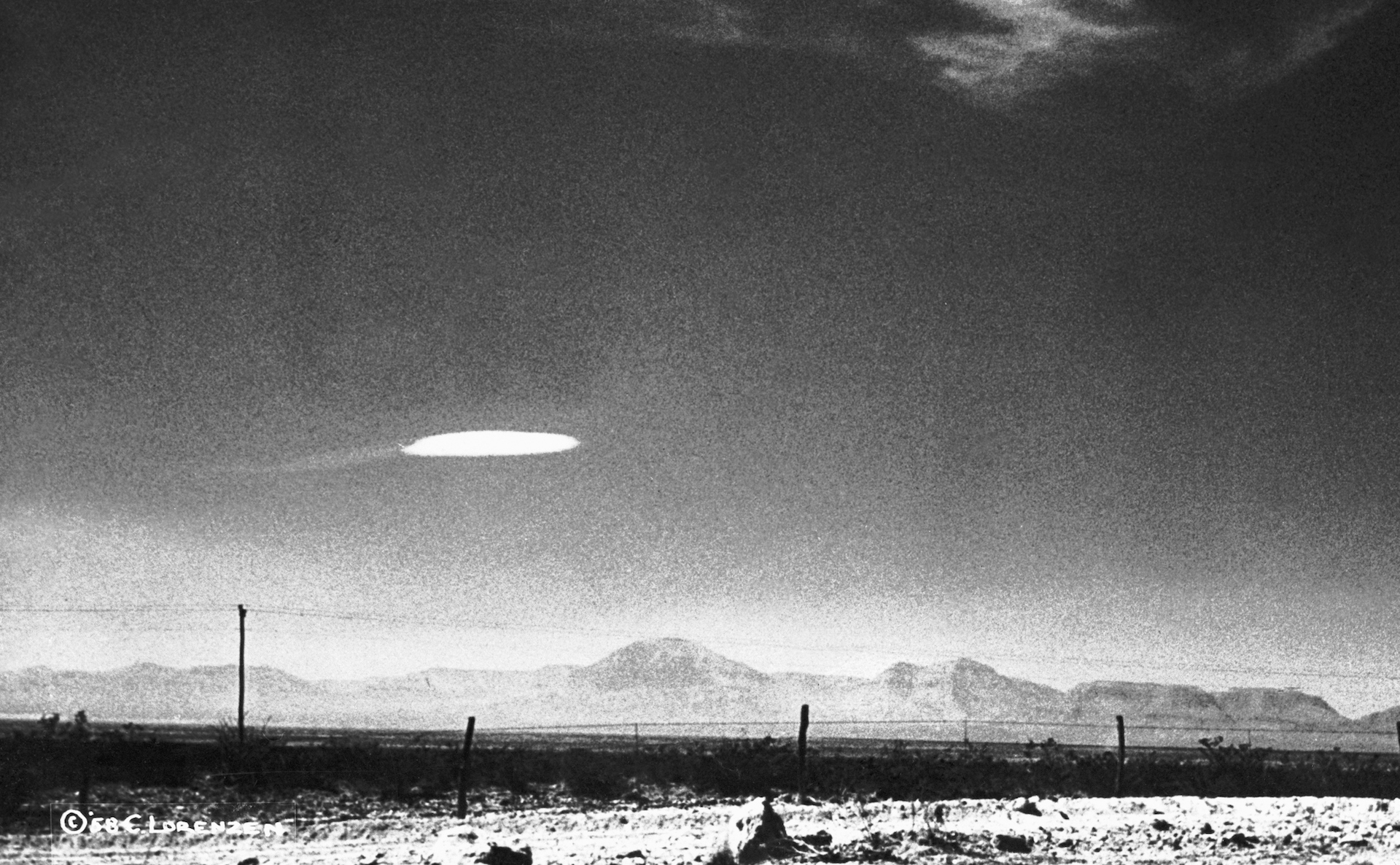
Probed ingest of: Pentagon seeks access to vast private UFO records collection
Brandi Vincent’s DefenseScoop report examines AARO’s proposed subscription to the National UFO Historical Records Center, led by David Marler. The linked federal notice specifies pre-1990 data, metadata and analysis, a one-year base with four options, and a sole-source justification built around unique archive holdings. The central distinction is access for AARO researchers versus public disclosure; the notice itself promises no public release.
