
Probed ingest of: Air Force Test Pilot Saw a Silent Triangular Craft Over an English Golf Course | Dan Isbell Part I
Safe Aerospace Podcast host Ryan Graves interviews former Air Force test pilot Dan Isbell about his December 1980 account of a silent triangular object near RAF Upper Heyford. Their conversation covers nuclear alert duty, F-111 and F-16 flying, F-22 acquisition, fiber-laser development, the costs of pilot-reporting stigma, and comparisons with Rendlesham-era accounts and a separate Johannesburg near-miss report. Isbell distinguishes his recollections from proposed explanations.
PROBED ASSESSMENT
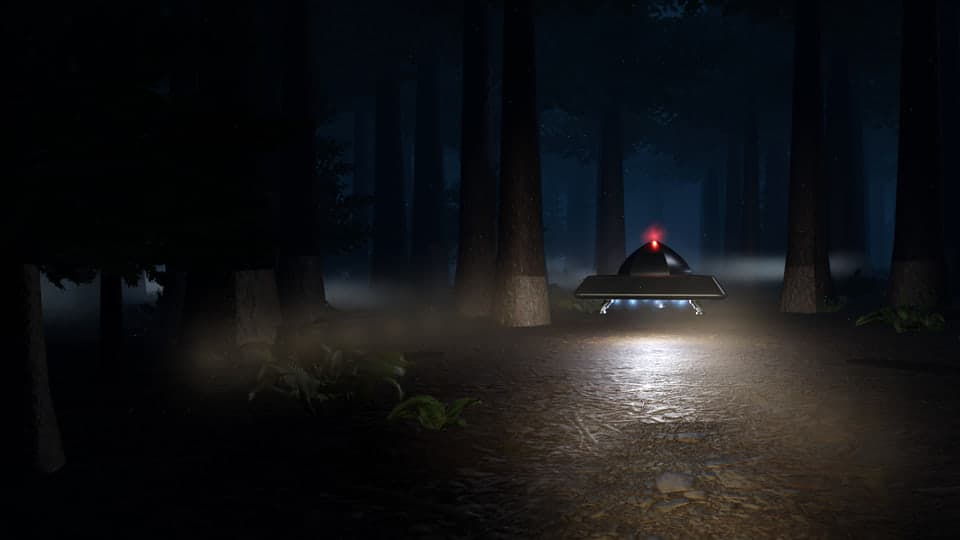
Dan Isbell recounts a silent, color-shifting triangular object above an English golf course after nuclear alert duty at RAF Upper Heyford on December 26, 1980. Ryan Graves frames that account through Isbell's flight-test career and the consequences pilots anticipate when reporting UAP.
- 1.Isbell estimates a fifty-to-sixty-foot object about 150 feet away and says it descended as he approached before he drove home.
- 2.Isbell says career and clearance concerns delayed disclosure for decades, followed by private conversations with ASA and the FBI.
- 3.Graves compares the encounter with an airline crew's reported black-triangle near-miss departing Johannesburg, including a shimmering yellow-gold underside.
- 4.Isbell describes influencing F-22 acquisition decisions and backing electrically powered fiber lasers to overcome chemical-laser logistics.
The discussion connects pilot reporting barriers with the loss of timely, testable observations. Isbell's technical career also offers a detailed account of how operational experience informed aircraft acquisition, laser development, and training.
Directed Energy Professional Society listings support Isbell's aviation and program-management background; Air Force and MIT sources support general technical context. The 1980 sighting, FBI-release account, and secondary encounters remain attributed reports, and proximity in time to Rendlesham does not establish a common cause.
- 1.Can the earliest account, precise roadside location, or released FBI interview establish additional details?
- 2.Are independently dated local reports available for comparison?
Claims remain attributed to the source unless independently documented. Reviewed and edited by an editor.
Source Claims
12- Source reportedUnverified
Dan Isbell reports that around 10 p.m. on December 26, 1980, he encountered a silent triangular object above a golf course while driving home from RAF Upper Heyford, estimating its length at fifty to sixty feet and his closest distance at about 150 feet.
He says they drew abreast and stopped abruptly above a golf course. He pulled across to the roadside nearest the object, initially watched through the car, lowered the window to listen, and then stepped outside.
- Source reportedUnverified
Isbell says the object descended as he approached, and that he drove away before seeing it land because he feared both possible physical harm and damage to his flying career.
His curiosity briefly included imagining what it might be like to fly such a machine. He then reconsidered both possible physical danger and professional consequences. He says he returned to the Corvette and drove home before seeing any landing.
- Source reportedUnverified
Isbell describes a changing luminous field around the object's underside and perimeter, with no visible occupants, recognizable propulsion noise, or observed illumination of the surroundings.
Asked by Graves whether these were individual lamps, he instead likens them to a shifting field, plasma, or auroral light. He later recalls purple, red, yellow, and occasional green.
- Source reportedAsserted
Isbell says fear of losing his flying career and security clearances kept him from publicly reporting his UAP experience for decades, including during later consulting work.
Isbell answers that stigma and clearance concerns persisted into his consulting years. Graves places his first ASA contact in May 2023, tentatively recalling May 27, before the July congressional hearing.
- Source reportedUnverified
Isbell says Graves helped arrange a private FBI interview and that officials later requested permission to release his account under a presidential disclosure initiative; he says he authorized identification.
Isbell also says Graves helped arrange a private FBI interview and that officials later sought permission to release his account under a presidential disclosure initiative. He says he consented to identification.
Structure Across Time
How the key people and organizations in this source are involved as events unfold. Built from the extracted timeline — co-appearance here reflects the source’s narrative, not verified coordination.
Dan Isbell Part I published
Safe Aerospace Podcast releases the first installment of Ryan Graves's conversation with Dan Isbell.
Isbell contacts Americans for Safe Aerospace
Graves dates Isbell's initial approach to May 2023, tentatively recalling the twenty-seventh. Isbell describes the exchange as private.
Johannesburg near-miss report recalled by Graves
Graves tentatively dates another crew's reported black-triangle near-miss to one of these years; the interview does not resolve which.
Pentagon program-analysis assignment
Isbell dates his Pentagon work to this period and places his F-22 comparison study around 1999–2000.
Isbell enters Test Pilot School at Edwards
Isbell says he changed a planned F-16 assignment to attend Test Pilot School and subsequently graduated first.
RELATED ENTITIES
(43)Referenced Material
5Research Map
Entities are linked when they share a claim or a dated event in this source. Tap any node to see why it’s here.
 Americans for Safe AerospaceGeorgia Institute of TechnologyNational Aeronautics and Space AdministrationCentral Intelligence AgencyU.S. NavyOptical Air Data Systems
 Ryan Graves