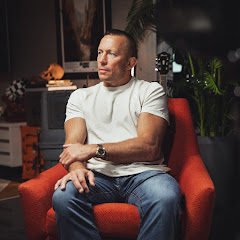
Probed ingest of: "I Worked On A UFO." | Area 51 Whistleblower Bob Lazar
GSP Podcast’s Georges St-Pierre interviews Bob Lazar about the claims dramatized in S4: The Bob Lazar Story: his path from Los Alamos through EG&G to the alleged S-4 facility, compartmented security, Project Galileo, the Sport Model’s reactor and gravity emitters, Omicron and Delta propulsion modes, predicted test flights, interrogation, surveillance, and his 1989 decision to go public through George Knapp. The episode also addresses the records and evidentiary gaps that continue to divide supporters and skeptics.
PROBED ASSESSMENT
Georges St-Pierre asks Bob Lazar how he says he reached S-4, what he claims he witnessed, how the alleged craft operated, and why he went public in 1989. Lazar links the retelling to the 2026 film S4: The Bob Lazar Story.
- 1.Lazar distinguishes claimed firsthand encounters with the reactor field and low-speed hover from Delta travel details he attributes to his colleague Barry or briefing files.
- 2.He describes compartmented access, movement logging, Projects Galileo, Sidekick, and Looking Glass, and a claimed practice of seeding false details to trace leaks.
- 3.His technical model uses three gravity emitters, Omicron and Delta configurations, field-based motion, and alleged inertia cancellation instead of conventional thrust.
- 4.His path to publicity runs from halted employment through test-flight outings, questioning at Indian Springs, surveillance, and the 1989 George Knapp interviews.
Lazar’s account helped define the modern image of Area 51 as a recovered-craft laboratory and still shapes arguments over disclosure and control of transformative technology.
The Los Alamos directory and newspaper profile support a connection to the laboratory environment, not the claimed education, EG&G assignment, S-4 access, or technical conclusions. Accounts of the reactor, craft, test flights, questioning, and surveillance remain participant testimony.
- 1.Can authenticated EG&G, security, payroll, or clearance records place Lazar in the alleged program?
- 2.Can original test-flight imagery and the proposed hangar image be independently located and analyzed?
- 3.Do contemporaneous witness accounts preserve the predicted schedules and observed movements without later contamination?
Claims remain attributed to the source unless independently documented. Reviewed and edited by an editor.
Source Claims
12- Source reportedUnverified
Lazar claims he served from December 1988 through April 1989 on an S-4 reverse-engineering team assigned to Project Galileo and examining the recovered disc he called the Sport Model.
from December 1988 through April 1989 he served on a reverse-engineering team examining a recovered disc
- Source reportedAsserted
Lazar says a meeting with Edward Teller at Los Alamos later led to interviews with EG&G Special Projects for the position that he associates with S-4.
Teller suggested an opportunity, leading to interviews with EG&G Special Projects
- Source reportedUnverified
Lazar claims S-4 access relied on a hand-geometry scanner and magnetic-stripe badges that logged movement through nearly every doorway.
nearly every doorway required the badge
- Source reportedUnverified
Lazar claims a small reactor demonstrated by his lab partner produced an invisible field that physically prevented him from touching the device.
an invisible field pushed his hands away
- InterpretationUnverified
Lazar claims the Sport Model hovered without transferring a corresponding crushing load to the ground, which he interpreted as isolation from ordinary gravitational interaction.
there was no crushing force or corresponding load transferred to the ground
Structure Across Time
How the key people and organizations in this source are involved as events unfold. Built from the extracted timeline — co-appearance here reflects the source’s narrative, not verified coordination.
GSP Podcast publishes the Lazar interview
Georges St-Pierre publishes the compact interview revisiting Lazar’s S-4 claims, propulsion descriptions, public disclosure, and outstanding evidence questions.
S4 documentary reconstructs Lazar’s account
S4: The Bob Lazar Story uses reconstructed laboratories, hangars, craft, and procedures that Lazar says closely match his memories.
Lazar says the S-4 work stopped
Lazar says the program stopped calling him in after security monitoring detected turmoil in his home life.
Lazar describes reactor and hover demonstrations
During the alleged assignment, Lazar says he encountered the reactor’s repelling field and watched the Sport Model hover without transferring its apparent load to the ground.
Viewing trips test the alleged flight schedule
Lazar says he took Gene Huff and other friends outside the restricted area on three occasions to watch activity he associated with scheduled S-4 tests.
RELATED ENTITIES
(58)Referenced Material
5Referenced Documents
4Research Map
Entities are linked when they share a claim or a dated event in this source. Tap any node to see why it’s here.
 George Knapp