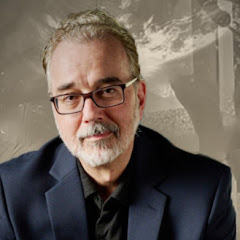
Probed ingest of: Luis Elizondo, James Clapper, and the Controlled Disclosure Theory
Richard Dolan examines UAP Gerb and Ross Coulthart’s claim that Luis Elizondo served as the public face of a James Clapper-directed controlled-disclosure effort. Dolan tests the theory against the 2017 AATIP opening, Elizondo’s 2019 statement about recovered UFO material, David Grusch’s 2023 allegations, the Pentagon’s disputed treatment of Elizondo, and the Clinton-era political context, arguing that competing government factions currently fit the public record better than a unified operation.

PROBED ASSESSMENT
Richard Dolan tests the claim that James R. Clapper Jr. used AATIP and Luis Elizondo to execute a limited UAP disclosure plan. He concludes that competing government factions currently fit the public chronology better.
- 1.Official silence and UFO stigma already protected any hidden retrieval program; the 2017 AATIP and Nimitz coverage invited questions about recovered craft.
- 2.Elizondo affirmed government possession of UFO material in May 2019, four years before David Grusch’s public allegations.
- 3.Clapper’s position makes him worth investigating, but no public records or named firsthand witnesses establish the alleged operational chain through the National Security Council and Elizondo.
- 4.The Pentagon’s contradictory statements about Elizondo’s AATIP role look more like institutional conflict than management of an approved frontman.
The dispute tests whether the post-2017 UAP opening reflects centrally managed narrative control or an unstable contest among factions with different disclosure goals.
The 2017 reporting, Elizondo’s 2019 interview, Clapper’s public record, the 2023 Grusch hearing, and Pentagon-AATIP documentation are accessible. The alleged Clapper-to-Elizondo operational chain remains publicly uncorroborated.
- 1.What records or witnesses establish Clapper’s alleged direction?
- 2.What pressure made controlled disclosure preferable to silence?
- 3.How does the theory reconcile Elizondo’s 2019 statement with the Pentagon’s later effort to minimize his AATIP role?
Claims remain attributed to the source unless independently documented. Reviewed and edited by an editor.
Source Claims
12- Source reportedUnverified
Dolan says UAP Gerb’s theory alleges that AATIP provided bureaucratic cover for a National Security Council crash-retrieval portfolio directed by James R. Clapper Jr., with Luis Elizondo selected as the public face of limited disclosure.
In Gerb's account, it functioned as an informal and effectively unfunded working group that provided bureaucratic cover for more sensitive National Security Council activity involving UAP.
- Source reportedUnverified
The theory, as Dolan reconstructs it, says a Hillary Clinton administration would have acknowledged non-human intelligence and anomalous craft while concealing alleged crash-retrieval and reverse-engineering programs, until Donald Trump’s 2016 victory disrupted the plan.
The theory further holds that Hillary Clinton was expected to carry out the public portion of the plan after winning the 2016 presidential election.
- InterpretationAsserted
Dolan argues that reviving public interest in UAP after decades of ridicule and silence would have increased pressure on any hidden retrieval program, making the alleged strategy self-defeating unless an external trigger forced action.
Acknowledging advanced anomalous craft would therefore increase pressure on the retrieval secret. Continued silence and ridicule would have been safer.
- InterpretationAsserted
Dolan says the controlled-disclosure hypothesis has not publicly demonstrated an imminent whistleblower, foreign disclosure, or other pressure that would explain why custodians of an alleged legacy program needed to open the subject.
His problem is that no such trigger has been demonstrated in the version of the theory presented publicly.
- InterpretationAsserted
Dolan interprets Hillary Clinton and John Podesta’s 2015–2016 UAP comments as compatible with campaign strategy or sincere declassification interest, but not by themselves as evidence of a James Clapper-directed intelligence operation.
That political calculation is very different, Dolan argues, from a Clapper-directed disclosure operation.
Structure Across Time
How the key people and organizations in this source are involved as events unfold. Built from the extracted timeline — co-appearance here reflects the source’s narrative, not verified coordination.
Dolan publishes his controlled-disclosure critique
Richard Dolan presents his evidence, chronology, and logic-based critique of the Clapper-Elizondo controlled-disclosure theory.
David Grusch gives public UAP testimony to Congress
Grusch’s public allegations about crash retrievals, reverse engineering, and non-human biologics went substantially beyond Elizondo’s earlier statements.
Department of Defense establishes the UAP Task Force
Dolan includes the 2020 task force in his counterfactual question about whether the same institutional opening would have occurred without Elizondo’s advocacy.
Elizondo affirms government possession of UFO material
Asked by Tucker Carlson whether the U.S. government possessed material or debris from a UFO, Elizondo referred to his nondisclosure obligations and answered yes.
Wilson-Davis notes become public
Dolan recalls defending the authenticity of notes attributed to Eric W. Davis concerning an alleged meeting with retired Vice Admiral Thomas R. Wilson.
RELATED ENTITIES
(56)
Referenced Material
5Referenced Documents
8Research Map
Entities are linked when they share a claim or a dated event in this source. Tap any node to see why it’s here.
 The Black Vault
 NewsNation
 John Greenewald
 Barack Obama
 Luis "Lue" Elizondo
 UAP Gerb
 Donald Trump